Reviewed · MILAN
Intensive Italian Language Course in Milan
Learning Italian in Milan can be scary.
This course turns that into forward motion with 4 lessons per day in small groups. I like that the class limit is 14 students, so you’re not lost in a sea of accents. I also like the school’s hands-on help for real life in Milan, from getting set up to finding your rhythm. The main trade-off: instruction is only in Italian from day one, so true beginners will need patience (and a notebook that’s ready on Day 1).
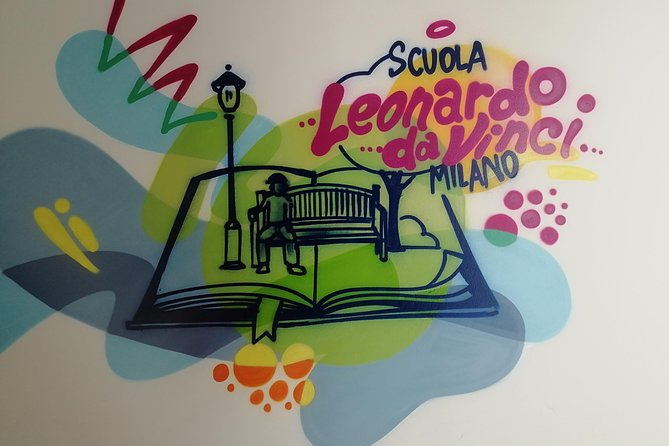
The school’s base is at Scuola Leonardo da Vinci Milano on Corso di Porta Vigentina 35, a practical spot for getting around. In the classroom, you’ll study with a mix of nationalities and ages, and you can usually find your level fast (A1 up through more advanced tracks). Outside class, there’s enough going on—cultural activities and weekend practice options—that you can start using Italian the same week you arrive, not months later.
In This Review
- Key highlights you’ll feel fast
- Scuola Leonardo da Vinci Milano: where you go and what to expect
- What intensive really means: 4 lessons per day, Monday–Friday
- Italian-only teaching: fast speaking habits, tough first days
- Levels, group mix, and how the schedule can fit you
- Textbooks and course materials: you start learning immediately
- After-class practice in Milan: cultural activities that help you speak
- The art program with Silvia: language through creativity
- Price and value for a 5-day Milan sprint
- Who this course suits best (and who should think twice)
- Should you book this intensive Italian course in Milan?
- FAQ
- Where is the meeting point for the course?
- How long is the intensive course?
- How many lessons do you have each day?
- What days are the classes held?
- How big are the classes?
- Are the classes taught in Italian or English?
- Are textbooks included?
- Is there any practice or cultural time outside of lessons?
- What is the cancellation policy?
Key highlights you’ll feel fast
- Small-group intensity (max 14 students) that makes speaking practice realistic
- 4 lessons per day, Monday to Friday for steady progress without guessing
- Italian-only classroom method that forces useful habits quickly
- Textbooks included so you can start learning without extra prep costs
- Practical school support in Milan, from daily logistics to bigger paperwork help
Still deciding? These are the Milan tours travellers book more than any other.
- Milan: Cathedral and Duomo’s Terraces Entrance Ticket★ 4.6 · 61,054 reviews
- From Milan: Como Private Boat, Bellagio and Lugano Day Trip★ 4.8 · 6,271 reviews
- Milan: City Sightseeing Hop-On Hop-Off Bus with Audio Guide★ 4.0 · 6,256 reviews
Scuola Leonardo da Vinci Milano: where you go and what to expect
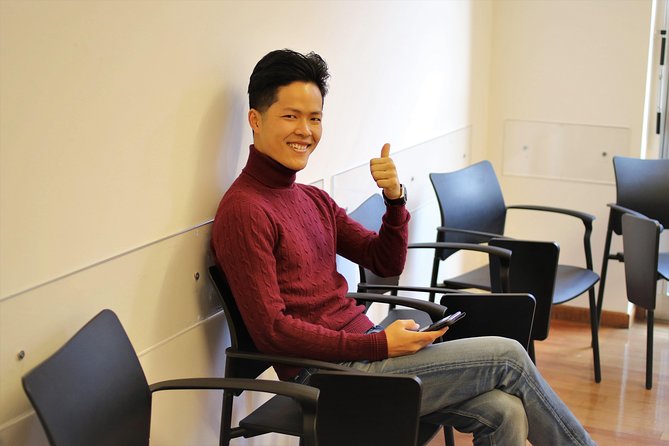
Your “start line” is the school at Corso di Porta Vigentina, 35 (20122 Milan). The experience runs back to the same meeting point at the end, which is handy when your days are full and you don’t want extra transfers.
In practice, this location works because you’re near public transportation. That matters for an intensive course: you’ll spend less time fighting schedules and more time showing up rested and ready to speak. One learner also described the area around Porta Romana as safe and convenient—exactly the kind of detail that helps when you’re new to a city.
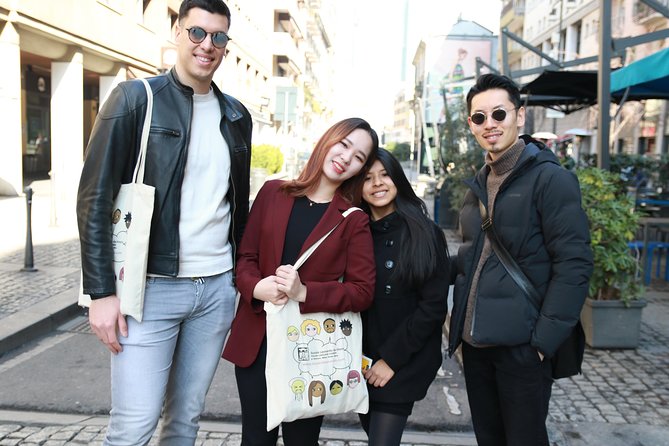
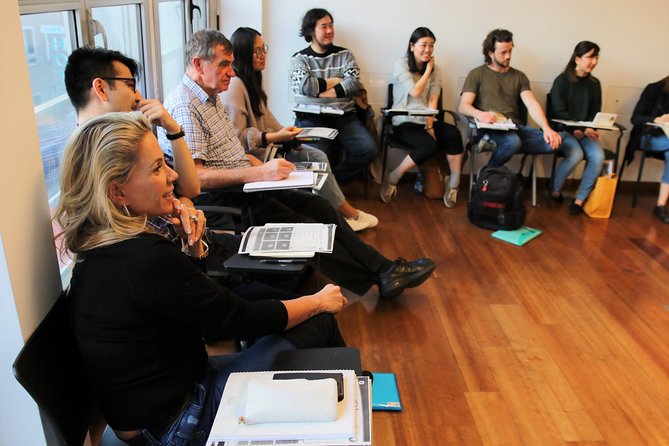
The learning vibe is international but structured. Your group can include students of different ages and nationalities, and that’s not just a social perk—it changes how you learn. You’ll hear multiple accents and ways of expressing ideas, which is what you want if your goal is real-world conversation, not just classroom grammar.
One more thing I’d take seriously: many instructors are described as highly qualified (including people with PhDs in linguistics) and genuinely engaged. That combo tends to show up as faster feedback and fewer “wait, what did I do wrong?” moments.
What intensive really means: 4 lessons per day, Monday–Friday
The intensive format here is 4 lessons per day, from Monday to Friday. That’s a strong schedule for two reasons.
First, it keeps your brain in Italian mode. Language improves when you’re consistently working on comprehension and speaking, and 4 lessons/day makes it hard to slip into “just surviving” mode.
Second, it helps you build momentum. With so many focused class hours in a week, you’re more likely to notice progress by Day 3 or Day 4—especially in speaking confidence. In a city like Milan, you’ll also have plenty of real opportunities to test what you learned: ordering food, asking directions, or simply understanding what’s on a sign.
A possible drawback is the pace. If you’re hoping for a “vacation with a few classes,” this likely won’t match that. It’s designed to move you, not soothe you. If you want a slower start, you might consider a longer plan with more gradual intensity—still within the same school system, but with a schedule that fits your stress level.
Italian-only teaching: fast speaking habits, tough first days
This course has a clear rule: it’s held only in Italian, and you start speaking from the first day. That’s one of the biggest reasons people choose intensive programs, because your brain can’t hide behind English.
What makes it more workable is that the school structure is built for interaction. Groups are small, and the stated goal is to allow speaking with the teacher and among classmates. Also, the school offers multiple levels, so you’re not stuck in a class that’s either too easy or too hard. If you find your level quickly, the Italian-only method becomes a benefit instead of a wall.
Still, plan for an adjustment period. On Day 1, you might understand more than you can produce. That’s normal. Bring a strategy for the first week: take notes, write down phrases you actually use, and don’t wait for perfect sentences before you speak.
Also, don’t ignore the “course in English” detail. Even though teaching is in Italian, the course is listed as offered in English, which usually means you’ll get support and communication in English when you need it. The exact boundaries aren’t spelled out in detail here, so if you rely on English for understanding instructions, it’s smart to ask the school what they can support during your first days.
- Milan: Cathedral and Duomo’s Terraces Entrance Ticket
★ 4.6 · 61,054 reviews - From Milan: Como Private Boat, Bellagio and Lugano Day Trip
★ 4.8 · 6,271 reviews - Milan: City Sightseeing Hop-On Hop-Off Bus with Audio Guide
★ 4.0 · 6,256 reviews - Milan: Milan Cathedral Direct Entrance – Terrace Excluded
★ 4.5 · 5,782 reviews - Milan: Guided Walking Tour & Last Supper Visit with Ticket
★ 4.7 · 5,409 reviews
Levels, group mix, and how the schedule can fit you
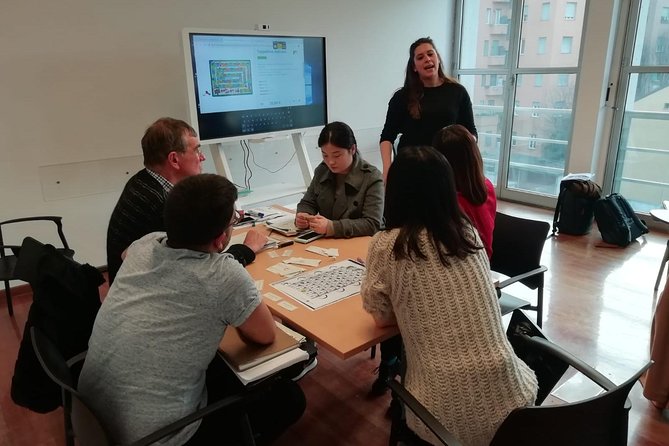
This school is designed to work for different learners. Classes include students of different nationalities and age groups, and you can study from beginner level onward (A1, A2, B1 are explicitly mentioned). The point isn’t just variety—it’s practice for the way Italian sounds in real life.
Another strong element is flexibility by duration. You can book from 1 to 48 weeks, and the pricing improves the longer you stay, starting from the 5-week course. That matters if you’re trying to reach a real goal (travel fluency, professional relocation, or even language credentials). For a short visit, you’ll still learn a lot—but longer stays give you room to build from communication basics into stronger grammar and smoother conversation.
One learner highlighted that the school can adjust schedules and classes based on your experience and needs. That’s a big deal in intensive learning. If you’re too far ahead, you’ll get bored. If you’re behind, you’ll fall behind. A responsive school can prevent both.
Textbooks and course materials: you start learning immediately
You’re not sent away to buy stuff before class. The school provides the textbooks, and they’re included in the course price. That’s real value. Language courses often hit you with added costs for materials, and here you’re starting with the expectation that you’ll be ready on Day 1.
Teachers also use additional support materials to practice different forms of communication. The goal is improvement in how you express yourself—not just passive reading. That’s especially important in an Italian-only environment, because the fastest way to improve is to keep pushing output: speaking, responding, and asking questions in Italian.
From a practical standpoint, this means you should come prepared to work, even outside class. If the school hands you structured materials, use them. Even 20 minutes of focused practice the evening of a lesson can multiply your results during a tight week.
After-class practice in Milan: cultural activities that help you speak
An intensive course shouldn’t end when the bell rings. Here, the school includes cultural activities during the week and on weekends, which lets you practice listening and speaking in real settings instead of only in the classroom.
From student feedback, the style of activities can include:
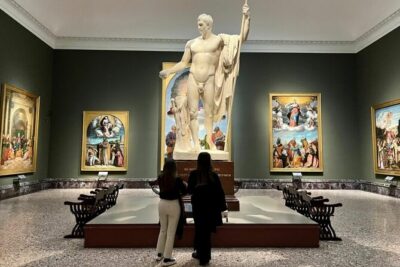
- city and museum tours
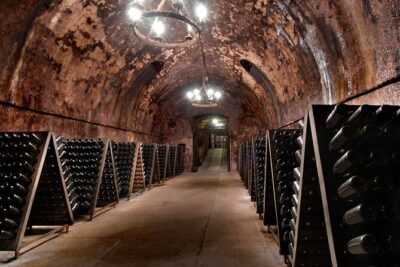
- wine tastings
- other social events that turn Italian into a real conversation tool
I like this approach because it’s low-pressure practice. You’re not performing a “lesson.” You’re asking a question, making a comment, and reacting to what’s happening. That’s how you stop sounding like a student and start sounding like a person.
One student also specifically mentioned learning with a guide named Luisa, who helped them see Milan more like a Milanese. When you’re learning language, it helps to have someone local frame the context: what you’re looking at, what the place means, and what people actually say about it.
Tip: when the school offers these activities, treat them as part of your course, not optional extras. If you attend them consistently, your Italian improves faster than it would from class time alone.
The art program with Silvia: language through creativity
One of the most distinctive perks mentioned is an art program arranged by the school, taught by Silvia in her studio. This is not your classic “study in a room” add-on. The feedback described a modern approach that focuses on mixing media and experimenting with style, with Silvia helping students find their own visual direction.
Why does this matter for an Italian course? Because it creates another reason to interact. Even if your vocabulary isn’t perfect, creative activities tend to shift you from memorizing phrases to communicating meaning—through questions, descriptions, and reactions.
If you’re the type who learns by doing, this kind of program can be a morale boost. It also helps you meet people beyond the classroom, which is often where language practice really clicks.
Price and value for a 5-day Milan sprint
The listed price is $365.63 per person for 5 days (approx.). On the surface, it’s not a bargain-crazy deal, but it’s also not a “pay for nothing” price. You’re paying for a structured intensive schedule: 4 lessons per day, Monday to Friday, with small-group interaction, and included textbooks.
So where does the value come from?
- Time density: 20 lessons across the workweek (4/day) is more instructional contact than most casual weekend formats.
- Small group size: a max of 14 students improves the chances you actually speak.
- Materials included: textbooks are included in the course price, which can reduce hidden costs.
- Support that goes beyond class: help with Milan logistics is highlighted in feedback, including guidance around SIM cards and bigger administrative needs like residency permits and credentialing exams.
If your goal is rapid progress and you can commit to the intensity, this looks like good value for Milan. If you want leisurely travel days and low structure, you might find the schedule demanding. In that case, you’d likely get better value by choosing a longer, less intense plan.
Who this course suits best (and who should think twice)
This intensive Italian course fits best if you:
- want quick speaking improvement
- like a classroom that demands participation
- prefer small groups instead of crowded language classes
- can handle being in Italian-only instruction
- want your Italian and Milan experiences to connect through cultural activities
You might think twice if you:
- hate fast schedules or need lots of downtime
- are completely new to language learning and expect instant comfort on Day 1
- prefer a program where you can consistently rely on English during lessons (this course is Italian-only in class)
Still, don’t confuse difficulty with failure. Intensive can be the fastest path to confidence. The key is showing up ready to work and using the activities to practice outside class.
Should you book this intensive Italian course in Milan?
If you want an Italian course that pushes you to speak, gives you structured daily practice, and helps you live in Milan while you learn, this is a strong bet. I’d book it if your schedule can handle 4 lessons per day and you’re okay with the reality that Italian-only instruction begins immediately.
One practical caution: the experience is non-refundable and cannot be changed for any reason. If your travel plans are uncertain, plan carefully before you commit.
Otherwise, this looks ideal for language learners who want to turn Milan into a study partner—classroom in the morning, then real-world Italian in the afternoons and weekends.
FAQ
Where is the meeting point for the course?
The course meeting point is Scuola Leonardo da Vinci Milano, Corso di Porta Vigentina, 35, 20122 Milan, Italy.
How long is the intensive course?
The duration is listed as 5 days (approx.), but you can book from 1 to 48 weeks.
How many lessons do you have each day?
The intensive course includes 4 lessons per day.
What days are the classes held?
Classes run Monday to Friday.
How big are the classes?
The course has a maximum of 14 students.
Are the classes taught in Italian or English?
The course is held only in Italian, starting from the first day of class. It’s offered in English, but instruction itself is Italian-only.
Are textbooks included?
Yes. Textbooks are provided by the school and included in the course price.
Is there any practice or cultural time outside of lessons?
Yes. The school offers cultural activities during the week and on weekends, including options such as city and museum tours and wine tastings, and it can include an art program through Silvia.
What is the cancellation policy?
The experience is non-refundable and cannot be changed for any reason.