
Reviewed · MILAN WALKING TOURS
Milan: Highlights and Secret Treasures walking tour
Milan can feel like a blur of Duomo photos, but this walk gives you a street-level map of the city. What I love most is the small-group pace (you can actually ask questions) and the mix of big-name sights with quieter stops that most people skip. One thing to consider: a few highlights are listed as needing admission tickets not included, so you may want to budget a little extra.
You’ll start at Piazza Fontana and finish near Castello Sforzesco, with an English-speaking guide (plus French/Italian available). Expect around 3 hours of walking, and you’ll have the choice of morning or afternoon timing. Based on guide feedback, you can also get useful tips for where to eat and what to notice while you’re there.
In This Review
- Key highlights to look for
- Why this Milan walk works better than a photo-only route
- Price and timing: what $119.21 gets you in practice
- Start strong at Piazza Fontana: Milan’s ancient fountain
- Off-the-beaten churches: San Bernardino Alle Ossa and Ca’ Granda
- Torre Velasca and Piazza Missori: small pauses with big contrast
- Santa Maria presso San Satiro: a free stop worth your attention
- Piazza San Sepolcro: Roman roots plus the Ambrosiana library area
- Piazza Affari and Milan’s money talk
- San Maurizio al Monastero Maggiore: the Sistine Chapel-style stop
- Piazzale Luigi Cadorna and the color of a train-station finish
- Ending at Castello Sforzesco: courtyards and ducal power
- Getting the most out of your guide (and how to ask better questions)
- Admissions and time limits: the real-world planning note
- Who should book this tour, and who might want something else
- Should you book Milan: Highlights and Secret Treasures walking tour?
- FAQ
- FAQ
- Where does the tour start and end?
- How long is the walking tour?
- What time does the tour start?
- Is admission included for all stops?
- What languages does the guide speak?
- Is the tour private?
- Do I get a mobile ticket?
- Is the tour offered in different times of day?
- What weather is required?
Key highlights to look for
- Small group attention: more guide time per person, not a rapid-fire marching band.
- A real mix of eras: Roman traces, Renaissance churches, and modern Milan’s finance and skyline.
- Multiple languages: English is standard, with French and Italian speaking support.
- Free stops included: several key churches and viewpoints are listed as free-entry.
- A clean route that ends at Sforzesco: easy to keep exploring after the tour.
Keep walking the Milan backstreets
- Milan: Guided Walking Tour & Last Supper Visit with Ticket★ 4.7 · 5,409 reviews
- Milan: Guided Walking Tour with Last Supper Skip-the-Line★ 4.7 · 1,143 reviews
- Milan: Guided Street Food Walking Tour with Food Tasting★ 4.8 · 654 reviews
Why this Milan walk works better than a photo-only route
This tour is built for people who want to understand Milan, not just collect landmarks. The route threads together very different pieces of the city: old water and old stone, Renaissance art, and even the business-and-power side of Milan. That means you end up seeing how the city keeps reinventing itself—without needing to ride buses or constantly check maps.
I also like that the experience is small-group. In a big group, guides often talk at you. Here, the format supports back-and-forth questions and quicker course-corrections if you’re curious about something specific—architecture, city history, or why a place looks the way it does.
The other strong point is the guide quality. In feedback, guides such as Elisa (and others like Alexa) are described as friendly, enthusiastic, and ready with lots of context. One of the best signs is that people mention advice on things you wouldn’t randomly find—like a standout bakery stop and excellent gelato—things that make your day feel like it’s unfolding locally, not like a checklist.
Price and timing: what $119.21 gets you in practice
At $119.21 per person for about 3 hours, you’re paying for two things: a guide and a smart walking route. This isn’t just “here’s a map, good luck.” You’re getting an organized sequence of stops across the center of Milan, with explanation at each one and time to keep things comfortable.
You’ll also want to note what isn’t included: admissions at several stops. Some places on the route are listed as free, and some are not. That’s why I suggest treating this as a guided orientation first, and then using your energy (and budget) to decide which ticketed moments you want to commit to.
For timing, you’ll pick morning or afternoon. The tour starts at 10:00 am when you choose the morning slot, meeting at Piazza Fontana. It ends at Castello Sforzesco, Piazza Castello. That finish is handy because it puts you in position for your next move—whether that’s museums, a long wander, or a relaxed meal nearby.
Start strong at Piazza Fontana: Milan’s ancient fountain
The tour opens at Piazza Fontana, where you’ll find the most ancient fountain in Milan. It’s a great first stop because it anchors you right away in the city’s deep timeline. Instead of jumping straight to big-ticket monuments, you begin with something functional—water in a public square—that helped shape how the city worked.
This is also a helpful kickoff if you’re new to Milan. Your guide can set the basic geography quickly: where you are, how today’s streets relate to older Milan, and what visual clues to look for as you walk.
The Milan highlights, a wider sweep
- Milan’s Must See: Half-Day Tour of Last Supper, Duomo & La Scala
★ 4.0 · 4,193 reviews - From Milan: St. Moritz and Panoramic Bernina Express Tour
★ 4.6 · 1,723 reviews - Best of Milan Experience Including Da Vinci’s The Last Supper and Milan Duomo
★ 4.5 · 1,516 reviews - Milan: Hidden Gems Guided Bike Tour
★ 4.8 · 1,334 reviews - The Secrets to Learn Fresh Pasta and Tiramisù in a Glam Home
★ 5.0 · 1,182 reviews
Off-the-beaten churches: San Bernardino Alle Ossa and Ca’ Granda
From Piazza Fontana, the route shifts into religious and architectural landmarks.
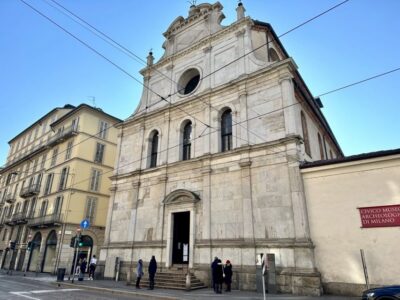
Next up is Santuario di San Bernardino Alle Ossa. It’s listed as a free stop, and the tour gives you about 15 minutes. Even if you don’t go deep into interiors, this kind of stop is valuable because Milan’s church architecture can be surprisingly expressive—and it’s often tucked into areas people overlook while chasing only the headline sites.
Then you head to Ca’ Granda, with another 15 minutes on the schedule. This is one of those places where context matters. A guide can help you see beyond the facade: what it is in the city story, how it sits in the neighborhood, and why it’s worth a pause even if you think you already “know” Milan.
If you care about architecture, these two stops are where the tour starts to feel like a real education, because the explanations help you connect buildings to the city around them.
Torre Velasca and Piazza Missori: small pauses with big contrast
The route includes Torre Velasca, described as the most central skyscraper in Milan. You’ll get about 5 minutes here. A short stop, yes—but it’s a smart one. Milan has a way of mixing old and new without apology, and this is one of the clearest ways to spot that contrast. The tower gives you a modern skyline reference point before the walk continues into older squares and churches.
Then you’ll reach Piazza Missori, where the tour focuses on the remainings of San Giovanni in Conca Church. This matters because it shows Milan isn’t frozen in one era. You’ll be looking at fragments—literal remnants—and your guide’s job is to explain why those remnants are meaningful and how they fit into the city’s longer story.
These quick stops are also practical. They break the walk into manageable segments, so you can keep energy for the longer, more absorbing moments ahead.
Santa Maria presso San Satiro: a free stop worth your attention
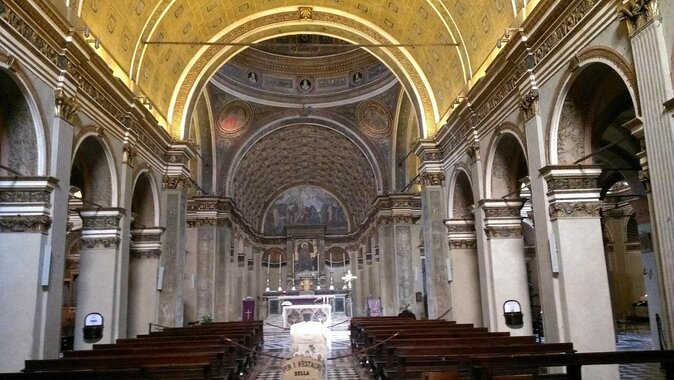
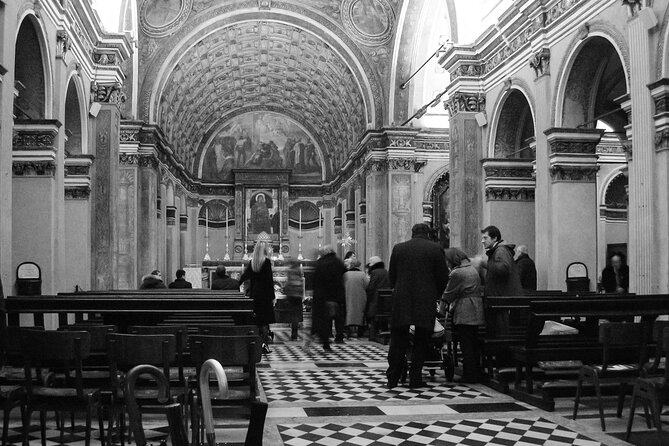
You’ll continue to Chiesa di Santa Maria presso San Satiro, with about 20 minutes and listed as free. This is a nice shift in pace because a longer pause in a church often pays off: you can slow down, take in details, and let the guide’s story land.
In cities like Milan, the most rewarding interiors are the ones you don’t automatically think to search for. That’s why a free stop here is a win: you get another highlight without adding ticket cost.
Piazza San Sepolcro: Roman roots plus the Ambrosiana library area

At Piazza San Sepolcro, you’re in a place tied to the old Roman forum of Mediolanum and the Ambrosiana library area. The tour gives you about 10 minutes.
This stop works if you like understanding Milan as a layered city. Roman Milan isn’t just a fun fact—it’s a framework for how space developed. Even if you don’t go inside any specific buildings during your walk, having the Roman reference point makes the rest of the sights make more sense.
If you’re the type who enjoys city planning and how power changes hands, this is where the dots start connecting: Roman public space, then later eras building over and around it.
Piazza Affari and Milan’s money talk
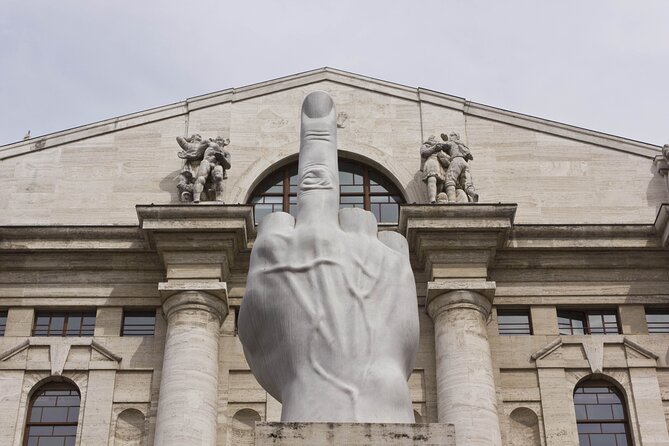
Next is Piazza Affari, the business and financial district, plus a mention of a provocative monument. You’ll spend about 10 minutes.
This is the tour’s reality check. Milan isn’t only churches and courtyards. It’s also finance, industry, and the kind of modern ambition you can read right into the city’s center. If you’ve been thinking Milan is mostly fashion and museums, this stop helps balance the day.
San Maurizio al Monastero Maggiore: the Sistine Chapel-style stop
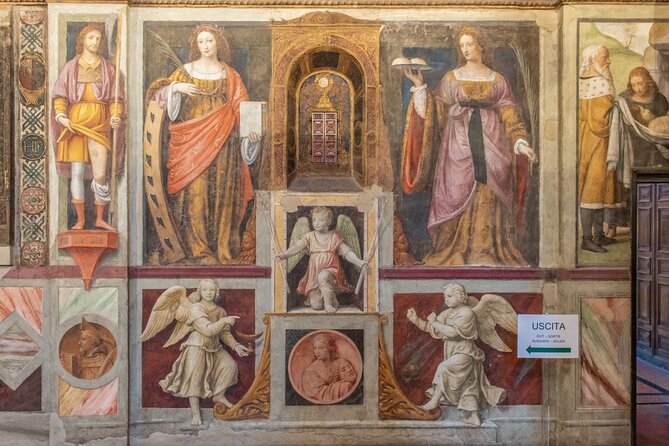
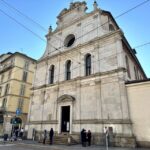
One of the most praised points is Chiesa di San Maurizio al Monastero Maggiore, described as the Sistine Chapel of Milan and listed as a free stop. You’ll get about 20 minutes here.
Even if you only have a short time, this is the church stop that tends to stick with people. The name alone suggests a visual spectacle, but the real value is that your guide can help you focus on what to look for while you’re standing there. That makes a huge difference—churches can feel like they blur together if you’re not sure what your eyes should catch first.
Also, being in a refined shopping-street area is a practical bonus. You can turn this into a perfect timing moment: enjoy the church, then keep walking afterward if you want boutiques, snacks, or just people-watching.
Piazzale Luigi Cadorna and the color of a train-station finish
The route continues to Piazzale Luigi Cadorna, described as the most colorful train station, with about 5 minutes. This is a quick, lively stop that keeps the day from feeling too solemn.
It also works as a transition. Stations are naturally busy, and that energy can help you shake off the heavier-feeling architecture stops. Plus, it gives you a sense of how Milan moves today—useful if you plan to use trains or just want to understand where transit sits in the city’s rhythm.
Ending at Castello Sforzesco: courtyards and ducal power
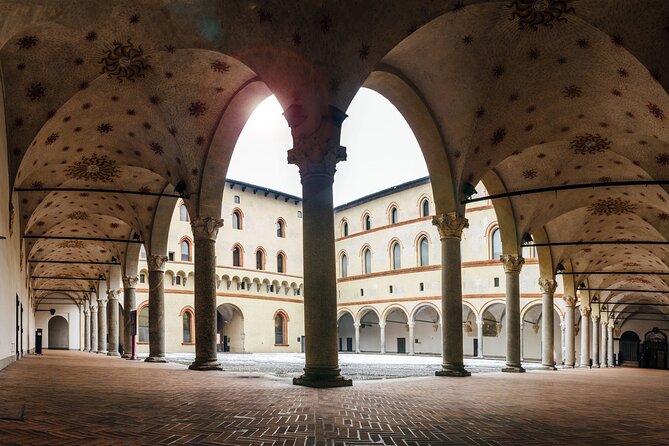
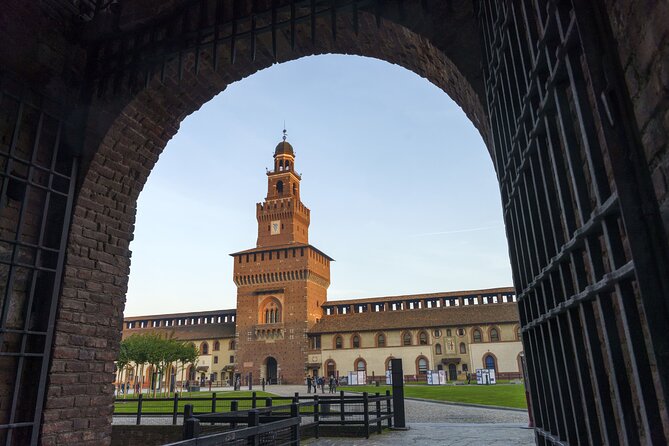
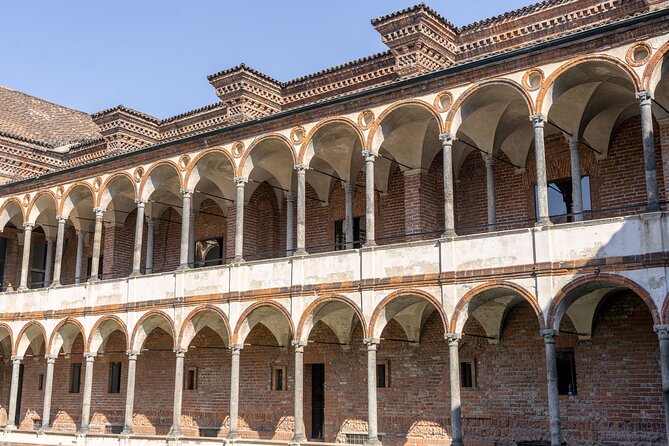
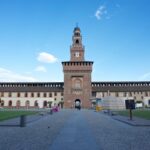
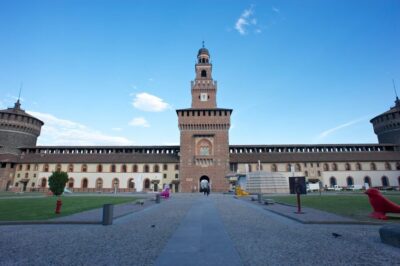
The final major stop is Castello Sforzesco, where the tour takes you around and through the three courtyards of the ducal fortress and emphasizes the Sforza family residence-past. This part runs about 20 minutes, and it’s listed as free on the tour.
This is a strong ending because it’s both visual and useful. Even if you don’t go deeper into museum collections (not stated in the tour details), the courtyards give you a feel for scale and authority. It’s one of those places where you can linger after the guide wraps up, and the building still delivers.
Getting the most out of your guide (and how to ask better questions)
What makes this experience more than a standard walk is how the guide handles questions and pacing. In feedback, guides are described as passionate and friendly, and people specifically call out how easy it is to ask questions and get detailed explanations.
So here’s how to get more out of it:
- Ask one question per stop about what you should notice in the architecture right in front of you.
- If you’re deciding about ticketed entries (since some stops are not included), ask your guide what’s worth prioritizing given your interests.
- If you want food tips, ask directly. People mention the tour including guidance toward a great bakery and excellent gelato, which is the kind of Milan advice you’ll remember long after the photos.
Also, since the guide can speak English, French, and Italian, it’s worth checking communication needs ahead of time so you’re comfortable with explanations.
Admissions and time limits: the real-world planning note
Because some stops are listed as admission not included, you should plan for two different versions of your day:
- If you love history and can spend extra time paying for entries, you can turn more stops into inside-the-structure moments.
- If you prefer to keep costs predictable and just enjoy exteriors and narrated context, you can still get a full orientation from the walk.
Either way, remember the schedule gives you limited minutes at each location. That’s why it’s a walking tour, not a slow museum day. Wear comfortable shoes, bring water if it’s warm, and use the guide’s timing to avoid getting stuck waiting for a slow group moment.
One more practical note: feedback indicates that some areas might be limited at times due to restrictions, so your guide may adjust what you can access. If that happens, focus on the value of the explanation and the exterior view points—they still build a clear picture of the city.
Who should book this tour, and who might want something else
This tour suits you if:
- You want context, not just a route of photos.
- You like a small-group format where you can ask questions.
- You’re mixing eras: Roman traces, Renaissance churches, and modern Milan’s business side.
You might want to compare alternatives if:
- You hate walking. This is a multi-stop route across the center, so comfort matters.
- You only want places where you already know you’ll go inside and stay a long time. The schedule here is structured around short, guided moments.
Should you book Milan: Highlights and Secret Treasures walking tour?
I’d book it if you want a fast, guided framework for Milan’s center. The ending at Castello Sforzesco is a good payoff, the route covers a range of eras, and the small-group attention is exactly what makes these kinds of tours worth paying for.
If you decide to book, do two things before you go: wear good walking shoes, and skim which stops are listed as admission not included so there are no surprises. Then lean into the guide. Ask what to look for at each stop and use their food tips if you want an easy win at the end of your walk.
FAQ
FAQ
Where does the tour start and end?
The tour starts at Piazza Fontana, 20122 Milano MI, Italy and ends at Castello Sforzesco, Piazza Castello, 20121 Milano MI, Italy.
How long is the walking tour?
The duration is about 3 hours.
What time does the tour start?
The tour start time shown is 10:00 am.
Is admission included for all stops?
No. Some stops are listed as admission ticket not included, while others are listed as free.
What languages does the guide speak?
The guide is available in English, with French and Italian speaking support as well.
Is the tour private?
Yes. It’s described as a private tour/activity where only your group will participate.
Do I get a mobile ticket?
Yes, the experience includes a mobile ticket.
Is the tour offered in different times of day?
Yes. You can choose between a morning or afternoon tour time.
What weather is required?
This experience requires good weather; if canceled due to poor weather, you’ll be offered another date or a full refund.
More Tour Reviews in Milan

More Milan Highlights Tours



More Milan Walking Tours
Fresh in our Milan notebook



Milan Walking Tours, compared.
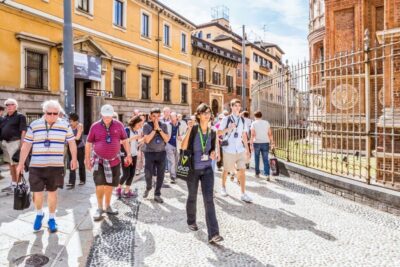 ★ 4.7Guided Walking Tour & Last Supper Visit with TicketFrom $1015,409 reviews
 ★ 4.7Guided Walking Tour with Last Supper Skip-the-LineFrom $1061,143 reviews
 ★ 4.8Guided Street Food Walking Tour with Food TastingFrom $58654 reviews
 ★ 4.7Guided Walking Tour with Duomo and the Last SupperFrom $152615 reviews
 ★ 4.5Guided Duomo, Last Supper and City Centre TourFrom $105452 reviews
 ★ 4.7Best of City Walking Tour with Last Supper TicketsFrom $112359 reviews
 ★ 5.0Milan Highlights and Hidden Gems Private Guided Walking TourFrom $246302 reviews
 ★ 4.4Milan by Night 2-Hour Walking TourFrom $52286 reviews
Browse the lists this tour appears in