
Reviewed · MILAN WALKING TOURS
Milan : Historic Private Walking Tour
Two hours, and Milan changes shape fast. This private walk is a smart mix of major sights and local context, from the modern pull of Piazza Gae Aulenti to the calmer rhythm of older churches. I especially like that the tour feels customizable, so the guide can steer toward what you care about. I also like the practical add-ons, like where to eat and drink after you’re done walking.
The one thing to consider: because this is a private stroll with flexibility, your experience depends on the guide’s focus. If you want heavy architecture and building-by-building history only, set that expectation early so you don’t end up with more bar-and-street time than you planned.
In This Review
- Key things that make this tour worth your time
- Why a 2-hour private walk fits Milan’s pace
- Piazza Gae Aulenti: the modern starting point that sets the tone
- Pinacoteca Ambrosiana (and the art focus you’ll actually use)
- Bosco Verticale: design you can read from street level
- UniCredit Tower and Porta Garibaldi: modern landmarks with a sense of place
- Piazza Gae Aulenti again: why revisiting a square is smart
- Basilica di San Simpliciano and N’Ombra de Vin: old Milan with real atmosphere
- Santa Maria Incoronata and Piazza Mercanti: history in compact form
- SUPER Milano and Gallerie d’Italia: culture stops that also guide your next day
- The guide matters: what you can expect from the people running the show
- Price and value: is $41 per person a good deal?
- Practical tips so you get the best tour day
- Should you book this Milan historic private walking tour?
- FAQ
- How long is the Milan Historic Private Walking Tour?
- Where does the tour start and end?
- Is the tour private?
- What languages are available?
- Is public transport included?
- Is the tour wheelchair accessible?
Key things that make this tour worth your time
- Private and customizable: you can shape the route to your pace and interests.
- Modern Milan in quick hits: Bosco Verticale, UniCredit Tower, and Piazza Gae Aulenti without spending half a day.
- Art stops built into the walk: guided time around Milan’s painting collections like Pinacoteca Ambrosiana and related highlights.
- Old-church contrasts: San Simpliciano and Santa Maria Incoronata add texture to the skyline views.
- Local-life stops: N’Ombra de Vin is included for the feel of Milan, not just its monuments.
- Real follow-up tips: guides share things like café timing and what to do next after the tour.
A local to yourself, a few more picks
- Da Vinci’s Last Supper Express Semi-Private Guided Tour★ 4.8 · 427 reviews
- La Scala Theatre and Museum Tour in Milan With Private Guide★ 3.5 · 384 reviews
- Milan: Sunset Navigli Food and Drinks Tour with a Local★ 4.8 · 359 reviews
Why a 2-hour private walk fits Milan’s pace
Milan is one of those cities where you can burn a full day and still miss the point. This tour’s sweet spot is time: 2 hours is long enough to connect the big visual dots, and short enough that you don’t lose your energy to transit wrangling or museum lines. You get a guide to do the linking for you—what to notice, what matters, and what to skip next.
Also, private matters here. You’re not stuck with a crowd rhythm. If you want photos at Bosco Verticale, you can pause. If you’d rather spend extra minutes at a church facade, the guide can usually adjust. That flexibility is a real value add in a city where the “best” views often require the right moment of street-level pacing.
Piazza Gae Aulenti: the modern starting point that sets the tone
You start at Piazza Gae Aulenti, 8, and that choice tells you what kind of Milan you’re about to see. This area is all about the city’s newer face—clean lines, contemporary architecture, and the sense that Milan moves fast even when you’re just standing still watching people pass.
From this point, the tour naturally “tilts” from modern design toward history and back again. That back-and-forth is useful. Milan doesn’t separate eras neatly—you feel it in how the streets layer past and present a few blocks at a time. Starting at Gae Aulenti makes the rest of the walk click because you’re mentally calibrated for both city styles.
Pinacoteca Ambrosiana (and the art focus you’ll actually use)
The itinerary puts Pinacoteca Ambrosiana on the early list, with guided time. Even if you’re not a die-hard art person, a guided stop like this helps because the guide can point out what to look for and how the collection fits Milan’s cultural identity.
One note: the tour description also references Pinacoteca di Brera as a starting idea for the day’s art focus. In practice, either way, you’re getting a guide-led entry into Milan’s painting world rather than wandering into a museum and hoping it all lands. The value isn’t just what you see—it’s how you see it.
If you like your museum time structured (short explanations, clear wayfinding, and a sense of why the works matter), you’ll appreciate this art integration. If you prefer a long sit-down museum experience, you might find the art stops feel like a highlight reel rather than a full gallery marathon.
Keep walking the Milan backstreets
- Milan: Guided Walking Tour & Last Supper Visit with Ticket
★ 4.7 · 5,409 reviews - Milan: Guided Walking Tour with Last Supper Skip-the-Line
★ 4.7 · 1,143 reviews - Milan: Guided Street Food Walking Tour with Food Tasting
★ 4.8 · 654 reviews - Milan: Guided Walking Tour with Duomo and the Last Supper
★ 4.7 · 615 reviews - Milan: Guided Duomo, Last Supper and City Centre Tour
★ 4.5 · 452 reviews
Bosco Verticale: design you can read from street level
Bosco Verticale is one of those stops that looks like a concept sketch made real. You’ll be guided through the idea behind the towers—residential buildings dressed in terraces of trees, described as having more than 900 trees. This is Milan’s version of “nature meets engineering,” and you don’t need technical vocabulary to get it. At street level, the point is visible: the city is trying to soften itself and function better through design.
A guide helps you avoid the common trap of treating Bosco Verticale like a photo wall only. You can ask what you should notice—how the terraces repeat, how the building edges shape views, and why this became a symbol for sustainability-minded living.
UniCredit Tower and Porta Garibaldi: modern landmarks with a sense of place
From Bosco Verticale, the walk heads toward UniCredit Tower, and then through the Porta Garibaldi area. The guide’s job here is to make these landmarks feel more than skyline wallpaper.
UniCredit Tower represents Milan’s corporate-modern identity, while Porta Garibaldi helps you understand the neighborhood’s role as a bridge between transit life and city-scale architecture. You’ll also move through Piazza Gae Aulenti again as part of the route logic, which is handy: repeating a key square gives you a second chance to notice details you missed the first time.
If you’re the type who enjoys architecture without turning it into a lecture, this portion hits the right balance. It’s structured enough to guide your attention, but not so technical that you lose the walking energy.
Piazza Gae Aulenti again: why revisiting a square is smart
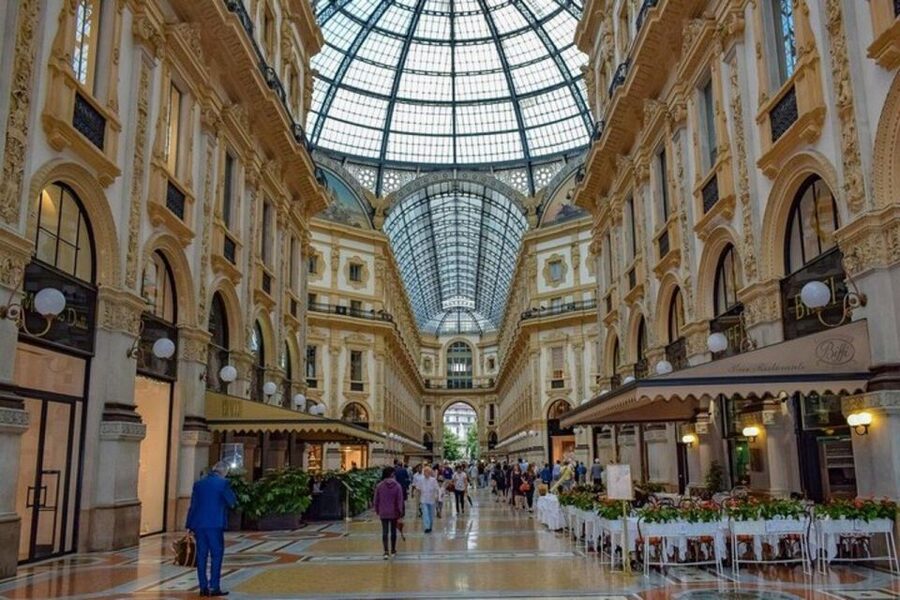
It might sound odd to see a place listed more than once, but this kind of loop makes sense for a 2-hour format. By the time you return to Piazza Gae Aulenti, you’ve already built context with the modern skyline stops. Now you can read the square differently—more like a crossroads of styles than just a scenic starting point.
This is also where you get practical city-feel: people moving through, the rhythm of cafes nearby (even if the tour doesn’t include food), and the sense of where the city breathes in the daytime.
Basilica di San Simpliciano and N’Ombra de Vin: old Milan with real atmosphere
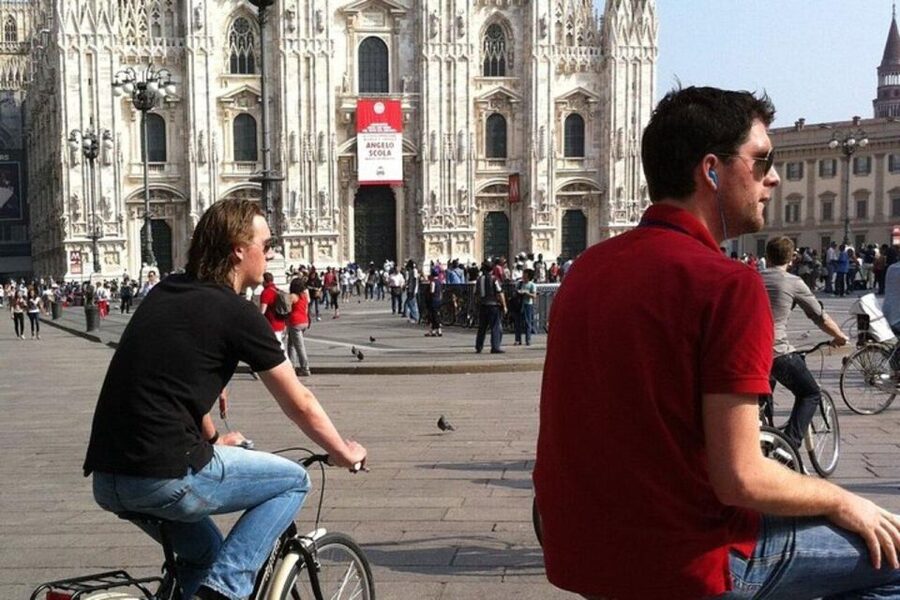
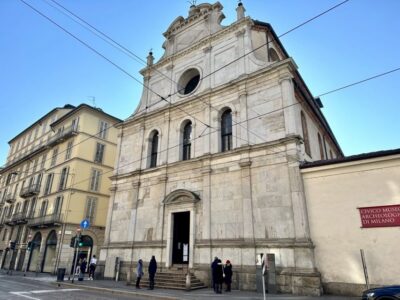
Then the tour slows down in spirit. Basilica di San Simpliciano adds the classic Milan layer: older stone, older texture, and a different pace at street level. Even if churches aren’t your main interest, a stop like this matters because it anchors what you’re seeing in time. Milan’s modern architecture feels less random when you’ve touched the older foundations.
Right after that, you’ll be guided toward N’Ombra de Vin, included for the atmosphere of local life. This is a good reminder that Milan isn’t only museums and views. It’s also meeting points, everyday routines, and evening culture. The tour doesn’t promise food or drinks here, but the stop gives you a sense of where locals like to hang out—useful for planning the rest of your trip.
Santa Maria Incoronata and Piazza Mercanti: history in compact form
Chiesa di Santa Maria Incoronata shows up as another key anchor, with guided attention. The tour description highlights the stop as an architectural moment, and it fits the tour’s theme perfectly: Milan’s past isn’t confined to one district. It shows up in pockets, and this church is one of those places where street-level detail can surprise you.
Nearby, you’ll reach Piazza Mercanti. This square is ideal for short guided time because it’s the kind of place where buildings around the edge tell you the story. You learn what this space was for and why it still matters, even if you’re just passing through.
You may even circle back near Santa Maria Incoronata later in the route. That’s not wasted time—it’s often how a 2-hour walk manages to hit both art and architecture without feeling rushed.
SUPER Milano and Gallerie d’Italia: culture stops that also guide your next day
Toward the later part of the route, you’ll encounter cultural stops like SUPER Milano and then Gallerie d’Italia. These are the kinds of places that work best when you go in with a plan for what to notice. A guide can help you connect the dots between the art, the design choices in Milan, and what those institutions represent in the city’s modern cultural scene.
If you’re trying to decide what to do after the tour, these stops are especially helpful. The guide is set up to give you advice about other attractions, and you’ll already have landmarks on your mental map. That means your planning gets faster, not harder.
The guide matters: what you can expect from the people running the show
This tour lives and dies by the guide, because it’s private and customizable. In the best cases, you get clear, organized storytelling and the ability to match your interests. Guides such as Davide and Daniela have delivered explanations that make landmarks feel connected, not like a checklist. They also adapt the route based on what you’ve already seen and what you want next.
One standout theme from guides’ style is follow-up advice. For example, a guide who lives in Milan shared very specific café timing rules: espresso at Armani, and the idea that cappuccino is mainly a breakfast drink, not something locals expect later in the day. That kind of tip is gold because it changes how you experience the city after the tour.
That said, not every run is guaranteed to be equally architecture-heavy. In one reported case, the guide’s approach felt more like a casual walk than a strict historic-and-architectural lecture. The fix is simple: when you start, tell the guide what you want. If you want more building history, say so right away and ask for that focus.
Price and value: is $41 per person a good deal?
At $41 per person for a 2-hour private walking tour, this can be strong value—especially in a city where a guide can easily cost much more once you add time and transportation. Here, the price also ties to more than just walking. You’re getting:
- Guided stops at major landmarks
- Help from the team to book tickets for desired visits
- Walking plus public transport included depending on the option you choose
What’s not included is also clear: no drink or food. So if you want an aperitivo or lunch as part of the experience, you’ll need to add that on your own.
If you’re traveling with a friend or two, the “per-person” price can feel even better because the private factor doesn’t dilute into a group tour feel. If you’re the only one in your party, it can still be worth it when you value guided orientation—getting the city to make sense fast.
Practical tips so you get the best tour day
This is a walking tour, and Milan rewards good shoes. Aim for comfortable footwear, and plan to move at a steady pace. You’ll also likely use public transport at some points, so be ready for quick walking between stops.
Since the tour is wheelchair accessible, it’s designed to accommodate mobility needs, but it still helps to ask your guide early about pacing and where the route may involve steps or tighter areas (the tour is accessible, but street layouts can vary).
Bring your curiosity. The route mixes art, modern architecture, and older churches. If you treat it like a checklist, you’ll rush the moments that make it meaningful. If you treat it like a guided conversation while you walk, you’ll come away with a better city map—and better choices for your next day.
Should you book this Milan historic private walking tour?
Book it if you want a fast, guide-led way to connect Milan’s big visual story—modern towers, designed nature, art stops, and old churches—within two hours. It’s especially good if you like the idea of personalization and you want the guide to help with what to do next, not just what to look at.
Skip or adjust your expectations if your top priority is a strict, deep architecture seminar and nothing else. This tour can be adaptable, so tell the guide what you care about. When you match the guide’s focus to your interests, it turns into a very efficient use of time.
FAQ
How long is the Milan Historic Private Walking Tour?
It lasts 2 hours.
Where does the tour start and end?
It starts and ends at Piazza Gae Aulenti, 8.
Is the tour private?
Yes. It’s private and exclusive, so there won’t be anyone else in your group.
What languages are available?
The live guide is available in English, French, Italian, and Spanish.
Is public transport included?
The tour includes a walking tour and public transport, except if you select an option that changes that.
Is the tour wheelchair accessible?
Yes, the tour is wheelchair accessible.
More Tour Reviews in Milan

More Milan Walking Tours
More Private Milan Tours


Fresh in our Milan notebook

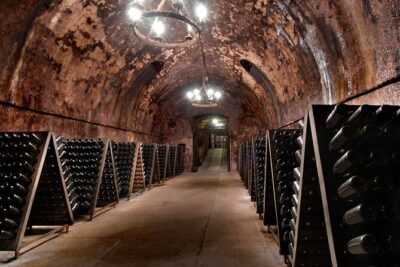

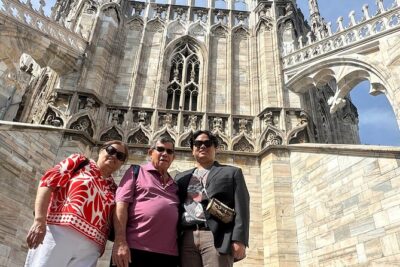

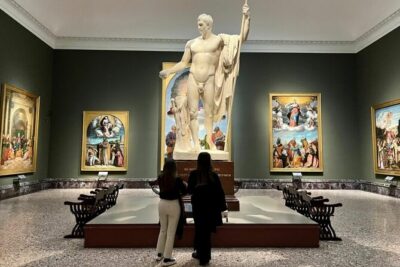
Milan Walking Tours, compared.
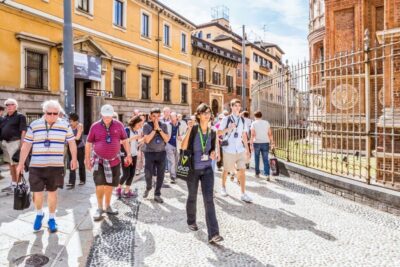 ★ 4.7Guided Walking Tour & Last Supper Visit with TicketFrom $1015,409 reviews
 ★ 4.7Guided Walking Tour with Last Supper Skip-the-LineFrom $1061,143 reviews
 ★ 4.8Guided Street Food Walking Tour with Food TastingFrom $58654 reviews
 ★ 4.7Guided Walking Tour with Duomo and the Last SupperFrom $152615 reviews
 ★ 4.5Guided Duomo, Last Supper and City Centre TourFrom $105452 reviews
 ★ 4.7Best of City Walking Tour with Last Supper TicketsFrom $112359 reviews
 ★ 5.0Milan Highlights and Hidden Gems Private Guided Walking TourFrom $246302 reviews
 ★ 4.4Milan by Night 2-Hour Walking TourFrom $52286 reviews
Browse the lists this tour appears in