
Reviewed · MILAN WALKING TOURS
Milan Walking Tour: Explore Top Sights & Hidden Gems
Milan hits fast when you walk. This Milan walking tour strings together the Duomo area, the Galleria Vittorio Emanuele II, Brera, and Castello Sforzesco into one compact route with outside viewing and local context built into short stops.
I like that it stays focused: you get expert guidance without paying for a bunch of attraction entry fees, and the pacing is made for a real walk (2 hours, not a half-day slog). I also like the small cap of 15 travelers, which usually means you can actually hear explanations while you’re moving.
One possible drawback: the guide experience can be the make-or-break factor. Even though English is offered, some past groups reported language clarity and routing/timing differences, so you’ll want to confirm the plan with your guide as you start.
In This Review
- Key Highlights You’ll Actually Feel on the Walk
- Why This 2-Hour Milan Walking Tour Works
- Duomo Di Milano: A 6-Century Facade You Can Read From Street Level
- Galleria Vittorio Emanuele II: The Elegant Shortcut Between Two Major Squares
- Bottega Rossa: Milanese Food Stories Without a Restaurant Detour
- Brera District Walk: Art Galleries and Side Streets With No Ticket Required
- Cavalli e Nastri Vintage Stop: Milan Style, Up Close
- Castello Sforzesco: Fortress Views and Museum Choices
- Price and Logistics: What $39 Really Buys You
- Guide Quality and English: The Variable You Should Plan For
- When the Route Doesn’t Match Perfectly: How to Handle It
- Who This Tour Suits Best (And Who Should Skip)
- Should You Book This Milan Walking Tour?
- FAQ
- How long is the Milan walking tour?
- Is the tour offered in English?
- Is admission to attractions included?
- Where do you meet, and where does the tour end?
- What group size is the tour limited to?
- Can I cancel for a refund?
Key Highlights You’ll Actually Feel on the Walk

- Duomo exterior views with a quick, guided look at the façade’s famous scale (thousands of statues and spires)
- Galleria Vittorio Emanuele II as a short but meaningful switch between Piazza del Duomo and Piazza della Scala
- Bottega Rossa stop without entering—you get food-food context while the tour keeps moving
- Brera district time in a neighborhood built around galleries, shops, and wandering
- Vintage fashion detour at Cavalli e Nastri for a taste of Milan style beyond museums
- Castello Sforzesco area mainly for fortress spotting, with museum entry left optional
Keep walking the Milan backstreets
- Milan: Guided Walking Tour & Last Supper Visit with Ticket★ 4.7 · 5,409 reviews
- Milan: Guided Walking Tour with Last Supper Skip-the-Line★ 4.7 · 1,143 reviews
- Milan: Guided Street Food Walking Tour with Food Tasting★ 4.8 · 654 reviews
Why This 2-Hour Milan Walking Tour Works

This is the kind of tour I recommend when you want to see “the big map names” in Milan but don’t want to spend the day waiting in lines or hunting for entrances.
The route is built around walkable, central landmarks: you start near Montenapoleone (the meeting point listed as Montenapoleone M320121), then spend short stretches outside to connect key squares and neighborhoods. It’s also a practical format if your time is tight—you can stitch this onto a longer day of shopping, museums, or aperitivo.
Value matters here. The price is $39 per person for a guided 2-hour walk, and the listed stops are mostly free from an entry-fee standpoint. In other words, you’re paying for guidance and pacing, not for a stack of paid tickets. You still shouldn’t assume museum tickets are included—those are explicitly not part of the deal.
Duomo Di Milano: A 6-Century Facade You Can Read From Street Level
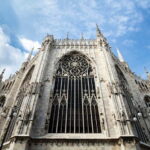
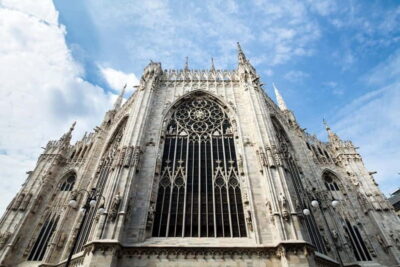
Your first stop is the Duomo Di Milano, viewed from the outside. This is one of those places where doing nothing but standing there is still worth it—because the façade is basically a sculpture book written in stone.
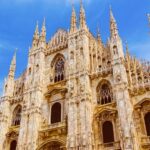
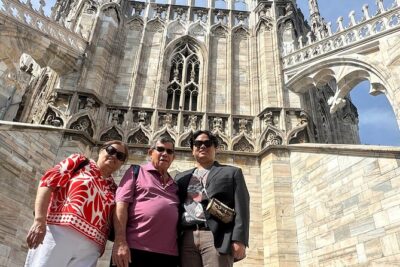
What you’ll focus on is the sheer scale: the façade was built over six centuries, with more than 3,000 statues and 135 spires. A good guide helps you avoid the classic mistake of only noticing the biggest pieces, then walking away thinking you’ve seen it all.
What I like about this stop: you get the wow-factor without the “okay, now pay and wait” stage. It’s a fast way to orient yourself, too. The Duomo anchors so much of central Milan that the rest of your day makes more sense after you’ve seen it.
What to watch: outside viewing means you won’t get the inside experience. If you want cathedral interior details, rooftops, or guided cathedral access, you’d need to plan that separately, because this walk is built around street-level time.
Galleria Vittorio Emanuele II: The Elegant Shortcut Between Two Major Squares
From the Duomo area you move into the Galleria Vittorio Emanuele II. This is a covered arcade that links Piazza del Duomo with Piazza della Scala. Think of it as Milan’s “window into old-school city life”—historic shops, cafés, and that classic glass-and-stone atmosphere.
This isn’t just photo time. A short guided stop here is useful because it shows you how Milan’s “big sights” connect with day-to-day commerce. You’ll get the sense of why the Galleria is still a social and shopping corridor, not just a relic.
Potential drawback to keep in mind: because the tour time is tight, you won’t linger for long browsing breaks. If shopping is your goal, you’ll likely want to come back on your own after the tour so you can slow down.
The Milan highlights, a wider sweep
- Milan’s Must See: Half-Day Tour of Last Supper, Duomo & La Scala
★ 4.0 · 4,193 reviews - From Milan: St. Moritz and Panoramic Bernina Express Tour
★ 4.6 · 1,723 reviews - Best of Milan Experience Including Da Vinci’s The Last Supper and Milan Duomo
★ 4.5 · 1,516 reviews - Milan: Hidden Gems Guided Bike Tour
★ 4.8 · 1,334 reviews - The Secrets to Learn Fresh Pasta and Tiramisù in a Glam Home
★ 5.0 · 1,182 reviews
Bottega Rossa: Milanese Food Stories Without a Restaurant Detour
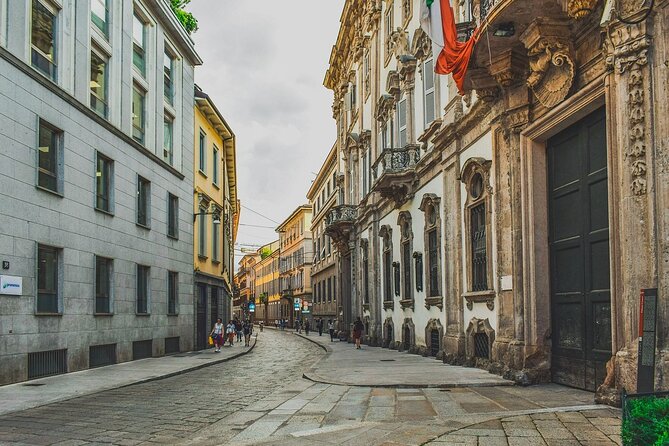
Next comes Bottega Rossa. Here’s the twist: you get an explanation of traditional Milanese food through a historic restaurant concept, but you continue the tour without entering.
This is a smart format for travelers who get annoyed when tours turn into “walk, sit, wait, then maybe order.” You still get context—what Milanese food means, what to look for, and how local dishes fit into the city’s culture—while keeping the route moving.
Why this stop matters: if you’re planning to eat well in Milan later, this kind of quick food lens helps you decode menus and make better choices. Even if you don’t remember every detail, you’ll remember the flavor direction: what Milan is trying to serve you when it calls something traditional.
Watch your expectations: it’s not a tasting. It’s a short interpretive stop. If you want a full food tour with sampling, you’ll need a different experience.
Brera District Walk: Art Galleries and Side Streets With No Ticket Required
Then you shift into the Brera district. This is where Milan feels less like a postcard and more like a neighborhood: art galleries, small shops, and the kind of streets that reward wandering.
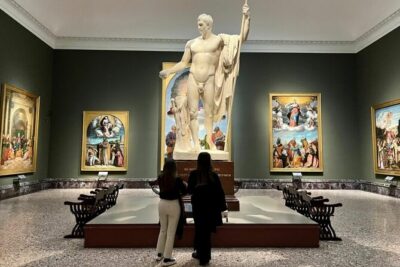
The Pinacoteca di Brera is part of this area, and it’s easy to see why. Even if you’re not entering, the district’s layout makes it feel like art is embedded into daily life. You’ll get time to “place” Brera: not just as a stop on a map, but as a working cultural zone.
What you’ll probably enjoy most: this is often the section of a walking tour where you slow down naturally. You’re not stuck staring at one monument; you’re moving through a lived-in area with visual variety.
What to consider: Brera is popular, so the vibe can be lively. That’s good for atmosphere, but it can also mean you’ll want comfortable shoes and a little patience if foot traffic is heavier.
Cavalli e Nastri Vintage Stop: Milan Style, Up Close
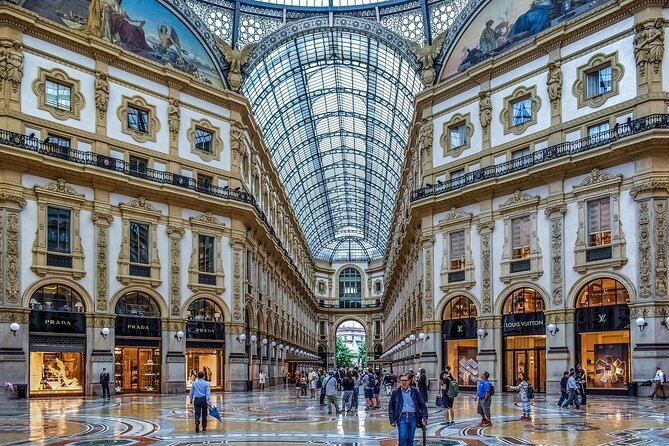
Cavalli e Nastri is a vintage clothing store and a place for second-hand fashion. In a tour that’s heavy on architecture and neighborhoods, this is a good change of pace.
This stop helps you understand Milan beyond fashion ads and showroom windows. It gives you a chance to see how style lives in the city’s retail culture—especially through resale and vintage pieces that reflect real taste, not just trends.
A practical tip: don’t treat this as a guarantee of shopping time. The stop is short, and the goal is observation and story, not a full shopping session. If you’re serious about vintage, you’ll probably want a second visit when you have more time.
Castello Sforzesco: Fortress Views and Museum Choices
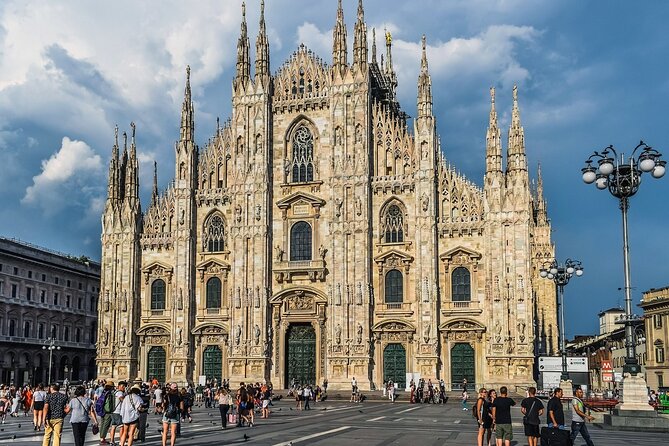
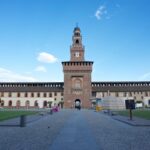
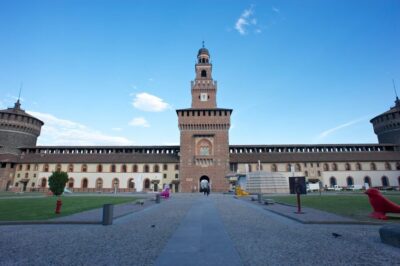
The last landmark zone on the route is Castello Sforzesco. This is a former fortress that houses several museums, but in a walking tour format like this, the emphasis is typically on seeing it from the outside and understanding why it matters.
You might notice the difference between “tour spotting” and “museum day” right away. A walking tour is great for getting your bearings and capturing key angles. A museum ticket is what turns the fortress into a full history and art experience.
One important consideration based on past experiences: some groups reported not getting a long, detailed look at the castle and instead seeing it briefly from a distance. That doesn’t make the stop worthless—it still sets the scene—but it’s worth setting your expectations: you’re here for the fortress context more than museum depth.
Price and Logistics: What $39 Really Buys You
Let’s talk value, because Milan can get pricey fast.
For $39 per person, you’re paying for a 2-hour guided walk with a professional guide. Included benefits are straightforward: the tour itself and the guide. The sights listed are marked free for the tour’s purpose, and the schedule focuses on street-level and observational stops.
But there’s a line you should know: entry tickets are not included. That means if you decide you want to go inside a museum building, that cost is on you. This is totally normal for city walking tours, but it changes the “real total cost” if you get tempted while you’re there.
Logistics are mostly easy:
- You’ll use a mobile ticket.
- The maximum group size is 15 travelers, which helps keep walking smooth.
- It’s offered in English.
- It’s near public transportation, so you’re not stuck with a complicated arrival plan.
- Service animals are allowed.
Timing is another part of value. The tour is listed as 2 hours, and each stop is roughly 20 minutes. Still, real life happens—street traffic, group questions, and guide pacing can shift things. If you have a strict dinner reservation, plan some wiggle room.
Guide Quality and English: The Variable You Should Plan For
Here’s the honest part. In Milan, a walking tour lives or dies by the guide’s clarity and confidence. And while English is offered, past experiences show that comprehension can vary.
In one described instance, the guide named Matteo was criticized for professional presentation (lack of an official badge or lanyard) and for English that was difficult to follow. Another issue raised was routing and timing not matching the detailed route as expected. There were also notes about the tour feeling longer than the advertised 2 hours in at least one situation, and that the end of the tour felt less guided than expected.
There’s also a helpful counterpoint: the operator response, signed by Manuel, acknowledged concerns about the guide experience and language and said they would address it directly with Matteo. That suggests feedback gets taken seriously, even if you still want to protect your own experience.
What you can do right now: start strong. When the tour begins, ask the guide to confirm the rough order and the ending point. If you can’t hear well, move closer. If you’re relying on the tour for context and you have language concerns, don’t wait until the middle to speak up.
When the Route Doesn’t Match Perfectly: How to Handle It
I can’t pretend every tour will run like a storyboard. Some people reported a reschedule that changed the itinerary. Others reported route differences and shorter time at certain points like Castello Sforzesco.
So use a simple strategy:
- Treat the list of stops as a guide, not a contract.
- Focus on what you can see and learn in the moment.
- Keep track of where you are and where the group is heading next.
Also, because the tour is designed to end back at the meeting point, ask the guide for the final regrouping location early. That way, you avoid the common last-10-minutes confusion that can happen when groups are tired and streets look similar.
Who This Tour Suits Best (And Who Should Skip)
This walking tour is a good fit if you:
- want a first pass through central Milan landmarks
- prefer guided orientation without paying museum entry fees
- like neighborhood texture, especially in Brera
- are okay with short stops and moving at a walking pace
It may be less ideal if you:
- need deep museum-level detail for every stop
- hate ambiguity around timing
- depend on highly fluent English narration to follow every point
- are expecting a restaurant meal or a tasting
If you’re doing Milan for the first time, this tour can work as your “spine.” After that, you can return to whichever area you want to linger in.
Should You Book This Milan Walking Tour?
I’d book it if you want an efficient, walk-first introduction to Milan, especially for the Duomo exterior, the Galleria, and the neighborhood feel of Brera. The price feels reasonable for a guided 2-hour route where most viewing is outside and entry-ticket costs aren’t the main story.
I’d think twice if you are extremely sensitive to guide performance and language clarity, or if you have zero flexibility with your schedule. Since past experiences show the English experience and routing consistency can vary, you’ll get the best outcome by going in with realistic expectations: this is a street-level orientation tour, not a precision-scripted performance.
If you decide to go, do one smart thing: arrive early, stand close to the guide, and ask what the plan is for the ending point. You’ll turn a potentially bumpy variable into a smooth experience.
FAQ
How long is the Milan walking tour?
It runs for about 2 hours.
Is the tour offered in English?
Yes, it is offered in English.
Is admission to attractions included?
Entry tickets to attractions are not included. That said, the listed stops are set up so you can enjoy them without paying typical entry fees.
Where do you meet, and where does the tour end?
You meet at Montenapoleone M320121 Milan, Metropolitan City of Milan, Italy, and the tour ends back at the meeting point.
What group size is the tour limited to?
The tour has a maximum of 15 travelers.
Can I cancel for a refund?
Yes. You can cancel for a full refund up to 24 hours in advance of the experience start time.
More Tour Reviews in Milan

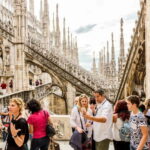
More Milan Highlights Tours


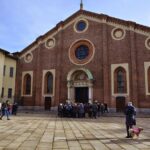



More Milan Walking Tours
Fresh in our Milan notebook



Milan Walking Tours, compared.
 ★ 4.7Guided Walking Tour & Last Supper Visit with TicketFrom $1015,409 reviews
 ★ 4.7Guided Walking Tour with Last Supper Skip-the-LineFrom $1061,143 reviews
 ★ 4.8Guided Street Food Walking Tour with Food TastingFrom $58654 reviews
 ★ 4.7Guided Walking Tour with Duomo and the Last SupperFrom $152615 reviews
 ★ 4.5Guided Duomo, Last Supper and City Centre TourFrom $105452 reviews
 ★ 4.7Best of City Walking Tour with Last Supper TicketsFrom $112359 reviews
 ★ 5.0Milan Highlights and Hidden Gems Private Guided Walking TourFrom $246302 reviews
 ★ 4.4Milan by Night 2-Hour Walking TourFrom $52286 reviews
Browse the lists this tour appears in