
Reviewed · VENICE DAY TRIPS
Private Tour from Milan: Venice Full Day Trip by Train
Venice starts to feel doable when you travel there by train. This private Milan-to-Venice full day pairs 2nd-class rail with a guided walk that hits major waterfront landmarks plus quieter local corners. I like that the route is paced around real sights (not just photo stops), and I also like that it’s set up as a private experience with your own guide and group. One thing to consider: Venice is Venice—expect crowds around the big hubs, and on humid days you may notice the lagoon smell.
You leave early from Milano Centrale (a 7:30am start), then spend your day moving from water to bridges to squares and back again. The itinerary is built like a guided map through Venice’s most famous “nodes,” from the Grand Canal to Rialto to St. Mark’s, with a few stops that feel more like local life than postcard Venice.
In This Review
- Key highlights worth planning around
- Leaving Milan at 7:30 and Coming Home the Same Day
- How the Guided Walk Actually Makes Venice Feel Less Chaotic
- Stop 1: Canal Grande and the St. Lucy Area (Start With the Big Water)
- Stop 2: Chiesa di San Giorgio dei Greci and Its Leaning Bell Tower
- Stop 3: Strada Nova, Venice’s Wider Street Trick
- Stop 4: Ponte di Rialto, the City’s Oldest Canal Crossing
- Stop 5: Piazza San Marco and St. Mark’s Basilica Mosaics
- Stop 6: Ponte dei Sospiri and the Bridge of Sighs Story
- Stop 7: Chiesa di San Zaccaria, a Church With a Built Timeline
- Stop 8: Ponte dell’Accademia and Crossing the Grand Canal Again
- Stop 9: Squero di San Trovaso, a Gondola Workshop You Can Peek Into
- Stop 10: Campo San Pantalon and the Banksy Mural Stop
- Stop 11: Campo Santa Margherita, Student Energy Without the Museum Feel
- Stop 12: Piazzale Roma, Where Venice Meets the Road World
- Price and Value: What $391.34 Buys You (and What It Doesn’t)
- So, Is It Worth Booking? My Honest Take
- FAQ
- FAQ
- How long is the Venice day trip from Milan?
- Where do we meet in Milan?
- Is this tour private or shared?
- Are admission tickets included for the sights?
- What about food—does the tour include lunch?
- When will the train tickets be purchased?
Key highlights worth planning around
- A private guide-driven route through Venice’s top sights, with room for questions and small course changes
- Grand Canal focus right at the start, when the light and the crowds often feel more manageable
- A mix of icons and textures: Rialto, Bridge of Sighs, church facades, and real shipyard machinery at a squero
- Street-level Venice with Strada Nova’s wider 19th-century pedestrian plan and neighborhood squares like Campo Santa Margherita
- Local-business friendly guidance (including shopping stops guided by people like Sneh and Elshad)
- Back-to-Milan timing built in so you’re not stuck figuring out trains while tired
A local to yourself, a few more picks
- Da Vinci’s Last Supper Express Semi-Private Guided Tour★ 4.8 · 427 reviews
- La Scala Theatre and Museum Tour in Milan With Private Guide★ 3.5 · 384 reviews
- Milan: Sunset Navigli Food and Drinks Tour with a Local★ 4.8 · 359 reviews
Leaving Milan at 7:30 and Coming Home the Same Day
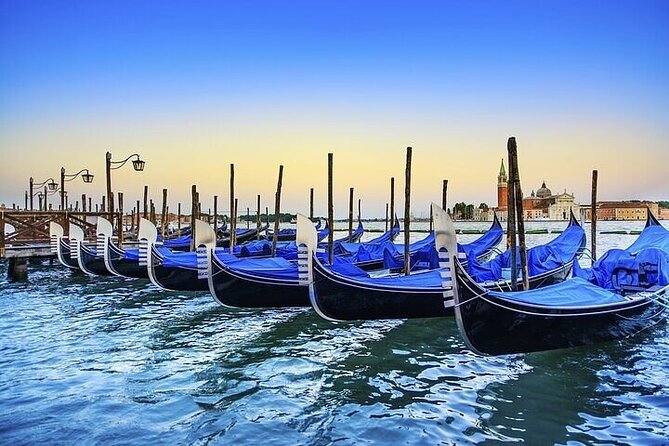
This trip runs about 11 hours, and the schedule is built around a round-trip train plan. You meet at Milano Centrale (Piazza Duca d’Aosta, 1, 20124 Milano) at 7:30am, and the return train back to Milan is part of the total experience.
The practical win is that you’re not wrestling with parking or ferry schedules. The rail ride is only about 2.5 hours each way, so you get a real Venice day without turning it into a “wake up, rush, suffer, sleep” marathon.
One more logistics detail that matters: your train ticket is handled for you. The provider says it will be purchased 48 hours in advance, and you’ll get train details the day before via email and WhatsApp. That’s one less stress point, especially if you’ve ever shown up at a station with the wrong paper.
How the Guided Walk Actually Makes Venice Feel Less Chaotic
Venice can feel like a maze—even for people who love walking. What makes this tour work is the way it stitches together Venice’s “must-sees” into a route that keeps you moving efficiently from bridge to bridge and canal edge to canal edge.
Guides highlighted in past experiences (like Sneh, Albi, Elshad, Mehmet, Dothan, and Dogan) are also praised for steering guests toward better pacing and less frustration. One review praised the use of back streets to avoid the worst crowds, which is exactly the kind of small route choice that turns a stressful day into a fun one.
That said, don’t expect crowds to vanish. Even with smart routing, you’ll still be near famous spaces—so wear comfy shoes, keep water handy, and don’t plan to measure every photo opportunity to the second.
Stop 1: Canal Grande and the St. Lucy Area (Start With the Big Water)
The day kicks off with a 2.5-hour train ride, then you start Venice with the Canal Grande. It’s the city’s main waterway—about 4 kilometers long—and it divides Venice into two halves. The tour’s phrasing about the Venetian-Gothic style also matters, because you’re seeing the canal the way Venice historically displayed power and wealth: through architecture facing the water.
You also get a chance to see the Sanctuary of St. Lucy (St. Luc(y)). This is a quieter anchor point compared with the nonstop show of the canal itself.
Why I like this start: if you begin with the Grand Canal, you get oriented fast. Your brain starts mapping Venice as a sequence of waterways and bridges, not random streets. A possible drawback is that the Grand Canal zone can be busy, and on steamy days the waterfront air can carry lagoon smells. If that’s a sensory issue for you, plan for it—Venice isn’t a closed museum.
A day on the Venice canals, more of them
- From Milan: Day Trip to Venice with Guided City Tour
★ 4.4 · 614 reviews - Venice Day Trip from Milan with Guided City Tour
★ 4.0 · 383 reviews - From Milan: Venice Full-Day Guided Tour With Boat Ride
★ 4.5 · 322 reviews - From Milan: Venice and Verona Full-Day Tour by Train
★ 4.1 · 217 reviews - From Milan: Venice City Highlights Guided Day Trip
★ 4.5 · 139 reviews
Stop 2: Chiesa di San Giorgio dei Greci and Its Leaning Bell Tower
Next up is Chiesa di San Giorgio dei Greci, tied to Venice’s Greek community—especially sailors and merchants. The standout is the bell tower often called the leaning clocktower, designed by Simone Sorella and completed in 1592.
There’s also an interesting story element here. The tower’s tilt is said to have started from early in construction, which gives this stop more than aesthetic value. You’re not just looking at an old building—you’re looking at a structure with a built-in quirk that locals keep talking about.
Practical takeaway: this stop is short (about 30 minutes), so it works well as a palate cleanser between heavier, more crowded sights. You’ll feel like you’re stepping into a different Venice chapter.
Stop 3: Strada Nova, Venice’s Wider Street Trick
Then you step into Strada Nova, described as Venice’s widest street. What makes it fascinating is the logic behind it: in the 19th century, it was created for faster pedestrian access between Rialto and the railway station, demolishing buildings that would otherwise force you into a longer crawl through narrow lanes.
This stop is a reminder that Venice isn’t just medieval postcard scenery. People have repeatedly reshaped circulation when they needed to move faster—especially as trains became part of daily life.
The drawback? Strada Nova can still feel like a corridor, not a destination. So give it its 30 minutes, then let your guide move you on before you lose interest.
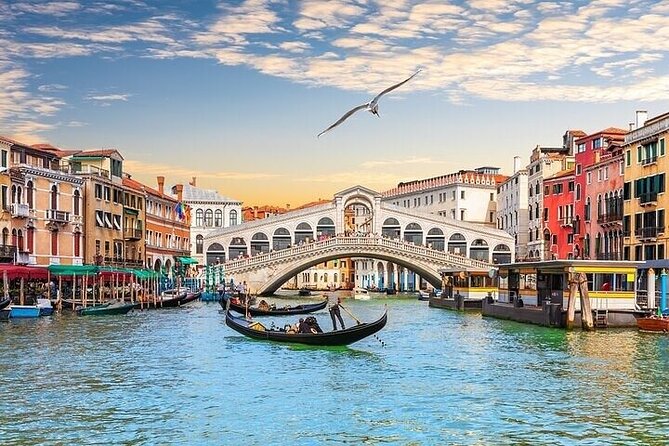
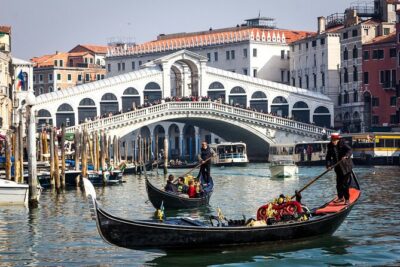
Stop 4: Ponte di Rialto, the City’s Oldest Canal Crossing
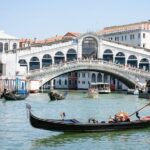
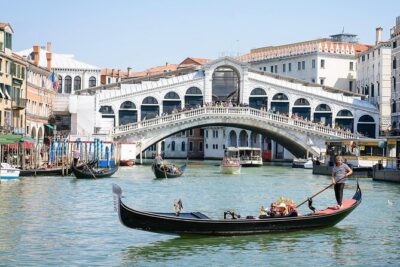
From there you reach Ponte di Rialto, the oldest of the four bridges spanning the Grand Canal. Historically, it was the economic hub of Venice, which explains why this spot has always been more than a romantic photo point.
I like that the tour keeps it as a focused stop (about 30 minutes). It’s enough time to see the bridge’s architecture and understand why it mattered. It’s also long enough to get a few angles without turning your day into bridge-gridlock.
If you’re sensitive to crowds, this is the moment to remember: Venice’s icons draw people. Consider stepping slightly aside from the densest spots while you take your photos.
Stop 5: Piazza San Marco and St. Mark’s Basilica Mosaics
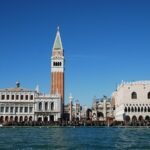
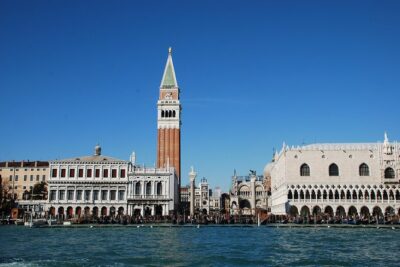
Now you hit the famous center: Piazza San Marco—often treated like Venice’s front room. Napoleon famously called it the most beautiful hall in Europe, and even if you ignore the quote, the square still delivers a big-sky sense of scale.
Nearby is St. Mark’s Basilica, where the itinerary highlights the gold-ground mosaics covering domes, vaults, and upper walls. This detail matters, because mosaics change how you read the architecture: the light hits surfaces differently than plain stone or paint.
A balanced expectation: this isn’t a stop where you “just walk through.” It’s a visual and spiritual art stop, so it’s worth slowing down. The tour lists about 30 minutes here, so don’t expect a full museum-length visit.
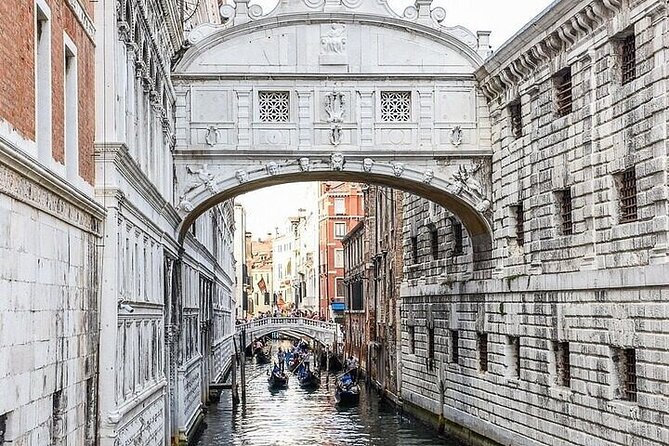
Stop 6: Ponte dei Sospiri and the Bridge of Sighs Story
Next is Ponte dei Sospiri, the Bridge of Sighs. It connects the Doge’s Palace to the historic prison across the canal and was built in the 1600s. The classic tradition says prisoners sighed at the thought of seeing the outside world for the last time.
What I like about this stop: it gives context. You see the bridge as a piece of civic machinery, not just a dark-romantic name. It also slots nicely between St. Mark’s and the next set of canal crossings, keeping your mental map coherent.
Stop 7: Chiesa di San Zaccaria, a Church With a Built Timeline
In central Venice you’ll stop at Chiesa di San Zaccaria, a former monastic church. The current church was built between 1458 and 1515, and the tour notes a harmonious mix of late-Gothic and Renaissance styles.
This is a good moment if you like architecture that shows layers of time. It’s also less “all roads lead here” than Piazza San Marco, which can make it feel like you’ve stepped into a quieter lane.
Stop 8: Ponte dell’Accademia and Crossing the Grand Canal Again
The tour then heads to Ponte dell’Accademia, one of only four bridges spanning the Grand Canal. It crosses near the southern end and is named for the Accademia di Belle Arti di Venezia.
This stop works as a bridge-between-eras. Rialto is historical commerce. Accademia is art-school Venice. Same canal, different Venice story.
Stop 9: Squero di San Trovaso, a Gondola Workshop You Can Peek Into
This is one of the best “real Venice” moments: Squero di San Trovaso. A squero is a traditional Venetian shipyard, and this one is described as one of the oldest and most famous. It’s where small boats like gondolas are repaired, and you’ll get a chance to peek at how gondolas are maintained.
I love this stop because it shifts you from monuments to craft. Venice isn’t only built from marble and gold mosaics; it also lives through skilled work that keeps boats functional.
Timing is short (about 30 minutes), so don’t expect a deep workshop lesson. But it’s a strong change of pace from church facades and palace-adjacent drama.
Stop 10: Campo San Pantalon and the Banksy Mural Stop
Next is Campo San Pantalon, where you can admire a Banksy painting often referred to as the shipwrecked or migrant child. The tour gives you a straightforward 30-minute window to see it.
My practical advice here: treat it like a landmark, not a full art stop. The value is in the fact that you’re getting a contemporary cultural marker inside a very old city map.
Stop 11: Campo Santa Margherita, Student Energy Without the Museum Feel
You finish the “walk and look” phase at Campo Santa Margherita in the Dorsoduro area. The itinerary notes it’s near university buildings and acts as a gathering place for students at the end of the day.
This is the kind of stop that helps you feel how locals use public space. Venice isn’t only for tourists standing still. People live in these squares, too.
Stop 12: Piazzale Roma, Where Venice Meets the Road World
To wrap up, you reach Piazzale Roma, the square at the entrance of the city at the end of the Ponte della Libertà. The tour notes something important: Piazzale Roma and nearby Tronchetto are the only places in Venice’s urban core accessible to ground motor vehicles.
This matters because it’s where your Venice day transitions back to the outside world—mentally and physically. It’s also a great “reset moment” before you board your return train (about 2.5 hours to Milan).
If you’re buying gifts or grabbing snacks on your own, this is where you’ll likely feel the most practical infrastructure nearby, compared to the deeper canal lanes.
Price and Value: What $391.34 Buys You (and What It Doesn’t)
At $391.34 per person for a roughly 11-hour private tour with rail included, the value comes from three things: time, guidance, and logistics handled for you.
First, you’re paying for a day plan that already links Milan and Venice by train. That saves you the mental load of train timing and station navigation.
Second, you’re paying for a guide to connect the dots. In multiple experiences, guides are praised for history storytelling (and for keeping things paced to your liking). Some guides also show a knack for local shopping and avoiding poor-value tourist traps—one guide (Elshad) is praised for steering guests toward reputable shops and keeping prices reasonable.
Third, the itinerary lists visitor fee included and shows “admission ticket free” for each stop. You’re not paying extra entrance fees for those specific points—though you still may want to budget for food and personal spending.
What’s not included is simple: food and drink. Also, there’s no pickup or dropoff in Milan, so you’ll need to get to Milano Centrale yourself.
So, Is It Worth Booking? My Honest Take
I’d book this if you want a structured Venice day that doesn’t leave you stranded in the wrong quarter or stuck fighting crowds with no plan. It’s especially smart for first-timers who want the major sights—Grand Canal, Rialto, St. Mark’s, Bridge of Sighs—plus one or two local-feeling stops like Squero di San Trovaso.
I’d think twice if you’re extremely crowd-averse or smell-sensitive. Venice can be packed around iconic landmarks, and one negative experience flagged how water smells can become part of the day. If that’s your biggest concern, plan to spend less time lingering at the most famous photo pinch points.
If you do book, bring a small mindset tweak: use the guide as your shortcut through Venice’s logic. And if you love local crafts, ask your guide to point you to something like the glass artist shop that one guide (Sneh) helped guests visit.
FAQ
FAQ
How long is the Venice day trip from Milan?
The experience runs about 11 hours total, including train travel time. It starts at 7:30am and includes the train back to Milan afterward.
Where do we meet in Milan?
You meet at Milano Centrale, Piazza Duca d’Aosta, 1, 20124 Milano MI, Italy.
Is this tour private or shared?
It’s private. Only your group participates.
Are admission tickets included for the sights?
For the stops listed on the route, the itinerary shows admission ticket free for each. The Venice visitor fee is included as well.
What about food—does the tour include lunch?
No. Food and drink are not included.
When will the train tickets be purchased?
The provider states the train ticket is purchased 48 hours in advance. Tickets are then sent to you by email and WhatsApp the day before.
More Tour Reviews in Milan

More Venice Day Trips

More Private Milan Tours


Fresh in our Milan notebook



Venice Day Trips, compared.
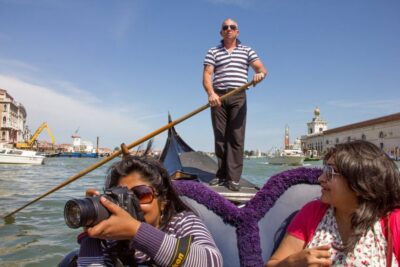 ★ 4.4From Milan: Day Trip to Venice with Guided City TourFrom $146614 reviews
 ★ 4.0Venice Day Trip from Milan with Guided City TourFrom $157383 reviews
 ★ 4.5From Milan: Venice Full-Day Guided Tour With Boat RideFrom $204322 reviews
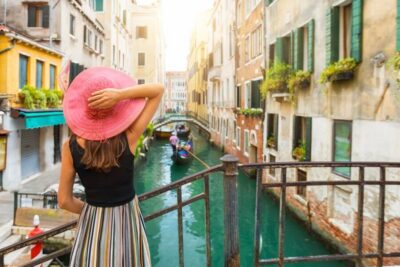 ★ 4.1From Milan: Venice and Verona Full-Day Tour by TrainFrom $180217 reviews
 ★ 4.5From Milan: Venice City Highlights Guided Day TripFrom $162139 reviews
 ★ 4.5Venice and Verona Full Day Tour by Train from MilanFrom $192131 reviews
 ★ 4.5Venice Full Day tour from Milan by high speed train. Small GroupFrom $99911 reviews
 ★ 4.5Private Transfer from Milan to Venice with a 2h Stop in VeronaFrom $5505 reviews
Browse the lists this tour appears in