
Reviewed · MILAN COOKING CLASSES
Milan: Homemade Pasta, Sauce, and Tiramisu Cooking Class
Pasta dough is easier than you think. In Milan, this 3.5-hour class with Valentina turns fresh pasta-making into a hands-on skill, and I really like how you get real guidance instead of just watching. The best part for me is the freedom to choose your own sauce, then sit down to eat what you made with a glass of wine in the background—plus a friendly small group feel that keeps things relaxed.
One thing to consider: it’s practical, flour-and-rolling-pin work. Wear comfortable clothes you don’t mind getting a little messy during the dough stage.
In This Review
- Key Points Before You Go
- Finding Valentina and Getting Comfortable With the Mess
- Handmade Pasta Dough: The Real Skill You’ll Keep
- Picking Your Sauce: Pesto, Ragù, and Cacio e Pepe Logic
- Cooking Together While Music Plays
- The Dessert Finish: Tiramisu or Tortino al Cioccolato
- What You Actually Eat (and Why It Tastes Better)
- Price and Value: Is $94 Worth It?
- Who This Class Fits Best (and Who Might Skip It)
- Practical Tips to Make Your Night Easier
- Should You Book This Milan Pasta and Tiramisu Class?
- FAQ
- Where is the meeting point?
- How long is the cooking class?
- How big is the group?
- What languages is the instructor able to teach in?
- What sauces can I choose from?
- Is dessert included?
- What should I bring?
- Is it suitable for children?
Key Points Before You Go
- Fresh pasta dough, made from scratch and shaped with a rolling pin, so you understand the whole process
- Choose your sauce from classic options like pesto and cacio e pepe, plus ragù alla bolognese or a seasonal sauce
- Finish with dessert: classic tiramisù or tortino al cioccolato (chocolate souffle-style)
- Wine + music while you cook, which makes it feel more like a shared evening than a chore
- Small group (max 4) and multilingual instruction (Italian, English, Spanish, French) for better help at the counter
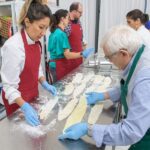
Hands in the flour, in a Milanese kitchen
- The Secrets to Learn Fresh Pasta and Tiramisù in a Glam Home★ 5.0 · 1,182 reviews
- Milan: Pasta and Tiramisu Cooking Class with Wine★ 4.8 · 1,106 reviews
- Gnocchi, Pasta, Tiramisù and Wine Class★ 5.0 · 691 reviews
Finding Valentina and Getting Comfortable With the Mess
Meet in Milan near the metro Bande Nere, which is handy because you’re not stuck guessing your way through a maze of neighborhoods. This matters because cooking classes work best when you arrive calm. You want time to settle in, put on your game face, and not rush the start.
The vibe is part “lesson,” part “good evening.” You’ll be with a small group of up to four people, which changes how the class feels. In a big group, you wait your turn. Here, you can actually ask a question when you hit a snag—like dough that feels too dry, or a sheet that isn’t as even as you want.
You’ll be working with an Italian instructor, Valentina Imperio, who speaks Italian, English, Spanish, and French. That multilingual setup is a real value for non-Italians. Even if your Italian is basic, you’ll still get clear, step-by-step instruction while you work with your hands.
Handmade Pasta Dough: The Real Skill You’ll Keep
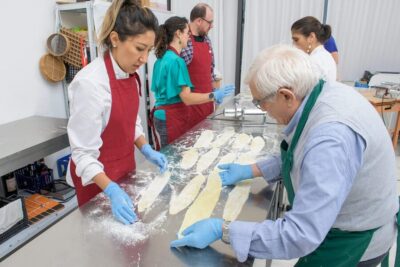
The heart of this experience is making pasta dough from scratch. You start at the beginning: learning how the dough comes together and how it should feel before you roll it out. Even if you’ve never made pasta, you can pick up the basics quickly because Valentina focuses on what your hands notice—texture, stretch, and consistency—rather than only theory.
Then comes the part people usually find intimidating: shaping pasta sheets using a rolling pin. You’re not just rolling blindly. You learn the approach for getting a workable shape without tearing the dough or ending up with uneven thickness. When you get it right, the dough transforms from something fragile-looking into something you can actually handle and shape.
Why I think this matters for you: fresh pasta is one of those things that tastes amazing, but most visitors only ever have it as a finished product in a restaurant. Here, you learn how the structure is built. That means you’re more likely to replicate it at home, even if your first attempt isn’t perfect.
Practical tip: pasta dough has a way of getting on everything. So keep your expectations realistic. If you treat it like a hands-on class, not a museum stop, you’ll enjoy it more. Comfortable clothes help a lot, since you’ll be rolling, stretching, and working close to your workspace.
Picking Your Sauce: Pesto, Ragù, and Cacio e Pepe Logic
After your dough stage, you shift to the sauce—because in Italy, pasta isn’t complete without something to carry flavor. The nice twist here is that you choose your sauce rather than being assigned one.
The options include:
- Pesto
- Ragù alla bolognese
- Cacio e pepe
- And you may also see a seasonal sauce option depending on what’s being offered
This choice is more than a menu perk. It changes how you cook the pasta and how you think about balance. For example, pesto is bold and aromatic, so you want pasta that holds sauce without becoming heavy. Cacio e pepe is all about creaminess and timing, so you need to be paying attention as the sauce comes together. Ragù brings depth and comfort, which pairs well with pasta that feels a bit more substantial.
One of the best values of this format is that you leave the class knowing which sauce style fits your taste. Next time you’re standing in your grocery store thinking what to make, you’ll have a real preference—not just a vague memory of a restaurant meal.
A few more we would happily send a friend to in Milan
- Milan: Pasta and Tiramisu Small Group Cooking Class with Wine
★ 5.0 · 660 reviews - Milan Cooking Class: Authentic Pizza & Gelato Making
★ 5.0 · 582 reviews - Milan: Italian Cooking Class with Food and Wine
★ 4.7 · 509 reviews - Small Group Cozy Cooking Class in a Typical Milanese Home.
★ 5.0 · 302 reviews - Milan: Pasta & Tiramisu Cooking Class with Premium Products
★ 5.0 · 255 reviews
Cooking Together While Music Plays
This class is designed to keep you active, not stuck waiting. As your sauce cooks and your pasta finishes, you’ll be moving through the steps with the group. Valentina adds instruction along the way, and the small size makes it easier to adjust if your technique needs a nudge.
There’s also music playing during the session and a glass of wine included. In one recent group experience, the wine included prosecco, which gives you an idea of how the evening can lean celebratory rather than formal. Either way, the point is the same: you’re not just learning food, you’re learning the pace of an Italian kitchen evening.
For me, that social layer is what turns the class from a checklist activity into something memorable. You’re eating with people you just met, and you’re talking while you cook. In a city full of sightseeing, that kind of reset is gold.
The Dessert Finish: Tiramisu or Tortino al Cioccolato
Every good Italian meal ends with something sweet, and this class does that properly. You’ll finish with either:
- Classic tiramisù, or
- Tortino al cioccolato (chocolate souffle-style)
Dessert in cooking classes is often an afterthought. Here, it’s treated like a real step. That matters because tiramisù and chocolate tortino both have textures you can feel: creaminess, structure, and that final moment when the dessert sets enough to slice or spoon.
If you’re a coffee-and-cocoa person, you’ll probably love tiramisù. If you prefer something warmer and more chocolate-forward, tortino al cioccolato can be the better fit.
Also, you’re not just eating dessert—you’re making it. That gives you the satisfaction of ending the class with a finished product you can recognize instantly, then replicate later.
What You Actually Eat (and Why It Tastes Better)
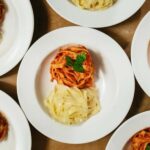
By the time you sit down, you’re eating pasta and sauce that you made from start to finish. That sounds obvious, but the difference is real. Restaurant pasta can be delicious, but you don’t always understand why it worked. In this class, you see how the pasta dough behaves and how the sauce clings, thickens, and flavors the final dish.
You’ll also taste what happens when you choose a sauce style that matches your preference. Some people fall in love with pesto’s herbal punch. Others want the sharp simplicity of cacio e pepe. And ragù lovers get the slow, comforting satisfaction that’s hard to fake.
A small detail that helps with value: after the cooking, Valentina may share recipes and practical tips so you can try again at home. Even a simple shopping guide for ingredients can save you hours of guessing.
Price and Value: Is $94 Worth It?
At $94 per person for about 3.5 hours, this isn’t the cheapest thing you can do in Milan. But you’re paying for a few things that usually cost more when you add them up separately: hands-on teaching, fresh dough made in your hands, sauce cooking with options, wine included, and dessert creation.
The small group size (max 4) also justifies the price. In classes where you’re one of 15 people, instruction becomes generic. Here, you get real attention, which makes the difference between leaving with a memory and leaving with skills you can repeat.
For value-focused travelers, this is one of those activities that can beat a pricey dinner. You’ll eat what you made, drink a glass of wine, and take home a clearer idea of how Italian cooking actually works.
Who This Class Fits Best (and Who Might Skip It)
This is a great fit if you want:
- A hands-on activity that’s still enjoyable after a long day of sightseeing
- A smaller class where you can get help
- A chance to learn classic Italian dishes you can actually recreate at home
It’s also a good match for families with kids over 6. If you’re traveling with younger children, this specific class isn’t listed as suitable under 6, so you’d want to look for other options.
Who might skip it: if you strongly dislike messy, practical kitchen work, this won’t feel comfortable. The class is built around making dough and shaping pasta, and that needs active participation.
Practical Tips to Make Your Night Easier
A few things will help your experience go smoothly:
- Bring comfortable clothes you can tolerate getting flour on
- Expect the pace to be hands-on, so arrive with a little energy left in you
- If you’re picky about language, feel good: instruction is available in Italian, English, Spanish, and French
- Keep in mind the class ends with a full sweet finish, so don’t plan a huge dessert craving right after
Should You Book This Milan Pasta and Tiramisu Class?
I’d book it if you want a real taste of Italian home-cooking style, not just a dining experience. The mix of fresh pasta dough, your choice of sauce, and a serious dessert finale (tiramisù or chocolate tortino) is the kind of combination that sticks in your memory. Add in the small group and Valentina’s friendly, capable teaching approach, and you have an activity that feels personal without being complicated.
If you’re on the fence, ask yourself one question: do you want to learn the method, or do you just want dinner? If learning the method sounds fun, this class is a strong yes for a Milan day. If you want something hands-off, you may be happier with a restaurant meal instead.
FAQ
Where is the meeting point?
The meeting point is next to the metro BANDE NERE.
How long is the cooking class?
The class lasts about 3.5 hours.
How big is the group?
It’s a small group limited to 4 participants.
What languages is the instructor able to teach in?
The guide/instructor provides instruction in Italian, English, Spanish, and French.
What sauces can I choose from?
You can choose from pesto, ragù alla bolognese, seasonal sauce, and cacio e pepe.
Is dessert included?
Yes. You’ll make either tiramisù or tortino al cioccolato (chocolate souffle-style).
What should I bring?
Wear comfortable clothes.
Is it suitable for children?
It’s suitable for adults and children over 6 years old, and it is not suitable for children under 6.
More Cooking Classes in Milan



More Tour Reviews in Milan






More Milan Cooking Classes


Fresh in our Milan notebook





Milan Cooking Classes, compared.
 ★ 5.0The Secrets to Learn Fresh Pasta and Tiramisù in a Glam HomeFrom $901,182 reviews
 ★ 4.8Pasta and Tiramisu Cooking Class with WineFrom $611,106 reviews
 ★ 5.0Gnocchi, Pasta, Tiramisù and Wine ClassFrom $83691 reviews
 ★ 5.0Pasta and Tiramisu Small Group Cooking Class with WineFrom $83660 reviews
 ★ 5.0Milan Cooking Class: Authentic Pizza & Gelato MakingFrom $78582 reviews
 ★ 4.7Italian Cooking Class with Food and WineFrom $80509 reviews
 ★ 4.9Fresh Pasta & Tiramisù Class in a Glamorous HomeFrom $88478 reviews
 ★ 5.0Milan Culinary Experience: Pasta & Gelato or Tiramisù ClassFrom $85337 reviews
Browse the lists this tour appears in