
Reviewed · MILAN WALKING TOURS
Milan: Private or Shared Essential Walking Tour
One of Milan’s greatest art lessons starts at the Duomo. This essential walking tour gives you the city’s main visual hits in just 2 hours, with a guide who connects the dots between faith, power, shopping, and the ducal era. I like it because it keeps moving and because the story is tied to what you’re actually looking at.
I especially love the Duomo-focused start—it’s not just pretty stone, it’s five centuries of building choices you can understand from the outside. I also like the stop at the Victor Emmanuel II Arcade, since it’s the kind of place that still feels like itself even when it’s doing luxury shopping today.
The main drawback to plan for: this is an exterior-heavy walk with tickets extra. If you expect to walk into every major landmark during the 2 hours, you’ll need to add paid admissions.
In This Review
- Key highlights at a glance
- From Duomo Square to Milan’s power streets
- Duomo di Milano: five centuries you can actually picture
- Royal Palace, Archbishop’s Palace, and Arengario Palace: who ran Milan?
- Galleria Vittorio Emanuele II: the first covered mall
- La Scala from the street: theater prestige without ticket rush
- Sforza Castle and the dukes behind the stone
- How the guide shapes the tour: Laura, Alexia, Cristina, and Fiamma
- Value and price: paying per group (up to 6)
- What you should pack and what to expect on the ground
- Languages and pacing: getting the tour you want
- Should you book this essential Milan walking tour?
- FAQ
- How long is the Milan walking tour?
- Where does the tour start and end?
- What is included in the price?
- Are tickets for the Duomo, La Scala, and Sforza Castle included?
- Do I need to pay for headphones?
- What languages are available?
- Is the tour wheelchair accessible?
- Is the tour suitable for everyone?
Key highlights at a glance
- Duomo di Milano as your first anchor point, with history explained as you look
- Royal Palace, Archbishop’s Palace, and Arengario Palace to understand Milan’s power center
- Galleria Vittorio Emanuele II as Europe’s early covered mall that’s still in business
- La Scala and Sforza Castle approached from the street for a fast, clear overview
- 2-hour pace that’s ideal for orientation, but not a substitute for ticketed tours
Keep walking the Milan backstreets
- Milan: Guided Walking Tour & Last Supper Visit with Ticket★ 4.7 · 5,409 reviews
- Milan: Guided Walking Tour with Last Supper Skip-the-Line★ 4.7 · 1,143 reviews
- Milan: Guided Street Food Walking Tour with Food Tasting★ 4.8 · 654 reviews
From Duomo Square to Milan’s power streets
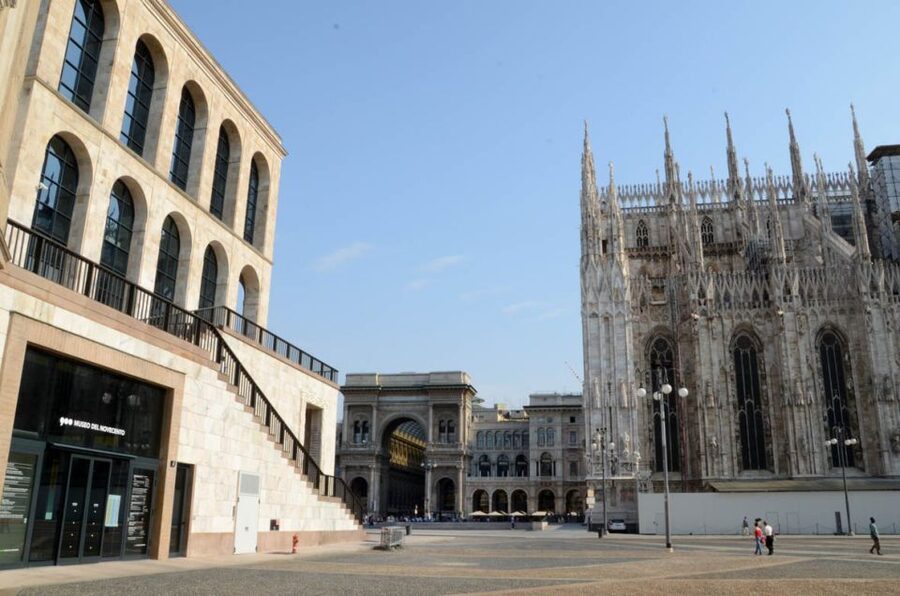
This is a good first-tour choice if you want your Milan to make sense quickly. You start at the Duomo di Milano area and the guide sets the tone right away: this city isn’t only about fashion and food, it’s about how art and authority show up in the same view.
The route is designed for walking and seeing. You’ll cover the big landmarks you’d normally circle on a map, and you’ll also hear what each site meant at the time it mattered. The vibe is practical: point, explain, move on.
If you’re short on time, I think this “greatest hits” approach is smart. Milan’s core sites are close enough that you can understand connections without spending an entire day indoors.
Duomo di Milano: five centuries you can actually picture
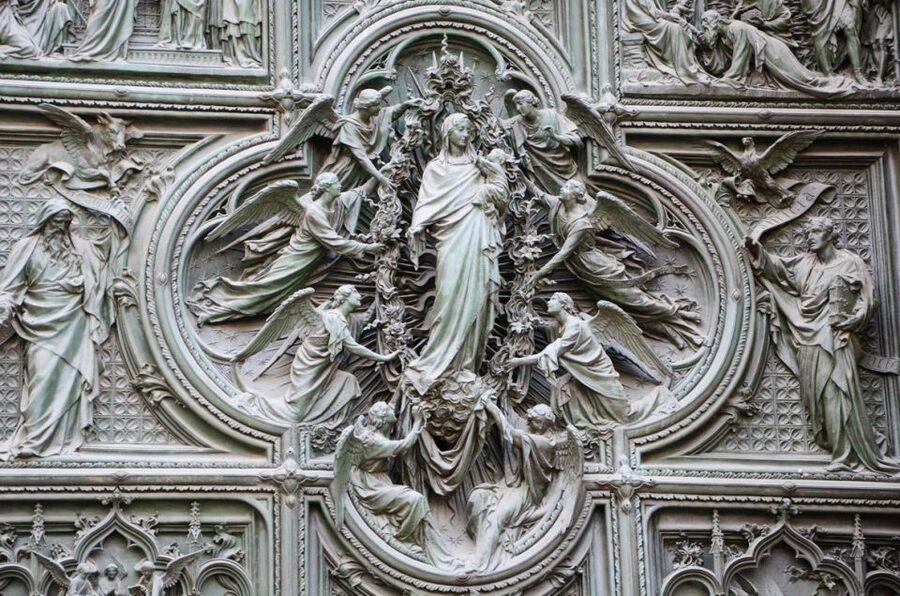
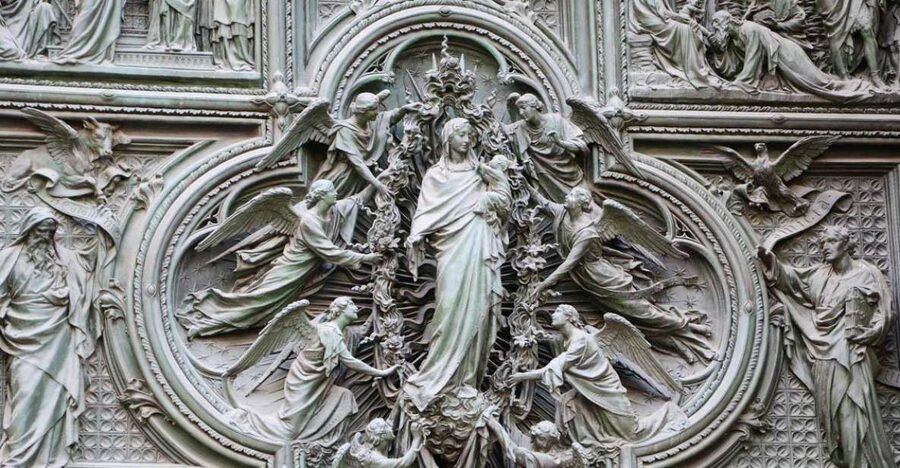
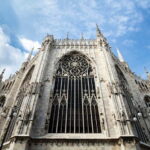
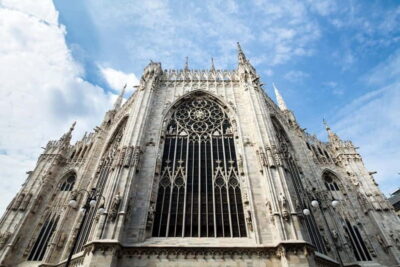
The tour begins at the Duomo, and it’s the right opening move. This cathedral is Milan’s signature, but it’s also a study in long-term ambition. The guide talks through the cathedral’s history—specifically its five centuries of construction—so you know what you’re looking at instead of just admiring it.
What I’d focus on during this first stretch:
- Look for the way the façade and spires create a sense of upward motion.
- Notice the scale cues: from street level, this is all about proportions and detail density.
- Listen for the “why it took so long” angle, because that helps you read the cathedral like a timeline rather than one finished product.
Another nice thing: the tour is built for clarity. Since the guide is explaining while you’re looking, you’re less likely to wander and miss the point of the architecture.
One more planning note. Duomo entry is not included for internal visits. You can pay for a basic entry separately (listed at €5 per person). If your schedule allows, pairing this walking start with a separate Duomo visit later is a solid two-step strategy.
Royal Palace, Archbishop’s Palace, and Arengario Palace: who ran Milan?
After the Duomo, you shift from religious architecture to civic and political weight. The tour includes stops where Milan’s power shows up in buildings—Royal Palace, Archbishop’s Palace, and the Arengario Palace.
Even if you don’t go inside, these exteriors matter. This is where the city’s story changes from sacred space to control, administration, and influence. You’ll get a quick read on why these structures were important, and how Milan’s leadership and culture were tied together.
This portion is also where a good guide really helps. When you hear the context while you’re standing in the square or facing the façade, you understand why Milan looks the way it does. Without that, palaces can feel like impressive backgrounds to photos.
A few more we would happily send a friend to in Milan
- Milan: Guided Walking Tour with Duomo and the Last Supper
★ 4.7 · 615 reviews - Milan: Best of City Walking Tour with Last Supper Tickets
★ 4.7 · 359 reviews - Milan Highlights and Hidden Gems Private Guided Walking Tour
★ 5.0 · 302 reviews - Milan by Night 2-Hour Walking Tour
★ 4.4 · 286 reviews - Private Milan Food Walking Tour of Brera
★ 5.0 · 217 reviews
Galleria Vittorio Emanuele II: the first covered mall
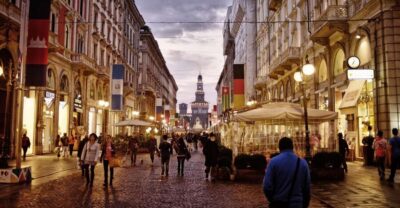
Then you get to one of Milan’s most fun architectural experiences: the Victor Emmanuel II Arcade. This is described as the first covered shopping mall in Europe, and it still functions as a luxury shopping site today.
What’s great here is that you’re not just seeing an old building—you’re seeing a “living” one. Even if you don’t buy anything (and you don’t have to), the arcade shows how design can create comfort, movement, and status all at once. Covered arcades also helped cities handle weather while keeping people shopping and strolling.
During this part of the walk, I recommend you slow down for a minute. Step back and look at the volume above you. Covered spaces can feel surprisingly dramatic once your eyes adjust.
A practical detail: the tour keeps to exteriors, so this is more about atmosphere than ticketed time. If you want to extend the experience after the guided portion, this is a great place to wander on your own for cafés and browsing—just keep an eye on time because the tour runs about 2 hours total.
La Scala from the street: theater prestige without ticket rush
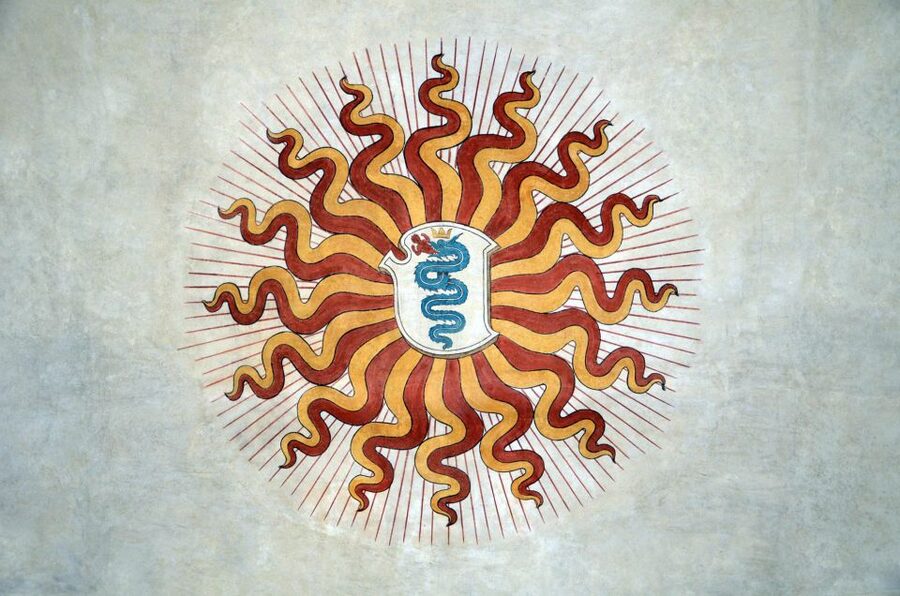
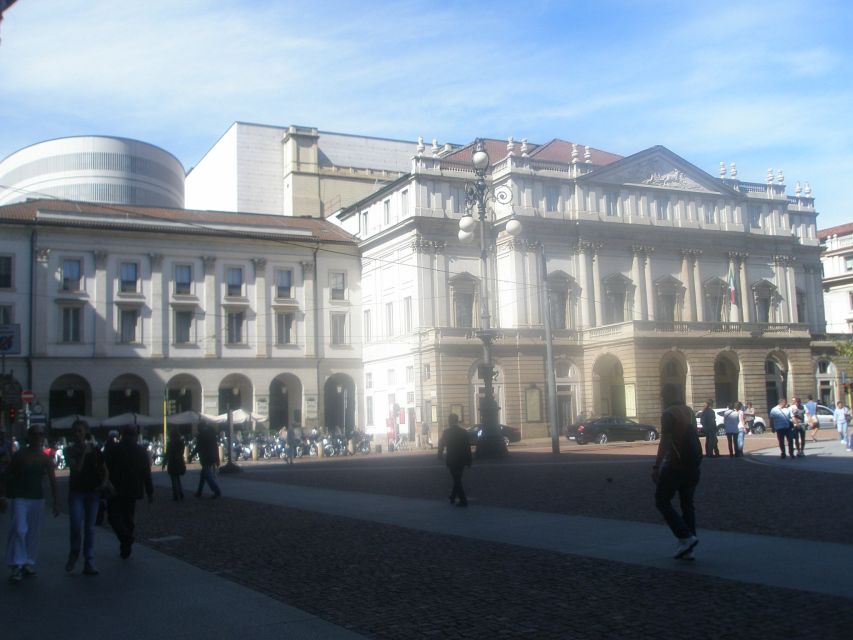
You’ll also see La Scala theater. The tour includes the exterior and the guide explains why it matters, but it doesn’t automatically include your entrance.
La Scala admission is listed at €9 per person. Also note that the La Scala Museum is closed on Mondays. If you’re arriving on a Monday and you want inside access, you’ll need to plan around that, or focus on the exterior guided visit and add a different museum day elsewhere.
This is a good stop even without tickets. Milan’s theater history isn’t something you can pick up from a quick glance. With a guide, the exterior becomes a setup for understanding what the institution represents—art as prestige, and performance as identity.
Sforza Castle and the dukes behind the stone
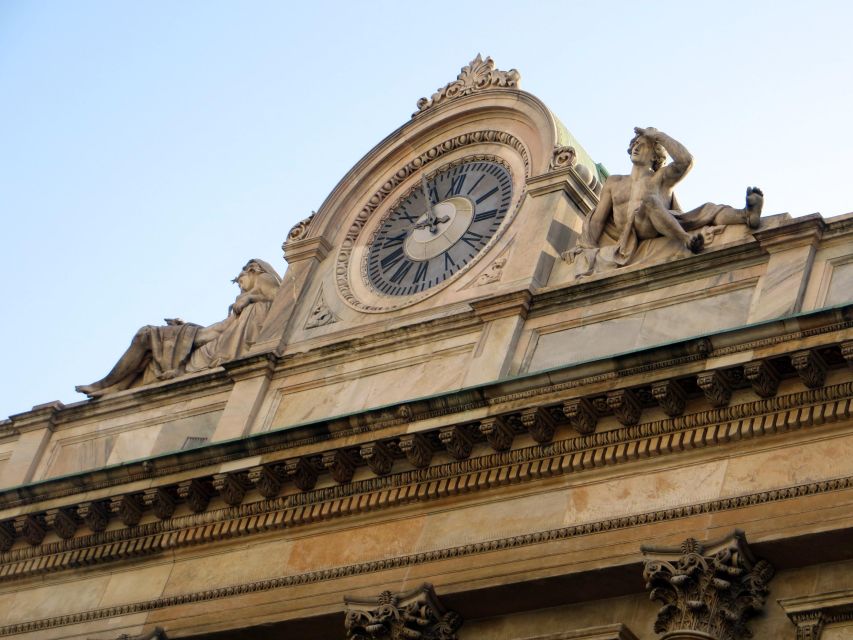
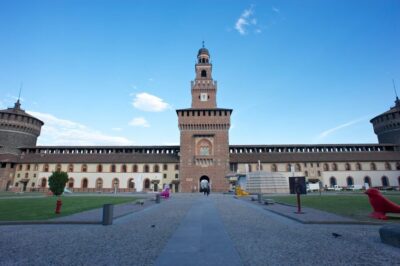
Next comes Sforza Castle, often described as a mighty fortress connected to Milan’s ducal rulers. The tour focuses on exterior viewing, but you still get the story of the castle and the dukes associated with it.
Castle exteriors can turn into “just a big building” if you don’t have context. Here, the value is that you learn what kind of place it was—political power made visible in stone. That changes how the building reads in your mind.
If you want to go inside, castle admission is listed at €5 per person, and it’s not included in the standard tour. One smart approach is to use the guided exterior visit to decide if you’re the type who will enjoy the interior history and displays. If yes, add the paid entry. If no, you still leave with a clear sense of why the castle matters.
How the guide shapes the tour: Laura, Alexia, Cristina, and Fiamma
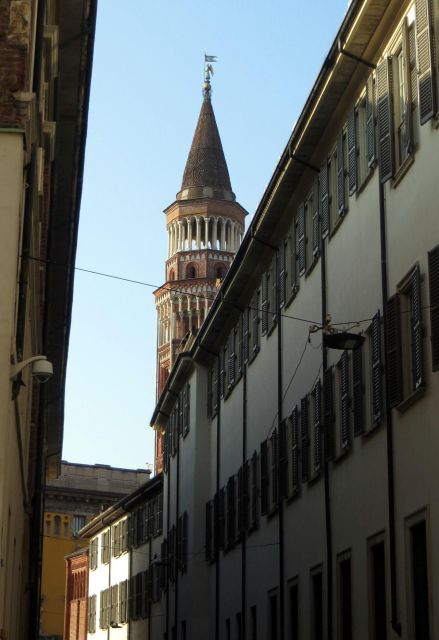
One reason this tour gets high marks is the way the guides handle the balance of facts and pace. Names like Laura, Alexia, Cristina, and Fiamma show up in the strongest examples, and the pattern is consistent: the guide points you at what to look at while explaining the context.
I like that because Milan can be easy to over-plan. If you spend your first day bouncing between landmarks without guidance, you end up with a pile of photos and not much meaning. A good guide fixes that by turning your walking route into a timeline you can remember.
There’s also a helpful note on flexibility. Some tours may stay strictly on script, but the best experiences here include adjustments when you ask for something extra—like helping with entrance to an important site you hadn’t secured yet. If you have a must-see inside ticket, it’s worth mentioning it during your tour planning.
Value and price: paying per group (up to 6)
This tour is priced at $317.20 per group up to 6. That can be a very fair deal if you’re traveling with a small crew—especially compared with paying individual guides across several short visits. You’re buying an efficient 2-hour overview with a live guide, not separate mini-tours for each stop.
The catch is that you still have extra costs for most interiors:
- La Scala admission fee: €9 per person
- Castle admission fee: €5 per person
- Duomo admission fee: €5 for basic entry
So your true total depends on how much you want to go inside. If you’re happy with exteriors, you can keep costs controlled and use the guided walk as orientation. If you want interiors, plan on budgeting tickets on top.
Headphones are also noted as compulsory starting from the 5th person, at €2.50 per person. That’s one of those costs that can surprise you late in the process, so if you’re booking for a group of 5 or 6, it’s worth counting.
Bottom line: it’s strong value when you want structure and context quickly. It’s less of a bargain if you expected all major sites to be fully included with ticket-free entry.
What you should pack and what to expect on the ground
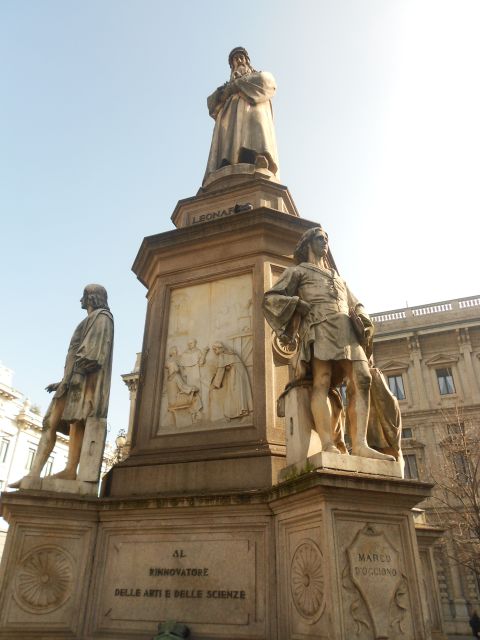
This is a walking tour, so comfortable shoes are a must. The tour also notes that luggage or large bags are not allowed, which makes sense for a city-center route where you’ll be navigating crowds near big landmarks.
On the logistics side:
- Duration is about 2 hours.
- The tour ends back at the meeting point.
- Meeting point may vary depending on the option booked, but it starts at the Duomo di Milano area.
A few traveler fit notes from the activity details:
- It’s wheelchair accessible.
- It’s not suitable for people with pre-existing medical conditions.
- It’s not suitable for people with motion sickness.
If you’re traveling with anyone who needs extra considerations, it’s smart to check in before booking. With a tight route and a short time window, comfort becomes part of the value.
Languages and pacing: getting the tour you want
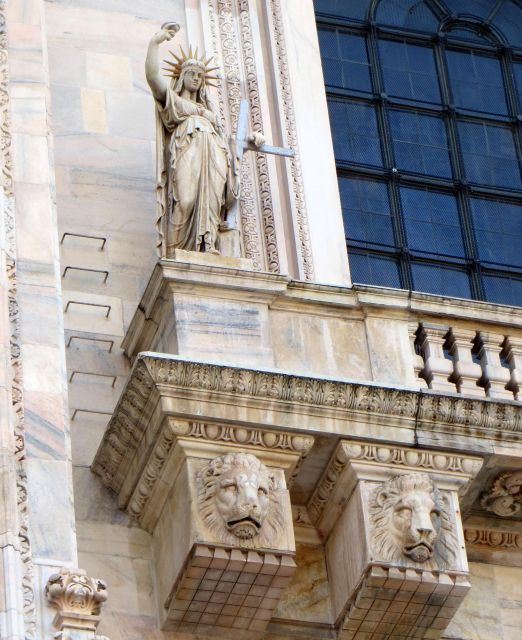
The guide language can be Spanish, English, French, German, Italian, Portuguese, Russian, or Japanese. The tour is conducted in English, and with advanced notice it can be conducted in other languages.
For pace, the 2-hour length is both a strength and a limitation. It keeps you from being stuck for half a day, but it also means the guide can only cover so much. If your group includes teens or people who need more interaction, ask the guide to keep explanations snappy and refer back to what you’re looking at in front of you.
Also, if you want internal visits added, the tour notes it can be personalized if you inform the local supplier in advance. Admission prices for those sites are listed (so you’re not guessing).
Should you book this essential Milan walking tour?
Book it if:
- You want an efficient first-day overview of Milan’s top visual landmarks.
- You like learning through what you’re seeing, not through a lecture after the fact.
- You’re traveling with a group of up to 6 and want guide value without paying multiple separate tour fees.
Skip it or upgrade it if:
- You’re hoping for lots of inside time. Most interiors cost extra (Duomo, La Scala, Sforza Castle).
- You need a very quiet, low-movement experience. It’s a walking tour with city-center pacing.
- Your group expects deep museum-style time in a single stop. This is an outside-and-context approach, not a full ticketed circuit.
If you want Milan to feel readable instead of random, this tour is one of the cleanest ways to start.
FAQ
How long is the Milan walking tour?
The tour lasts about 2 hours.
Where does the tour start and end?
It starts at the Duomo di Milano area, and it ends back at the same meeting point.
What is included in the price?
You get the tour and a live guide.
Are tickets for the Duomo, La Scala, and Sforza Castle included?
No. Duomo basic entry is listed at €5 per person, La Scala admission is €9 per person, and Sforza Castle admission is €5 per person.
Do I need to pay for headphones?
Headphones are available, and headphones are compulsory starting from the 5th person at €2.50 per person.
What languages are available?
The tour runs in English, and it can be conducted in other languages including Spanish, French, German, Italian, Portuguese, Russian, and Japanese (with advanced notice).
Is the tour wheelchair accessible?
Yes, it’s listed as wheelchair accessible.
Is the tour suitable for everyone?
It’s not suitable for people with pre-existing medical conditions or for people with motion sickness.
More Tours in Milan


More Tour Reviews in Milan

More Milan Walking Tours

Fresh in our Milan notebook



Milan Walking Tours, compared.
 ★ 4.7Guided Walking Tour & Last Supper Visit with TicketFrom $1015,409 reviews
 ★ 4.7Guided Walking Tour with Last Supper Skip-the-LineFrom $1061,143 reviews
 ★ 4.8Guided Street Food Walking Tour with Food TastingFrom $58654 reviews
 ★ 4.7Guided Walking Tour with Duomo and the Last SupperFrom $152615 reviews
 ★ 4.5Guided Duomo, Last Supper and City Centre TourFrom $105452 reviews
 ★ 4.7Best of City Walking Tour with Last Supper TicketsFrom $112359 reviews
 ★ 5.0Milan Highlights and Hidden Gems Private Guided Walking TourFrom $246302 reviews
 ★ 4.4Milan by Night 2-Hour Walking TourFrom $52286 reviews
Browse the lists this tour appears in