
Reviewed · BERNINA EXPRESS & ST MORITZ
Milan: Bernina and Glacier Train Tickets & Sankt Moritz Tour
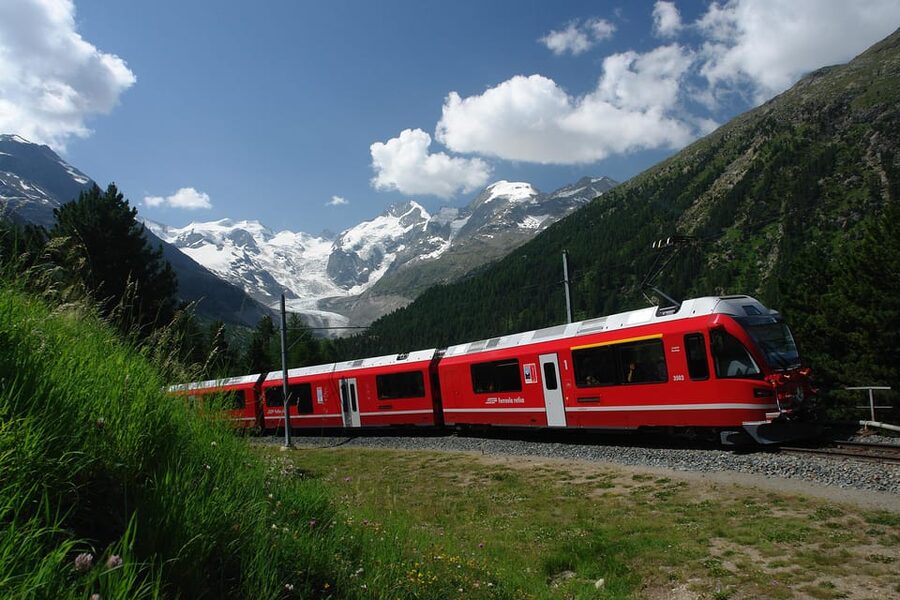
Two Alpine trains. One long, scenic day. I really like the Bernina Red train for the big mountain-window moments and the free afternoon in St. Moritz, the so-called Top of the World. The main trade-off is the coach time: it is a long day, so you’ll want to show up ready for sitting before you get your first view of Switzerland’s peaks.
When the day runs smoothly, it feels like it’s paced just right: live guidance in English or Spanish, plus hands-on coordination at the key switches between coach and rail. In at least one recent departure, the guide was Angelo and the driver was Marcello, and that kind of team can make the whole schedule feel calm instead of chaotic.
In This Review
- Key highlights to expect
- From Milan to the Alps: why this day trip feels special
- St. Moritz: the Top of the World time block you’ll use
- Boarding the Bernina Red train: where the views start paying off
- Albula Railway and the Landwasser Viaduct: the UNESCO moment
- Bergün and Preda: small stops with big “route feeling”
- Chur or Thusis: finishing the rail day the practical way
- Coach vs train time: how to survive the long day
- Price and value: what you’re actually paying for
- Who should book this—and who should rethink it
- Should you book? My practical take
- FAQ
- How long is the tour?
- What trains are included in the day trip?
- Do I get time to explore St. Moritz?
- How long is the Landwasser Viaduct panoramic train portion?
- Where does the tour end?
- How long are the coach rides from Milan?
- What languages is the live guide available in?
- Where do I meet the tour in Milan?
- Is there free cancellation?
- Is there a pay-later option?
Key highlights to expect
- Bernina Red train with eye-level mountain scenes that make the long day feel worth it
- St. Moritz free time (about 2 hours) in a town famous for being high-altitude and stylish
- Albula Railway section tied to the UNESCO rail story and the route used by the Glacier line
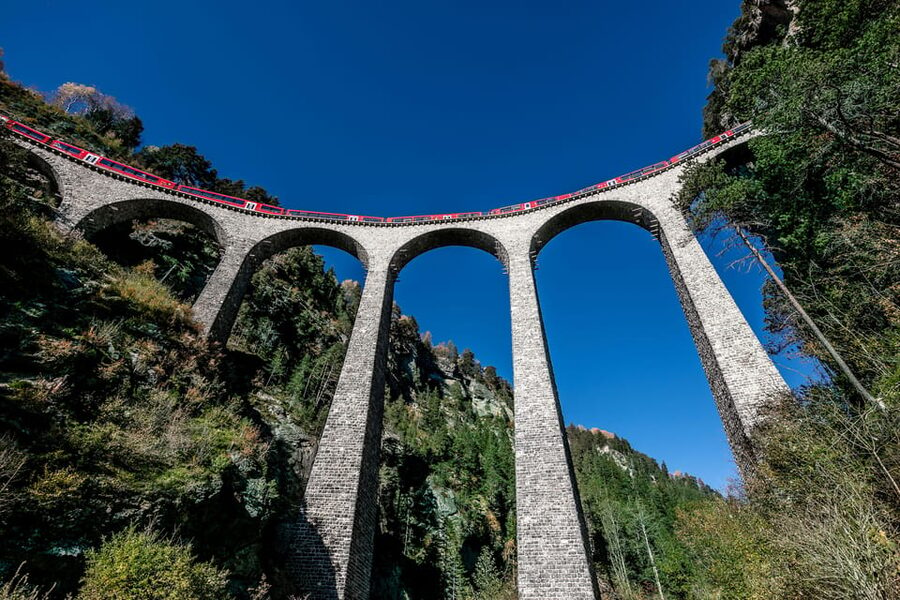
- Landwasser Viaduct crossing with a dramatic, curved bridge over a deep gorge
- Bergün and Preda stops that turn the ride into a real route, not just transit
- Finish in Chur or Thusis before the return coach to Milan
The red train up to St Moritz, more runs
- Bernina Red Train, Swiss Alps & St Moritz From Milan★ 5.0 · 2,954 reviews
- Swiss Alps Bernina Red Train and St.Moritz Tour from Milan★ 4.5 · 2,369 reviews
- From Milan: St. Moritz and Panoramic Bernina Express Tour★ 4.6 · 1,723 reviews
From Milan to the Alps: why this day trip feels special
This is a do-it-all rail day that connects the Swiss Alps to Italy without making you learn a rail timetable from scratch. You get the classic Bernina Red train experience, then continue along the Albula route that’s closely linked to the famous Glacier line scenery. If you want the big names—Bernina, Albula, Landwasser, St. Moritz—without spending a night in Switzerland, this format is the most straightforward way to get them.
I also like that the schedule is built around moments that actually matter for photos and memory. You’re not just on a bus all day. You get an afternoon break in St. Moritz, then a rail segment that includes the Landwasser Viaduct and other standout points like Bergün and Preda.
The one caution: you’re committing to a full 12–13 hours (with about 3.5 hours by coach each direction). If you know you get restless in transit, this is where you should plan extra patience.
St. Moritz: the Top of the World time block you’ll use
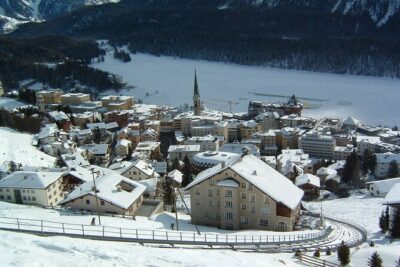
St. Moritz is the Engadin Valley’s headline town, famous for being high up, stylish, and surrounded by major peaks. In this tour you have about 2 hours of free time there—enough to do something real, but not enough to treat it like a full overnight base.
That time window matters, because it lets you do the “human” part of the day: walk the streets, get a coffee or snack, and reset your energy before you board the train. It’s also a good chance to wander toward viewpoints on foot without feeling rushed for a hotel check-in or dinner reservation.
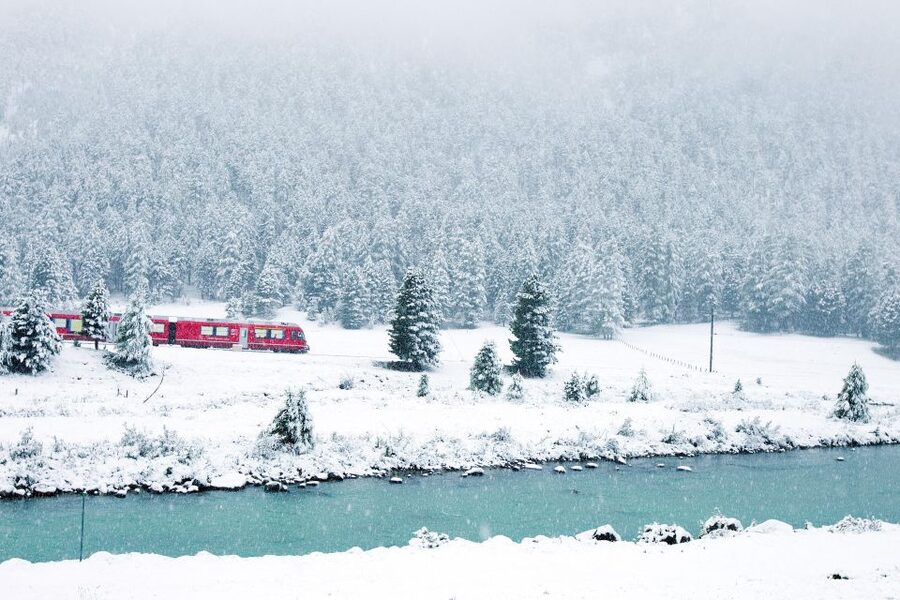
Seasonal detail worth keeping in mind: one winter departure included a bus stop at a lake area where the lakes were frozen. So if you go in colder months, expect cold-air views and bring layers you can actually tolerate standing in.
Practical note: because you’re on a tour format, it’s smart to return to the meeting point promptly when free time ends. With a tight rail day, the group moves when the timetable says so.
Boarding the Bernina Red train: where the views start paying off
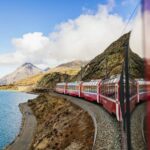
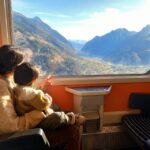
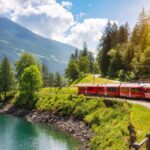
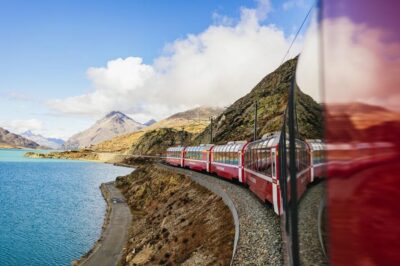
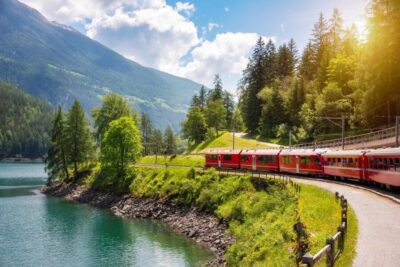
After your St. Moritz break, you board the legendary Bernina Red train. This is the portion people remember because it’s not a quick ride-through. It’s a slow, scenic experience where you can look out across Swiss high-country scenery and feel the elevation change.
I like how this portion gives you that classic “mountain railway” vibe: the track hugs the terrain, the train pulls you forward, and the scenery keeps shifting. Even without trying to memorize every valley, you can still enjoy the big visual rhythm: town edges → alpine valleys → higher passes.
One more practical tip: the day is long, so treat this as your visual reward after the earlier coach stretch. If you’re tempted to spend the early portion scrolling or napping, do it. Then, when the train starts, give your full attention to the windows and the slower tempo.
A few more we would happily send a friend to in Milan
- Milan: Cathedral and Duomo’s Terraces Entrance Ticket
★ 4.6 · 61,054 reviews - Milan: Guided Walking Tour & Last Supper Visit with Ticket
★ 4.7 · 5,409 reviews - Duomo Terraces Fast-Track Ticket & Optional Duomo Entry
★ 4.5 · 4,870 reviews - Milan: Leonardo3 The World of Leonardo Museum Entry Ticket
★ 4.4 · 3,936 reviews - Milan: Duomo Rooftop and Cathedral Guided Tour with Tickets
★ 4.8 · 2,678 reviews
Albula Railway and the Landwasser Viaduct: the UNESCO moment
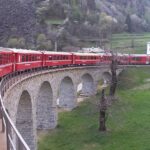
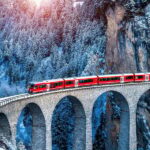
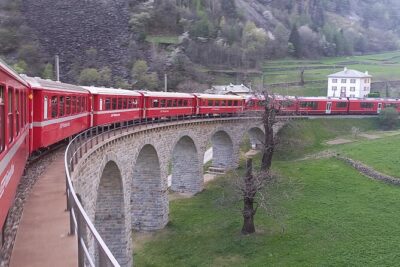
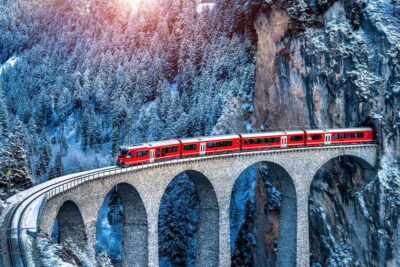
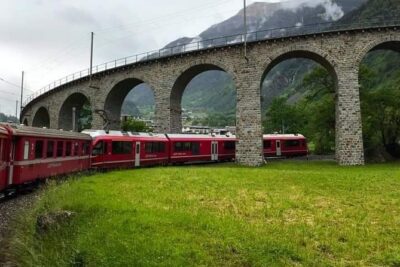
The Albula Railway segment is where the tour leans into UNESCO-style engineering and dramatic geometry. It’s also where the day’s most iconic “how did they build that” moment appears: the Landwasser Viaduct.
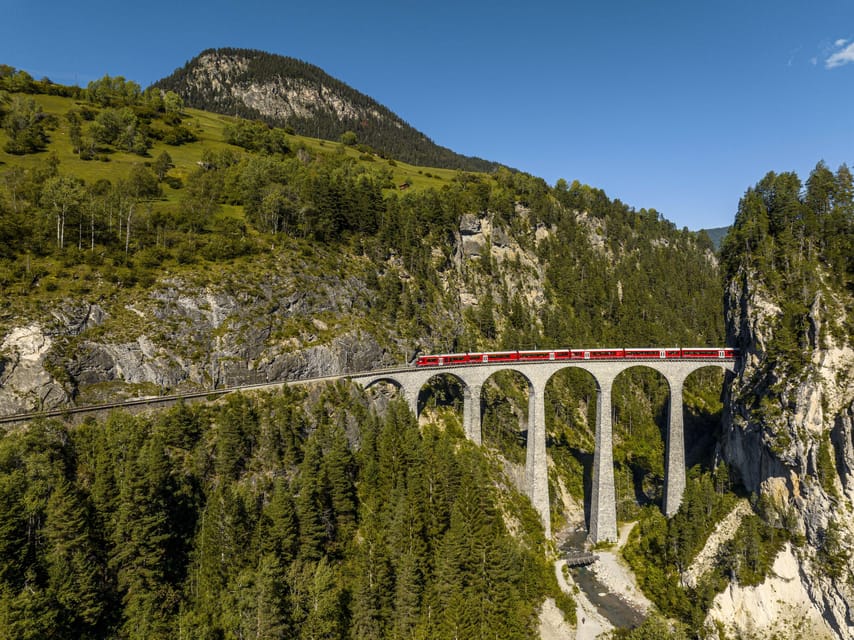
This crossing is described as an architectural marvel that curves over a deep gorge. In other words, you’re not just looking at mountains from a distance. You’re looking at a piece of infrastructure designed to sit beautifully in an intense physical setting—valley drop, gorge depth, and that curved span all at once.
The itinerary sets aside about 2 hours around this panoramic train experience, which is generous for rail sightseeing. That extra time matters. With a viaduct like this, you’ll want more than a blink-and-you-miss-it look. You’ll also have time to settle in—find a spot where you can keep the bridge and surrounding terrain in view, then just watch the train move across the structure and beyond.
Also, this is part of the route associated with the wider Glacier line scenery, even though the day trip is structured around a specific sequence. The takeaway for you: you’re getting a high-impact slice of the classic corridor, without needing to plan a multi-day “true Glacier Express” trip.
Bergün and Preda: small stops with big “route feeling”
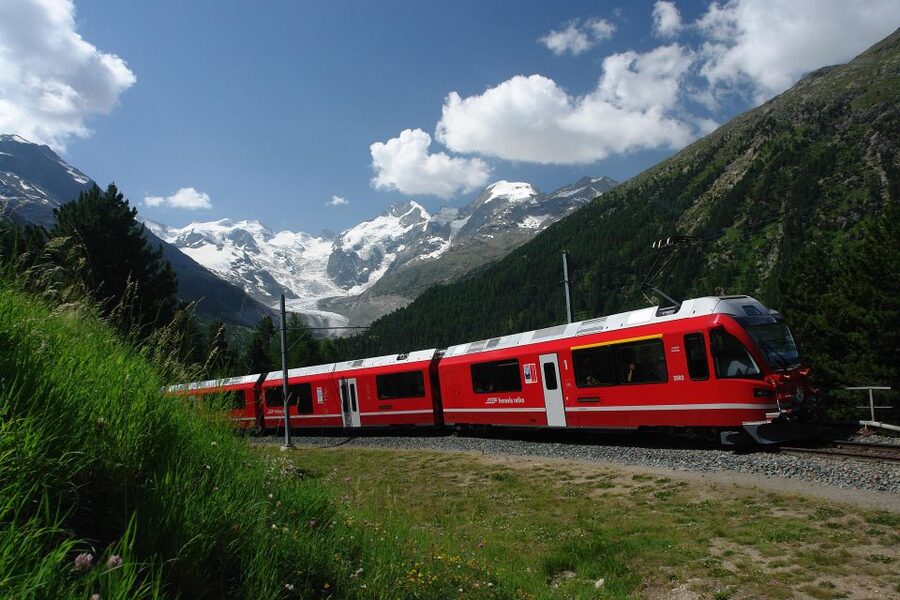
After the Landwasser moment, the ride continues through places that make the journey feel like a living route, not just one famous bridge.
Bergün is a named stop known for traditional Swiss architecture and an idyllic alpine setting. Even if you don’t have a long time on the platform, the point of including Bergün is that it breaks the day into “communities,” not only scenery. You get a sense of where people live in these high valleys.
Then the train reaches Preda, described as the highest point on the line. That matters because it changes the mood of the ride. Higher means colder air, thinner horizon, and a feeling of being closer to the sky. It’s also the point after which the scenery begins its more noticeable shift toward descent.
From a travel-planning standpoint, these named points are useful because they help you orient your day. When you know the train is going to Bergün and then to Preda, you can mentally pace yourself: enjoy the middle portion as a bridge between the big icons, and then watch for the moment the route tips toward the downhill views.
Chur or Thusis: finishing the rail day the practical way
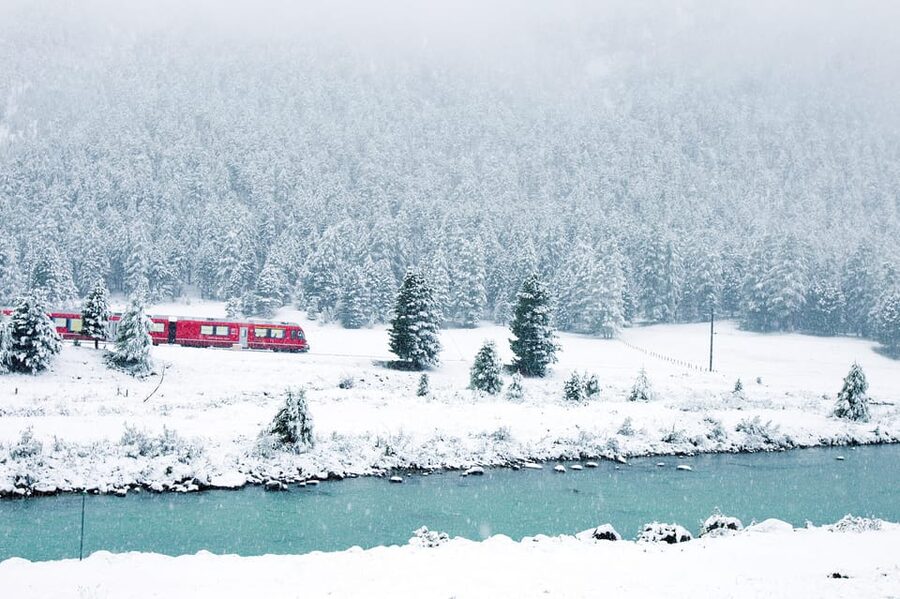
At the end of the train portion, your day is set up to finish in Chur or Thusis, followed by a return coach to Milan. That choice matters for your planning, even if you don’t control it day-to-day.
One past concern is that the sequencing might not match what some people expect in the moment, including confusion about whether Chur is visited. The important fix for you: confirm your actual end location (Chur vs Thusis) on your booking details or tour confirmation. It’s the best way to avoid the unpleasant surprise of thinking you’re heading one direction when the schedule hands you another.
There’s also a short break time of about 15 minutes at Thusis in the itinerary. That’s not a full stop for a meal, but it can be useful if you need fresh air or a quick restroom break before the long coach ride back.
Coach vs train time: how to survive the long day
This trip is built on balance: half the time is rail moments, half is coach transport. The coach rides are about 3.5 hours each way. That’s where the experience can either feel smooth or feel tedious, depending on what you do with your time.
Here’s how I’d set yourself up:
- Bring snacks and water you can actually eat quickly. There’s a break, but it’s not a whole lunch reset.
- Have a layer that works for cold air, because mountain trains and stations can be chill.
- Plan your phone battery. You’ll want it for photos and for finding your bearings when everyone regroups.
One piece of feedback that rings true: if you dislike long coach segments, this format might feel like too much sitting. The train is the payoff, but you do have to get through the coach stretches first.
If you’re someone who enjoys watching scenery from a window—even on the bus—this part won’t bother you much. You’ll still be traveling through Alpine country, even if it’s not yet the iconic bridge shots.
Price and value: what you’re actually paying for
You’re not just buying train tickets. You’re paying for a guided day that bundles together:
- Milan-to-Switzerland coach transfers (round trip)
- Time in St. Moritz
- A Bernina Red train experience
- The Albula Railway portion that includes Landwasser Viaduct
- Defined stops like Bergün and Preda
- The wrap-up connection toward Chur or Thusis and back to Milan
- Live guidance in English and Spanish
That’s value if you want “maximum scenic returns per planning hour.” It’s also value if you’d rather pay for coordination than spend your own day juggling connections, luggage logistics, and station timing.
What you should weigh before booking is your tolerance for long transit. If you’re the type who hates rigid schedules, a group day like this can feel like a checklist. If you’re okay with a structured day and love rail views, the package is efficient.
Who should book this—and who should rethink it
This tour suits you best if:
- You want the Bernina line and the Landwasser Viaduct experience in one day from Milan
- You like scenic rail travel and want a guided flow with minimal planning
- You want a real break in St. Moritz rather than just a station-to-train connection
I’d rethink it if:
- You have little patience for 12–13 hours with significant coach time
- You’re extremely sensitive to schedule changes, since the end point can be Chur or Thusis
- You prefer total independence over guided coordination
If your goal is a slower, deeper Alps trip with more time at each location, you might prefer staying overnight. But if your goal is “hit the highlights fast,” this day trip does that.
Should you book? My practical take
Book it if you want one day that stacks the big names: St. Moritz + Bernina Red train + Landwasser Viaduct + Albula route points like Bergün and Preda. The structure helps you see a lot without turning the trip into a logistics project.
Skip it (or choose a different format) if coach time will drain you. This is a long day. When you keep that expectation, you can enjoy the rhythm: coach to start, town to reset, train to reward you, then coach back before the Alpine magic fades into daylight fatigue.
If you do book, I’d double-check your confirmation for your pickup point in Milan and whether the day ends in Chur or Thusis. That small check is how you keep the day smooth.
FAQ
How long is the tour?
The duration is about 12–13 hours.
What trains are included in the day trip?
You ride the Bernina Red train, and you also travel along the Albula Railway section that connects to the wider Glacier line corridor.
Do I get time to explore St. Moritz?
Yes. You have free time in St. Moritz for about 2 hours.
How long is the Landwasser Viaduct panoramic train portion?
The Landwasser Viaduct panoramic train ride is scheduled for about 2 hours.
Where does the tour end?
Your day ends in Chur or Thusis, depending on the arrangement for your departure.
How long are the coach rides from Milan?
The coach transfer is about 3.5 hours from Milan to the tour area, and about 3.5 hours back to Milan.
What languages is the live guide available in?
The live tour guide is available in English and Spanish.
Where do I meet the tour in Milan?
Meeting point can vary by option. It may include locations such as Zani Viaggi Meeting Point, LakeComo Milan Visitor Center – Zani Viaggi, and Foro Buonaparte.
Is there free cancellation?
Yes. You can cancel up to 24 hours in advance for a full refund.
Is there a pay-later option?
Yes. You can reserve now and pay later.
If you tell me your month of travel and which Milan pickup option you’re considering, I can suggest how to time your day so the coach portion feels less painful.
More Tours in Milan
More Tour Reviews in Milan
More Bernina Express and St Moritz Trips
Fresh in our Milan notebook

Bernina Express & St Moritz, compared.
 ★ 5.0Bernina Red Train, Swiss Alps & St Moritz From MilanFrom $1682,954 reviews
 ★ 4.5Swiss Alps Bernina Red Train and St.Moritz Tour from MilanFrom $1792,369 reviews
 ★ 4.6From Milan: St. Moritz and Panoramic Bernina Express TourFrom $1881,723 reviews
 ★ 4.7From Milan: Bernina Train, Swiss Alps & St. Moritz Day TripFrom $1201,120 reviews
 ★ 4.7From Milan: Bernina Train Guided Tour to St. MoritzFrom $127948 reviews
 ★ 4.6From Milan: St Moritz & Alps Day Trip with Bernina Red TrainFrom $104851 reviews
 ★ 5.0Intimate Small-Group Bernina UNESCO Scenic Train on Swiss AlpsFrom $211619 reviews
 ★ 4.5Bernina Red Train And St Moritz Tour from MilanFrom $162280 reviews
Browse the lists this tour appears in