
Reviewed · MILAN BIKE & SEGWAY TOURS
Milan: Highlights and Hidden Gems Guided Bike Tour
Milan looks different at bike speed. This 3.5-hour guided ride strings together Duomo-area icons, Brera art streets, Porta Nuova modern architecture, and Roman remnants, all on an aquamarine bike with a live guide steering the story.
What I really like is how smoothly it balances the big hits (Duomo, La Scala, Castello Sforzesco) with side streets that help you understand how Milan neighborhoods actually work. I also like the guide style: if you get someone like Paulo, you’ll feel the city through clear, history-and-everyday-life anecdotes.
One consideration: this is not for anyone who can’t ride a bike, and it isn’t suitable for people under 4 ft 4 in / 135 cm.
In This Review
- Key things to know before you pedal
- Milan by Bike: why this 3.5-hour loop makes sense
- Meeting at Vetra: the easiest start points and the one car warning
- The bike setup: aquamarine style, flat riding, and comfort upgrades
- Ticinese streets to the Duomo area: Milan’s layers start fast
- Palazzo Reale, Galleria Vittorio Emanuele, and La Scala: the refined Milan sweep
- Brera: art district energy and why the stops feel human
- Porta Nuova to Castello Sforzesco: old meets modern without whiplash
- Parco Sempione and Arco della Pace: a breather that actually matters
- Roman ruins at the end: Milan’s older story comes into focus
- Riding experience and group feel: what the guides do best
- Price and value: what $44.41 buys in Milan time
- What to bring and how to dress for a Milan ride
- Who this tour is best for
- Should you book this bike tour?
- FAQ
- How long is the Milan Highlights and Hidden Gems Guided Bike Tour?
- What is included in the tour price?
- Which languages is the live guide available in?
- Where do I meet the guide for the tour?
- Is the tour suitable if I cannot ride a bike?
- What happens if it rains?
Key things to know before you pedal
- Iconic aquamarine bikes plus helmets and a waterproof jacket if the weather turns.
- A full Milan orientation in about 3.5 hours, mixing landmark stops with calmer district streets.
- Easy riding profile thanks to mostly flat routes, frequent check-ins, and plenty of short pauses.
- Duomo to La Scala to Brera to Porta Nuova, so you see multiple Milan eras without racing.
- Guide narration that sticks, with lots of practical context as you move from place to place.
The Milan highlights, a wider sweep
- Milan’s Must See: Half-Day Tour of Last Supper, Duomo & La Scala★ 4.0 · 4,193 reviews
- From Milan: St. Moritz and Panoramic Bernina Express Tour★ 4.6 · 1,723 reviews
- Best of Milan Experience Including Da Vinci’s The Last Supper and Milan Duomo★ 4.5 · 1,516 reviews
Milan by Bike: why this 3.5-hour loop makes sense
Milan is one of those cities where walking can feel slow once you’re between neighborhoods. This tour fixes that by moving you through key districts at a relaxed but steady pace, so you don’t spend your whole day just getting across town.
You get a quick sense of the city’s rhythm: the grandeur around the Duomo, the refined shopping arcades, the cultural center near La Scala, the arts-and-students vibe of Brera, the sharper lines of Porta Nuova, and the calmer green space at Parco Sempione. And then it adds a curveball with Roman ruins that remind you Milan has layers going way beyond the cathedral-and-fashion postcard.
The ride time is long enough to feel like a real tour, but short enough that you can keep exploring afterward. That’s ideal for a first day in town or for anyone who wants a smart highlight plan without committing to a full-day pace.
Meeting at Vetra: the easiest start points and the one car warning
You’ll meet near Metro Station Vetra (M4), with about a 3-minute walk. If you’re closer to Duomo (M1/M3), plan on roughly a 14-minute walk or a quick tram ride. From S. Ambrogio (M2), you’re looking at about 12 minutes on foot, or a longer bus option. Porta Genova (M2) is about 1.3 km away.
If you’re arriving by car, pay attention to the city’s restricted zones: the meeting instructions specifically warn you not to enter the Ztl area, since fines are a real risk. In practice, that means using parking outside the restricted zone and arriving on foot or by metro.
The bike setup: aquamarine style, flat riding, and comfort upgrades
This is one of the more practical Milan bike tours because the city route profile is designed for easy pedaling. One strong theme in the feedback is that the roads are flat and very easy to manage, with no stress from steep climbs.
You’ll get:
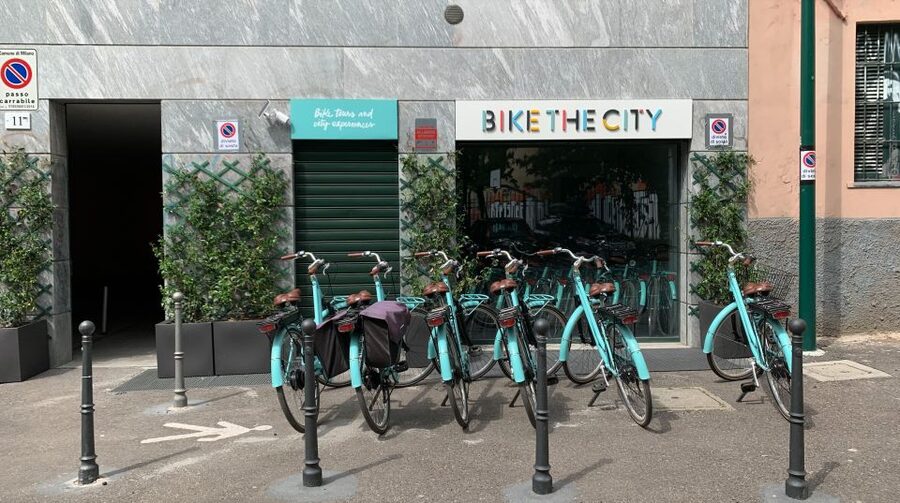
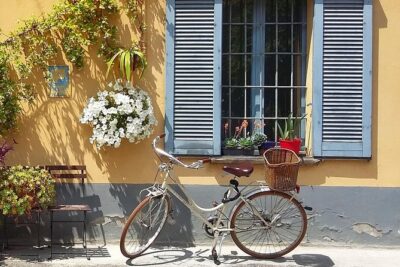
- a bike (the classic aquamarine look)
- a helmet
- an official guide
- third-party liability insurance
- a waterproof jacket option if rain shows up
Comfort matters too. People noted that bikes are in good condition and come in multiple sizes, which is a big deal in a city where one-size-fits-none can make riding less safe and less enjoyable.
If you hate the feeling of being cold, bring comfortable clothes. The tour keeps going with gentle rain, but you don’t want to start shivering and lose the fun.
The city on two wheels, more of it
- Milan: Hidden Gems Guided Bike Tour
★ 4.8 · 1,334 reviews - Milan’s Hidden Gems: Unique Bike Tour (ENG, NL)
★ 5.0 · 970 reviews - Milan: Highlights and Hidden Gems E-Bike Tour
★ 4.7 · 558 reviews - Milan: Highlights and Hidden Gems Guided Bike Tour
★ 4.7 · 498 reviews - Highlights and hidden gems of Milan Bike Tour
★ 5.0 · 491 reviews
Ticinese streets to the Duomo area: Milan’s layers start fast
The ride begins in the Ticinese district, a historic and lively starting point that sets the tone right away. Instead of launching you from a polished tourist plaza, you ease into Milan from a neighborhood feel—streets that look and sound like real daily life.
From there, you move toward the Duomo zone with a classic “wow, you’re here” sequence:
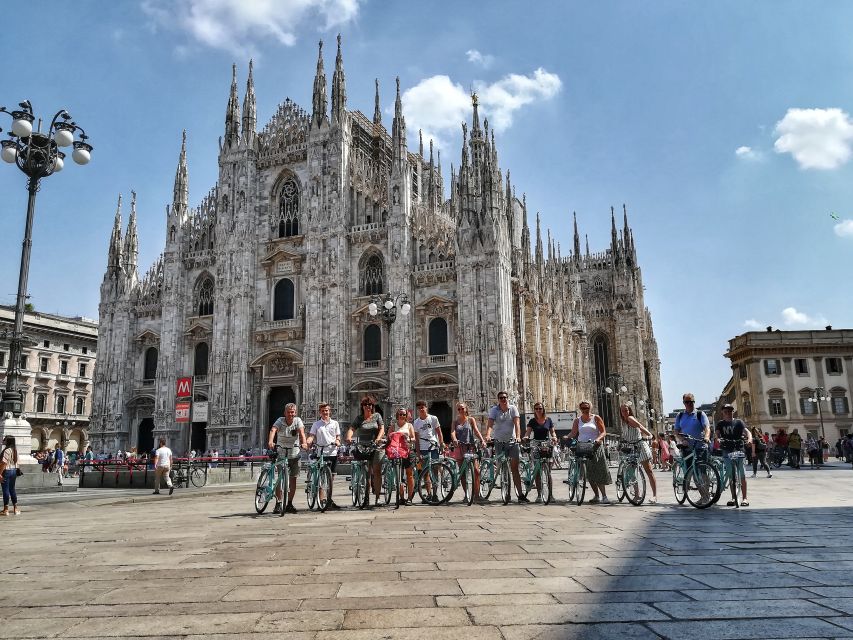
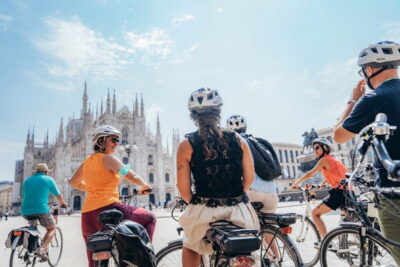
- Gothic Duomo Cathedral: close enough to appreciate the scale and detail
- surrounding sights that show why this area is Milan’s gravity
This segment is where the tour earns its quick-orientation promise. You see the famous cathedral complex without spending hours in one spot, and you’re placed in the right visual context for photos later—because you understand the surrounding streets, not just the monument.
A small note on expectations: this is a bike tour, so the stop style matters. You don’t get the kind of extended inside-time you’d want for a museum day. Instead, you get guided vantage points and story-driven pauses that help the exterior landmarks click.
Palazzo Reale, Galleria Vittorio Emanuele, and La Scala: the refined Milan sweep
After the Duomo, you glide into a more polished, elegant part of central Milan. You’ll pass by:
- Palazzo Reale, where the architecture signals old-world prestige
- the Galleria Vittorio Emanuele, a glass-and-iron shopping arcade that feels like an indoor street with a grand ceiling
- La Scala, the world-renowned opera house
This is a great trio because it shows three different versions of “Milan style”: royal-era formality, refined commercial architecture, and performance culture. Even if you’re not an opera person, La Scala matters because it’s one of the city’s most recognizable cultural landmarks.
The guide stories are what make this section more than just scenic stops. You’re not only seeing buildings—you’re hearing why Milan built them and how that purpose changed over time. It’s the difference between taking pictures and actually learning the city’s logic.
Brera: art district energy and why the stops feel human
Then comes Brera, the city’s arts heart. This is where the tour slows down slightly in feel, letting you experience the neighborhood mood rather than just the monument list.
You’ll roll into Brera with the Pinacoteca in mind as a landmark stop. Even if you don’t spend museum hours inside, just reaching that setting helps you understand Brera’s reputation: the area feels designed for creativity and wandering.
This part of the ride also helps you appreciate Milan’s smaller street pattern. You get the kind of back-street riding that’s hard to do on your own without planning—especially if you’re trying to avoid traffic stress.
A practical perk: feedback often mentions coffee and gelato breaks mid-ride. If your group schedule allows it, it’s a smart way to reset without breaking the momentum of the tour.
Porta Nuova to Castello Sforzesco: old meets modern without whiplash
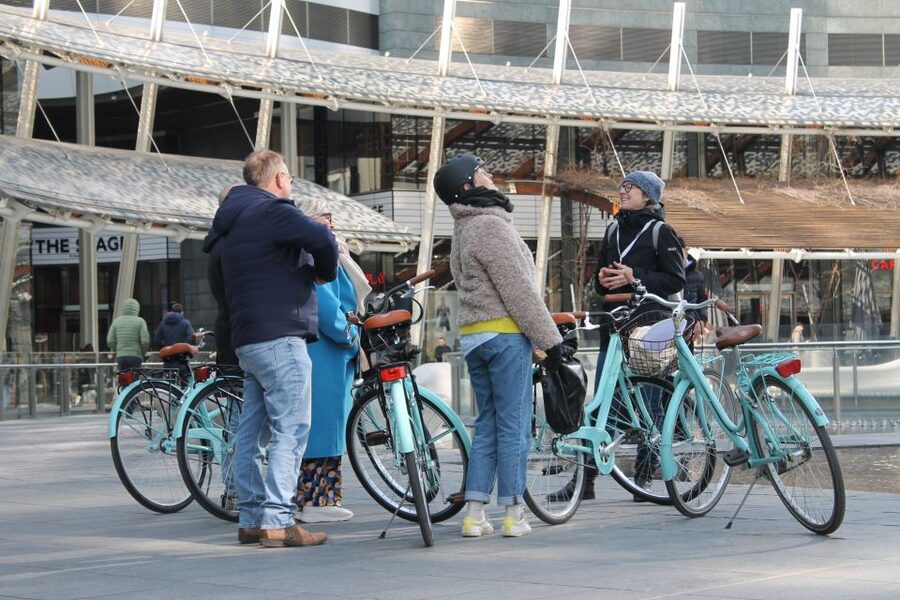
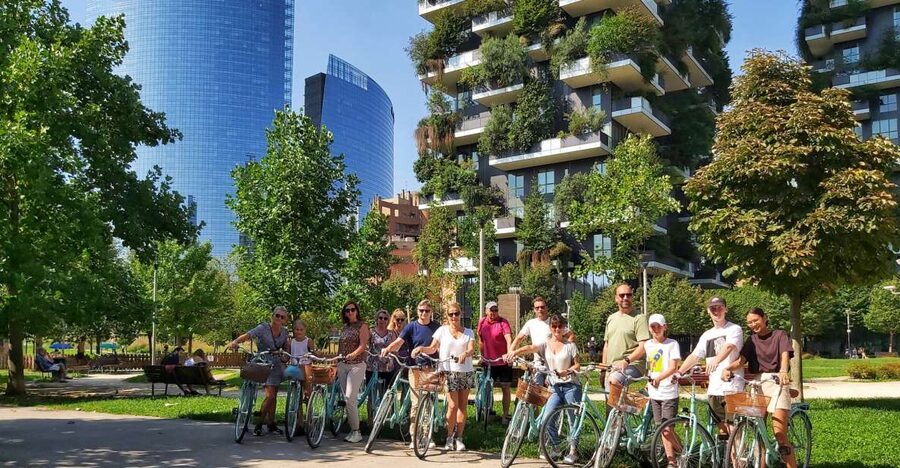
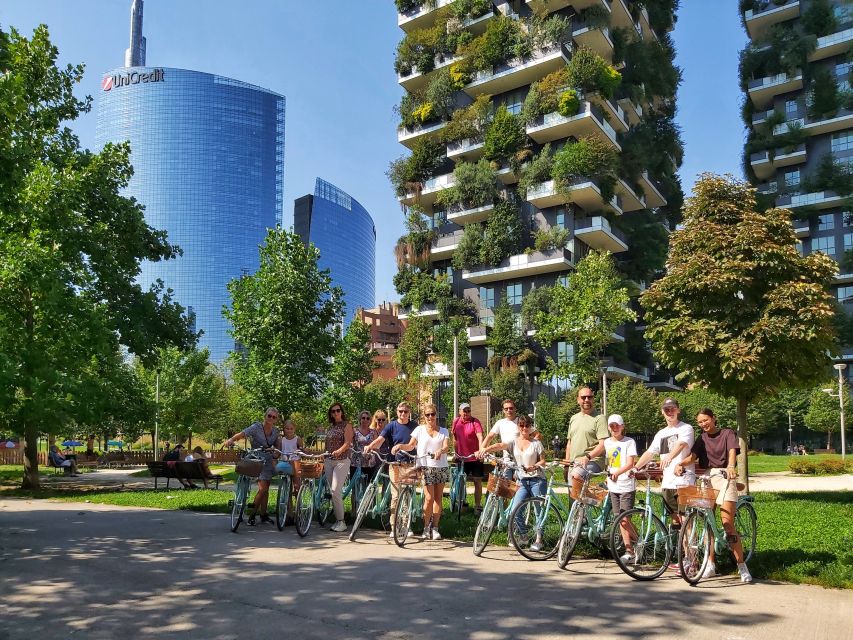
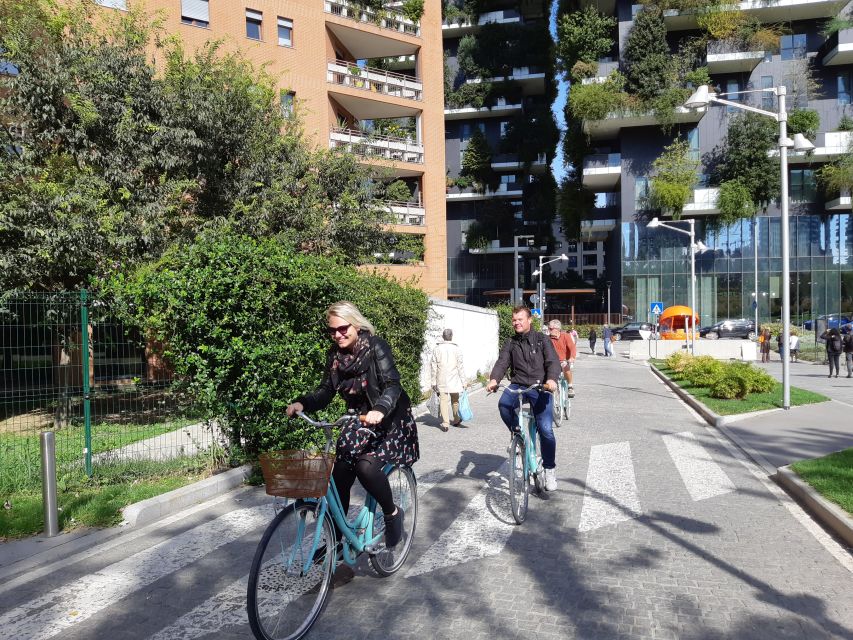
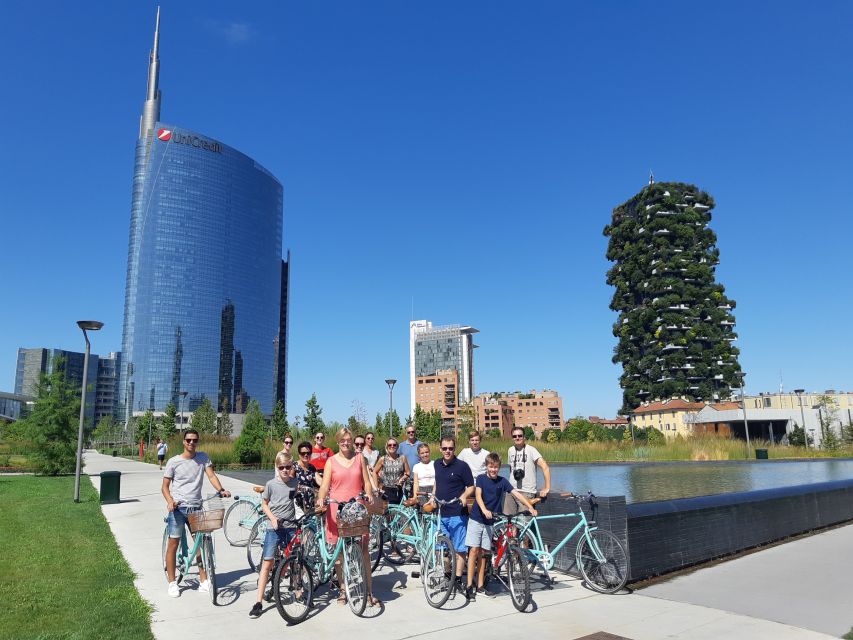
Next, you jump forward in time with Porta Nuova, Milan’s cutting-edge architecture area. This shift is valuable because it prevents the tour from becoming one long “old monuments” loop. You’ll see how Milan modernized—how the city stretches into newer forms and how those forms sit alongside the older core.
After Porta Nuova, the route swings to a major anchor: Castello Sforzesco. This is one of those places where being outside is enough to feel its weight and meaning. The castle isn’t just scenery; it’s a symbol of power, control, and the city’s strategic past.
The transition from modern district to medieval fortress works well on a bike. On foot, you might feel the distance. In the car, you might miss the street-level shifts. On a bike, you sense the change as you move through it.
One more reason this section is a win: the ride stays social. Group pacing is relaxed, so you can ask questions when the guide stops you or you want a quick explanation of what you’re looking at.
Parco Sempione and Arco della Pace: a breather that actually matters
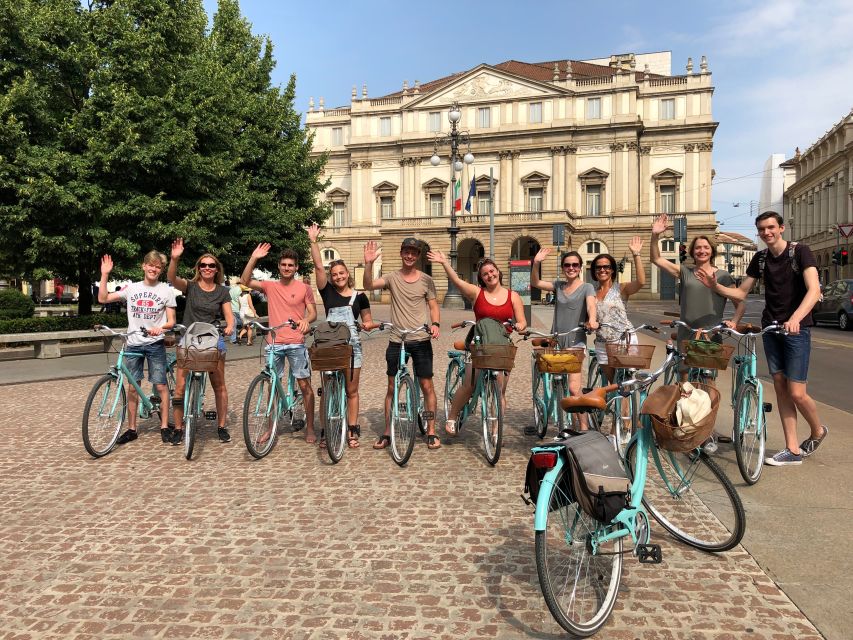
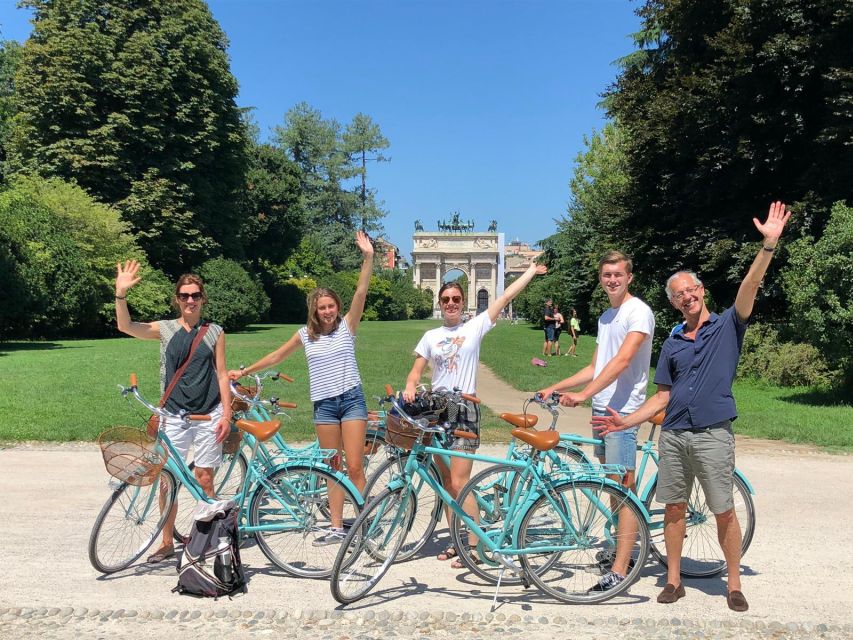
After the castle, the tour heads into green space at Parco Sempione, often described as Milan’s lush green lung. This is the moment where you breathe—literally and figuratively.
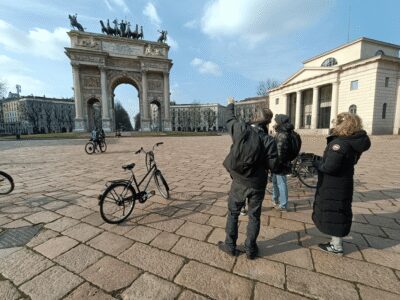
Then you get the Arco della Pace area, a neoclassical monument that fits the park setting. It’s a nice contrast: you’ve just been in stone and iron territory, and now you’re seeing a monumental structure framed by open space.
This stop helps in two ways:
- It breaks up the intensity of landmark concentration.
- It gives you time to regroup, stretch legs, and listen without feeling rushed.
For anyone who’s spent the morning sprinting through sights, this is the “okay, I can enjoy the city now” portion.
Roman ruins at the end: Milan’s older story comes into focus
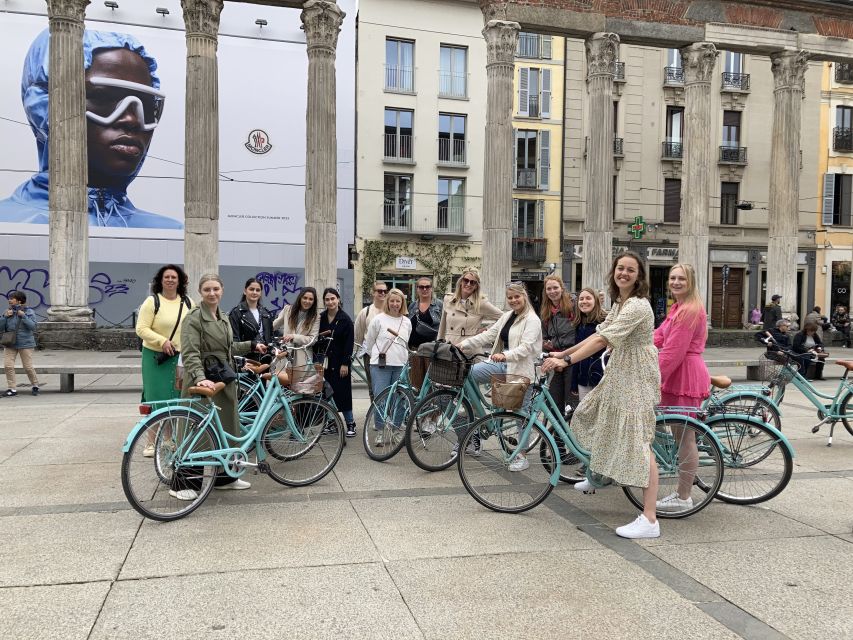
The finale brings you back in time again, with Roman remnants that connect Milan to its days as a capital of the Roman Empire. You’ll visit remnants associated with:
- an imperial palace
- a circus
- an amphitheater
Even though they’re ruins, they do a lot for your mental map. They remind you that Milan’s identity isn’t a single era. It’s built on layers, and the city still shows those layers if you know where to look.
This closing segment works well because you’re ready for a change of pace by then. The tour ends back near the starting area, so you’re not left stranded across the city with sore legs and no plan.
Riding experience and group feel: what the guides do best
The biggest recurring praise centers on the guide experience and safety on the streets. People specifically highlight that guides keep the group together, navigate confidently, and provide explanations during stops rather than info-dumping while you’re moving.
Guide names that come up include Paulo and Sandra, with Martha also mentioned for detailed guiding. If you get any of these styles, here’s what you can expect:
- clear, frequent storytelling that connects landmarks to the way Milan developed
- a pace that feels manageable for a mixed international group
- lots of short laughter moments, which helps a city tour feel less like a lecture
In other words, the guide is not just driving the route. The guide is shaping how the route makes sense to you.
Price and value: what $44.41 buys in Milan time
At $44.41 per person for about 3.5 hours, the value is strongest if you’re using the tour as a map-making tool. Milan is large enough that orientation is real money saved. This tour helps you decide where you want to spend more time later—because you’ll understand the geography and atmosphere.
You also get several items included that would cost money or time if you planned separately:
- bike + helmet
- an official guide
- third-party liability insurance
- a waterproof jacket for rain cover
That inclusion matters. The “hidden cost” of DIY biking in a big city is usually gear quality and route confidence. Here, the structure is built in, and the ride is designed to be flat and approachable.
If you’re short on time, this is one of those purchases that feels like it buys direction, not just transportation.
What to bring and how to dress for a Milan ride
Bring comfortable clothes you can ride in. If rain is possible, you’ll be covered with a waterproof jacket option, but your base clothing still matters for comfort.
Also remember the straightforward rules: no alcohol and no drugs. That keeps the tour enjoyable and safe for everyone.
Not allowed and not practical if you don’t know how to ride a bike. If you do ride regularly at home and you can feel comfortable with steering and braking, you’ll likely find the pace manageable.
Who this tour is best for
This is a great choice if:
- you want a first-day orientation to Milan
- you’re splitting your time and want landmarks plus neighborhood texture
- you prefer a seated, low-effort sightseeing format compared with hours of walking
- you appreciate guided context, not just photo stops
It’s less ideal if you’re looking for deep museum time or long interior visits. This tour is about seeing the city as a whole, then pointing you to where you want to zoom in afterward.
Should you book this bike tour?
Yes—if your goal is to understand Milan fast without getting stuck in the city-walk trap. For the price and time, you’re getting a strong mix of major icons and district variety, plus guide storytelling that makes the stops mean something.
Book it especially if you:
- have only a day or two in town
- want a route that includes both classic landmarks and quieter streets
- like the idea of seeing multiple neighborhoods without overplanning
Skip it if you can’t ride a bike comfortably or if you’re under 4 ft 4 in / 135 cm. And if you’re the type who wants hours inside museums, plan other time slots for that.
FAQ
How long is the Milan Highlights and Hidden Gems Guided Bike Tour?
The tour lasts about 3.5 hours.
What is included in the tour price?
The tour includes a bike, helmet, an official guide, third-party liability insurance, and a waterproof jacket in case of rain.
Which languages is the live guide available in?
The live tour guide is available in Dutch and English.
Where do I meet the guide for the tour?
You can meet near Metro Station Vetra (M4) with about a 3-minute walk. Other nearby options include Metro Station Duomo (M1/M3), S. Ambrogio (M2), and Porta Genova (M2), each with the walking or transit times noted in the meeting details.
Is the tour suitable if I cannot ride a bike?
No. The tour is not suitable for people who cannot ride a bike.
What happens if it rains?
The tour goes ahead even if there is a gentle sprinkle. If the weather takes a heavier turn, you’ll be contacted to help reschedule or get a full refund.
More Tour Reviews in Milan
More of Milan by Bike and Segway
More Milan Highlights Tours
Fresh in our Milan notebook

Milan Bike & Segway Tours, compared.
 ★ 4.8Hidden Gems Guided Bike TourFrom $451,334 reviews
 ★ 5.0Milan’s Hidden Gems: Unique Bike Tour (ENG, NL)From $42970 reviews
 ★ 4.7Highlights and Hidden Gems E-Bike TourFrom $52558 reviews
 ★ 5.0Highlights and hidden gems of Milan Bike TourFrom $47491 reviews
 ★ 4.9Sights by Segway Small Group TourFrom $79450 reviews
 ★ 4.8Guided Bike TourFrom $57256 reviews
★ 5.0Milan Sights by Segway Small Group TourFrom $90249 reviews
★ 4.8Guided Bike TourFrom $57256 reviews
★ 5.0Milan Sights by Segway Small Group TourFrom $90249 reviews
 ★ 5.02 hour Vintage Fiat 500 Central City Tour in MilanFrom $362148 reviews
Browse the lists this tour appears in