
Reviewed · MILAN BIKE & SEGWAY TOURS
2 hour Vintage Fiat 500 Central City Tour in Milan
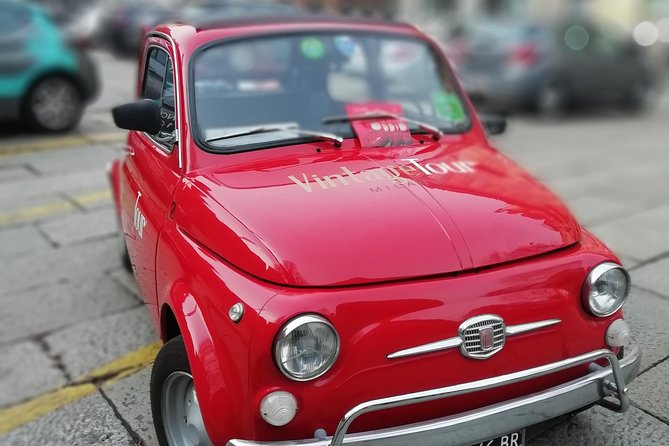
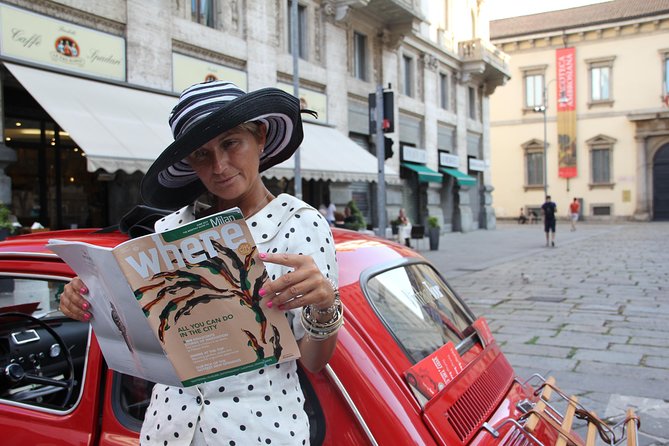
Milan feels different in a Fiat 500. This private 2-hour run mixes expert driving with live English commentary, so you zip between central sights without fussing over traffic, parking, or directions. You also get to choose how much time you spend on the walking parts, which is handy when your Milan schedule is tight.
I especially like the format: live commentary on board while the chauffeur handles the streets. I also love that you get to pick two stops of your choice along the route, which lets you shape the tour around your interests (art history, Renaissance secrets, or a quick look at Rome-era Milan).
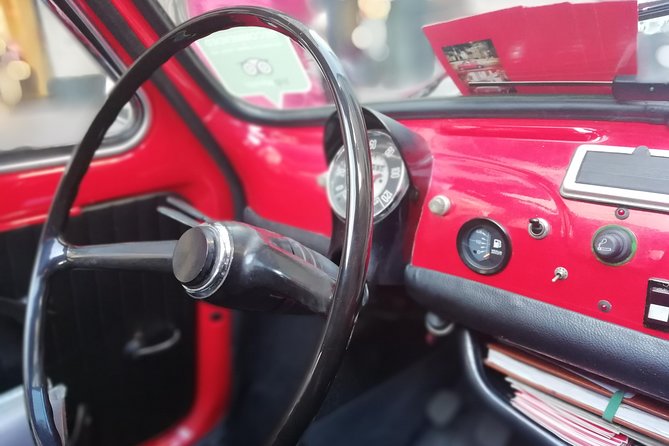
One thing to plan around: the car is very tiny and it has no AC, no seat belts, and no air bags. On hot days, dress light, and if you’re tall, expect tight seating and limited legroom.
In This Review
- Key highlights to know before you go
- Milan by Vintage Fiat 500: why it works in 2 hours
- Price and value: $362.95 for up to 3 people
- Where you start and how pickup affects your day
- Pick your two stops: the real trick to enjoying this route
- Art and Design District: start with Milan’s modern-to-old bridge
- Sforza residence and the Sala delle Asse story
- Santa Maria delle Grazie: Gothic architecture plus Last Supper context
- San Maurizio al Monastero Maggiore: Milan’s Sistine Chapel reputation
- Roman ruins near Corso Magenta: Maximian’s world in the background
- Banca d’Italia palace and the architecture nod to Rome
- Pinacoteca and Codex Atlanticus drawings: Leonardo on paper
- A shopping street break: Milan without the pressure
- Sforza hospital roots and today’s university presence
- Duomo di Milano: a big cathedral view from via Larga
- What it’s like inside the car: no AC, tight space, simple comfort
- Tour pacing: how the guide keeps you moving without rushing
- Who should book this Milan Fiat 500 tour
- Should you book? My take for decision-making
- FAQ
- What is the duration of the 2 hour Vintage Fiat 500 Central City Tour in Milan?
- How many people can ride in the Fiat 500?
- Is pickup available, and where?
- What language is the tour commentary in?
- Can I choose where we stop?
- What should I know about the car?
- Is the tour ticketed for attractions or murals?
- What’s included in the price, and what’s not?
- Is smoking allowed on board?
Key highlights to know before you go
- Private Fiat 500 for up to 3 people, no fleet feel, more control of the pacing
- Two stops you choose for walking/photo time, while the rest is storytelling from the road
- Renaissance + Leonardo focus around places tied to Ludovico Sforza and the Last Supper context
- San Maurizio al Monastero Maggiore gets called the Sistine Chapel of Milan, and this stop is about that wow factor
- Duomo sighting from via Larga without lining up at cathedral gates
- Hotel pickup (Zone 1 only) saves time if you’re staying downtown
The city on two wheels, more of it
- Milan: Hidden Gems Guided Bike Tour★ 4.8 · 1,334 reviews
- Milan’s Hidden Gems: Unique Bike Tour (ENG, NL)★ 5.0 · 970 reviews
- Milan: Highlights and Hidden Gems E-Bike Tour★ 4.7 · 558 reviews
Milan by Vintage Fiat 500: why it works in 2 hours
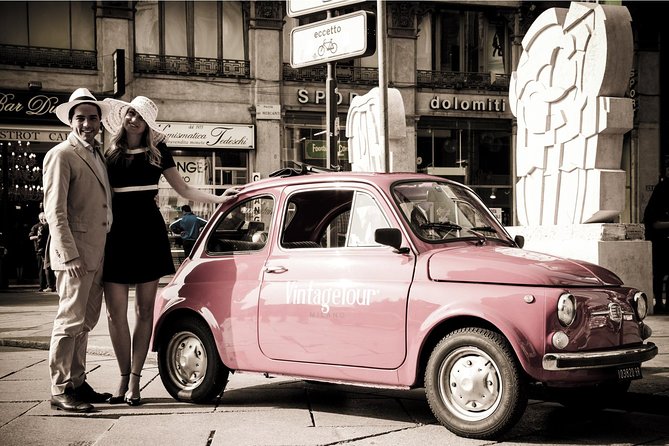
If you want a fast first look at Milan’s center, this tour has a smart rhythm. You ride in a classic Fiat 500, so you cover more ground than a walking-only day, yet you still get enough time outside the car to absorb a few key places.
The whole thing runs like a guided city drive with a human filter. A professional driver leads you through central streets and keeps things moving, while a tour leader gives live commentary in English. That matters because Milan’s best stories are rarely obvious from street level.
And yes, you will notice the car right away. The Fiat 500 is compact. The plus side is that it’s charming and photo-friendly. The downside is that comfort is basic, especially if you’re taller or you’re traveling as a full trio.
Price and value: $362.95 for up to 3 people
The price is $362.95 per group for up to 3 passengers, for about 2 hours. That pricing can feel high if you’re traveling solo. But split across two people, it becomes much easier to swallow, and it starts looking like good value if you want:
- a guided drive that saves time in traffic,
- hotel pickup in Zone 1 (for selected hotels),
- and a personalized tour vibe instead of a bus-style shuffle.
Where the value really shows up is in the choices. You’re not locked into one fixed script. You can pick two stops along the route, which means you can steer the tour toward what you’d actually spend time on if you were on your own.
Where you start and how pickup affects your day
Tours start at Via Palestro, 16 (20121 Milano). If you’re eligible for pickup, you’ll be collected from selected hotels in Zone 1 only. If your hotel isn’t in that zone, you’ll meet at Via Palestro and begin from there.
This matters because a classic 500 tour is best when you don’t lose time to getting across the city. Pickup in Zone 1 can mean you’re sightseeing sooner and less time coordinating taxis or public transit.
The tour ends back at the meeting point (unless pickup drops you differently as part of the same service flow). For planning, treat this as a loop around central sights, not a one-way transfer.
A few more we would happily send a friend to in Milan
- Milan: City Sightseeing Hop-On Hop-Off Bus with Audio Guide
★ 4.0 · 6,256 reviews - Milan: Official City Pass with Duomo and Over 10 Attractions
★ 4.4 · 1,186 reviews - Transfer Milan City Centre – Bergamo Airport
★ 4.5 · 975 reviews - Milan: The Milan Pass City Card
★ 4.0 · 655 reviews - From Milan: Day Trip to Venice with Guided City Tour
★ 4.4 · 614 reviews
Pick your two stops: the real trick to enjoying this route
The tour is built around a simple idea: you get time outside the car at two stops you choose. Everything else is handled by the driver and the live guide narration as you pass major landmarks.
So before you go, decide what kind of Milan you want:
- If you’re here for Leonardo and the Renaissance, prioritize stops tied to Ludovico Sforza’s era and the Last Supper setting.
- If you love interior artwork, choose the church stops where frescoes and painted walls are the point.
- If you want the “Milan vibe” too, one of your two stops can be a shopping street break or a view-focused stop.
Because the itinerary includes more than two major sights, your selection will shape the tour more than you might expect. This is a great format for travelers who want variety without turning the day into a museum sprint.
Art and Design District: start with Milan’s modern-to-old bridge
Your route begins with an area that blends Milan’s design identity with its historic core. The idea here isn’t to lecture you like a museum docent from a distance. It’s to set you up with mental maps.
From the road, you’ll get street-level orientation—what’s where, which districts feel different, and how the city layers eras on top of each other. That makes the later Renaissance stops land harder, because you understand the geography.
What to watch for: look at how the streets guide you toward big institutions and churches. Milan’s center feels orderly once you’ve seen a few anchors from a moving perspective.
Sforza residence and the Sala delle Asse story
One stop on the route connects directly to Ludovico Sforza, the Duke of Milan during the Renaissance. This was a residence, and Leonardo da Vinci first worked there as a military and civil engineer before his reputation shifted more toward art.
The tour highlights the Sala delle Asse and its frescoed ceiling, described as combining naturalist depiction with strong symbolism. Even if you don’t go inside for a long visit during this kind of drive-and-walk format, the story gives you context for why Leonardo mattered to power, not just to aesthetics.
Why this works: it reframes Leonardo from genius-in-a-vacuum to someone doing commissioned work for rulers. If you’re the kind of traveler who likes the why behind the what, you’ll appreciate this angle.
Practical note: if one of your two chosen stops is here, give yourself enough time to look slowly when you’re out of the car. These are the details you’ll remember later when you see other Renaissance sites.
Santa Maria delle Grazie: Gothic architecture plus Last Supper context
Another major stop area is Santa Maria delle Grazie, known for its beauty and for late Gothic architecture typical of Milan. It was built by the Dominicans from 1463 to 1482.
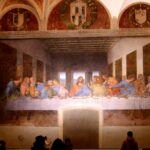
Then the timeline snaps into the Leonardo era. In 1495 to 1498, Leonardo painted the famous mural The Last Supper in the refectory of the monks.
This is one of those stops where the guide’s narration is as important as the building itself. Even if your visit time is short, you come away with a clear sequence: who built the church, when it existed, and why Leonardo’s mural belongs to that place.
The possible drawback: if your expectation is a full, long mural visit, a 2-hour private drive may not be your best format. This experience is about seeing the area and understanding it quickly, not about turning the day into a deep museum itinerary.
San Maurizio al Monastero Maggiore: Milan’s Sistine Chapel reputation
If you choose a church stop as one of your two walking breaks, I’d seriously consider San Maurizio al Monastero Maggiore. It’s a Renaissance church erected in 1503 based on a project by Giovanni Giacomo Dolcebuono.
This church is famous for its frescoes and pictures, and it’s often nicknamed the Sistine Chapel of Milan. That reputation isn’t random. It’s built on the idea that the interior art experience is intense and unforgettable.
What I like about this stop in a Fiat tour: you’re not stuck in one neighborhood for hours. You can see a dramatically different side of Milan (ornate, enclosed, art-forward) while still keeping your overall day efficient.
Small consideration: church spaces can be visually dense. Plan for slower looking once you’re inside or at the threshold. If you’re rushing, you’ll miss why this place is famous.
Roman ruins near Corso Magenta: Maximian’s world in the background
One stop option points you toward the ruins of the Roman Imperial Palace in Milan, where Emperor Maximian reportedly resided around 286 A.D. This stop is described as being just behind Marchesi 1824 on Corso Magenta.
The value here is perspective. In a city tour that’s heavily Renaissance-coded, a Roman-era reference gives you the bigger timeline. Milan didn’t start with cathedrals and dukes. It layers centuries, and this is a chance to feel that.
Best use of your time: if you’re a “photos first, history second” traveler, this is a nice compromise stop. You get the story, and you can take quick visual proof while the guide keeps the timeline clear.
Banca d’Italia palace and the architecture nod to Rome
Another route highlight is a grand building: the Banca d’Italia palace, built in 1907. It was designed by architect Luigi Broggi and Cesare Nava, and it was inspired by the architecture of the Vittoriano in Rome.
Why this matters: Milan isn’t only Renaissance and medieval stone. Early 20th-century architecture shapes the way the city feels today, including the proportions, facades, and how major institutions sit in the street grid.
This stop is especially good if you like comparing styles across Italian cities. You get a sense of how Rome’s monumental language traveled and got translated into Milan’s urban look.
Pinacoteca and Codex Atlanticus drawings: Leonardo on paper
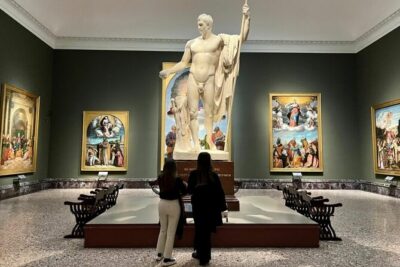
Your route also references the Pinacoteca, with an exhibition connected to drawings from the Codex Atlanticus, described as the largest collection of Leonardo’s drawings.
Even when you’re not spending hours in a gallery on a short drive tour, this kind of reference is helpful. It tells you what kind of Leonardo you’re dealing with: not only the painted icons, but the working drafts, engineering thinking, and visual experimentation.
If drawings are your thing, this can be a great stop choice for your two walking breaks—because it changes your Leonardo lens from finished masterpieces to raw ideas.
A shopping street break: Milan without the pressure
The itinerary includes time along an “affordable” shopping street. The exact street isn’t named in the information you provided, but the intent is clear: this is a chance to get a feel for shopping Milan without treating it like a luxury-only runway.
This stop is a good fit if you’re traveling with someone who wants something practical during the city tour. It’s also a smart choice if you already plan to do a museum-heavy day elsewhere.
The drawback: don’t expect a dedicated retail tour. In a 2-hour format, shopping is a window, not a full plan.
Sforza hospital roots and today’s university presence
One route stop highlights Milan’s first hospital, founded in 1456 by Francesco Sforza, and notes that it’s currently the main site of the State University.
This is the kind of detail that makes a short tour feel richer. It connects Renaissance-era social infrastructure to what’s used today. You get continuity: a place with public purpose, not only elite palaces and churches.
If you like history that affects everyday life (education, health, institutions), this stop gives you that angle quickly.
Duomo di Milano: a big cathedral view from via Larga
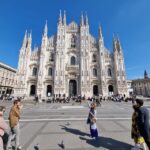
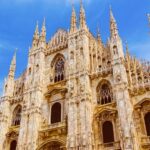
Finally, you’ll get a look at the Duomo di Milano from via Larga. The info provided notes its huge scale—515 ft (157 meters) long and 302 ft (92 m) wide—and a quick reminder of how the site evolved, including the earlier Basilica of Sant’Ambrogio and the 1386 start date for construction.
This is a strong finish for first-timers because it lands you on the city’s most famous landmark without turning your tour into a waiting-and-entering mission. From the street, you can still register size, shape, and the way Milan organizes around its cathedral.
Just remember: this is a view stop. If you want to go inside and spend serious time, you’ll need separate planning.
What it’s like inside the car: no AC, tight space, simple comfort
Let’s talk reality. The Fiat 500 on this tour has no AC, and it also doesn’t have seat belts or air bags. That doesn’t mean the ride is unsafe in practice for a guided tour, but it does mean you should treat the experience as old-school and prepare accordingly.
Plan for:
- Summer heat: dress lightly. Fans are mentioned in the tour guidance you shared.
- Comfort limits: the car is tiny. Tall travelers may find legroom tight, especially in the back.
- Photo opportunities: people often get great street photos because the car itself is a magnet for attention.
Also, no smoking on board, and smart casual dress code is required.
Tour pacing: how the guide keeps you moving without rushing
This kind of central-city drive tour works best when you get a mix of motion and short pauses. The setup here is designed for that:
- driving through key areas while you learn,
- stopping at up to two places you select,
- and finishing back at the starting point.
The value of having a private tour with just your group is that you can set expectations early. If you want more time at one chosen stop, you’ll be in a better position than on a shared group schedule.
Who should book this Milan Fiat 500 tour
This is a great fit if you:
- have only about 2 days (or less) and want a first orientation fast,
- want a fun transport style that still gives serious context,
- like Leonardo and Renaissance stories tied to real locations,
- are comfortable with tight space and a no-AC vintage car.
You might want a different kind of tour if you:
- need a long, museum-style schedule with guaranteed extended entry time,
- get uncomfortable in small vehicles,
- or strongly prefer modern cars with climate control and safety restraints.
Should you book? My take for decision-making
Book this tour if you want the fastest way to feel Milan’s layers: Roman roots, Renaissance power, church art, and the Duomo all in one compact plan. The price makes most sense for two or three people, especially if you can use Zone 1 hotel pickup to save time.
If you’re sensitive to heat or comfort limits, still consider it—but go in with the right expectations. Dress smart casual, plan for tight seating, and pick your two stops carefully so your walking time matches your priorities.
FAQ
What is the duration of the 2 hour Vintage Fiat 500 Central City Tour in Milan?
The tour lasts about 2 hours.
How many people can ride in the Fiat 500?
It’s a private tour with a maximum of 3 people per booking/ car.
Is pickup available, and where?
Hotel pickup is offered for selected hotels in Zone 1 only. If you’re not picked up, you start at Via Palestro, 16, 20121 Milano.
What language is the tour commentary in?
The tour offers live commentary in English.
Can I choose where we stop?
Yes. You can make two stops of your choice along the route.
What should I know about the car?
The Classic Fiat 500 has no air conditioning, and it does not have seat belts or air bags. It’s also a tiny car.
Is the tour ticketed for attractions or murals?
The tour information provided lists key sites and storytelling stops, but it does not mention ticket inclusions. You should plan based on the tour’s time format and what you specifically want to enter or view.
What’s included in the price, and what’s not?
Included: live commentary, a professional tour leader driver, and hotel pickup (Zone 1 selected hotels), plus the Fiat 500 for up to 3 people. Not included: drinks.
Is smoking allowed on board?
No. No smoking on board.
More Tours in Milan
More Tour Reviews in Milan

More of Milan by Bike and Segway



Fresh in our Milan notebook


Milan Bike & Segway Tours, compared.
 ★ 4.8Hidden Gems Guided Bike TourFrom $451,334 reviews
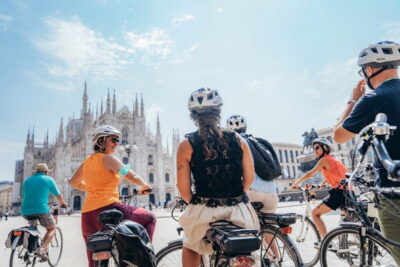
 ★ 5.0Milan’s Hidden Gems: Unique Bike Tour (ENG, NL)From $42970 reviews
 ★ 4.7Highlights and Hidden Gems E-Bike TourFrom $52558 reviews
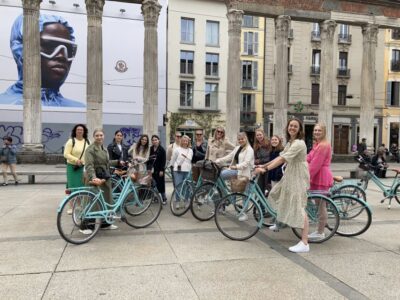 ★ 4.7Highlights and Hidden Gems Guided Bike TourFrom $44498 reviews
 ★ 5.0Highlights and hidden gems of Milan Bike TourFrom $47491 reviews
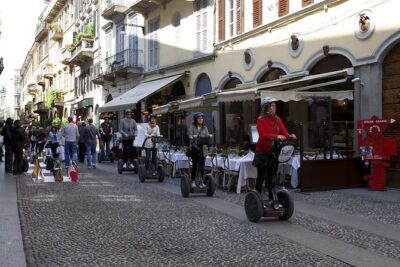 ★ 4.9Sights by Segway Small Group TourFrom $79450 reviews
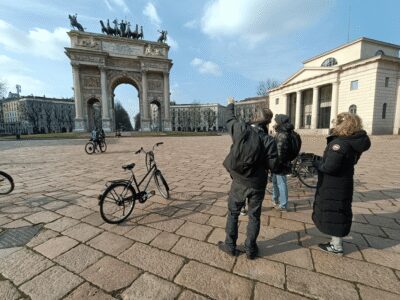 ★ 4.8Guided Bike TourFrom $57256 reviews
★ 5.0Milan Sights by Segway Small Group TourFrom $90249 reviews
★ 4.8Guided Bike TourFrom $57256 reviews
★ 5.0Milan Sights by Segway Small Group TourFrom $90249 reviews
Browse the lists this tour appears in