
Dough, fire, and a final slice you made. This Milan Neapolitan pizza master class is a real hands-on food culture lesson, with seawater dough and a finish that includes your homemade tasting. I especially like how the chefs walk you through each step without acting like you need to be a cook already.
The main consideration is time and comfort: it runs about 2 hours total, so you’ll want comfortable clothes and closed-toe shoes, especially if you’re not used to working dough.
In This Review
- Key highlights to look for
- Milan’s Neapolitan Pizza Master Class: where the lesson starts
- Origine Pizzeria Food Experience and your first steps in the kitchen
- The seawater dough: what you’re really learning about ingredients
- Kneading, leavening, and dough management: hands-on technique that sticks
- Rolling and shaping: thickness, sticking, and the real pizza look
- Toppings and balance: why the class cares about combinations
- Cooking in a professional oven: timing and placement matter
- Final tasting with soft drinks and your participation certificate
- Price and value: is $65 worth it in Milan?
- Who should book this Neapolitan pizza class
- A few practical tips before you go
- Should you book this Milan Neapolitan pizza master class?
- FAQ
- FAQ
- How long is the Milan Neapolitan pizza master class?
- Where is the meeting point?
- What’s included in the price?
- Are drinks included?
- Do I need any cooking experience?
- What languages are offered?
- What should I bring or wear?
- Is it okay if I have food allergies?
Key highlights to look for
- Seawater instead of salt: a dough approach they frame as gentler and easier to digest.
- Small-group, step-by-step coaching: you’re not just watching, you’re doing.
- Professional oven know-how: positioning and timing are part of the lesson, not an afterthought.
- Final shared tasting with soft drinks: you eat what you made, with the group.
- Participation certificate: a fun take-home souvenir from Origine Pizzeria Food Experience.
Hands in the flour, in a Milanese kitchen
- The Secrets to Learn Fresh Pasta and Tiramisù in a Glam Home★ 5.0 · 1,182 reviews
- Milan: Pasta and Tiramisu Cooking Class with Wine★ 4.8 · 1,106 reviews
- Gnocchi, Pasta, Tiramisù and Wine Class★ 5.0 · 691 reviews
Milan’s Neapolitan Pizza Master Class: where the lesson starts
If you care about food but get tired of overly staged tours, this kind of class is a breath of fresh air. At Origine Pizzeria Food Experience, you step in and immediately get pulled into the rhythm of making pizza like a craft, not like a chore.
You can expect a friendly, relaxed setup where the pizza chefs guide you with professionalism and passion. Before hands-on flour starts flying, there’s an intro to their philosophy: respect for ingredients, traditional technique, and an interesting twist—using seawater instead of salt. That matters because it sets the tone: you’re learning why things are done, not only what to copy.
One practical plus for me: this class is built for both beginners and people who cook. You don’t need to bring culinary confidence. You do need to bring curiosity and a willingness to try.
Origine Pizzeria Food Experience and your first steps in the kitchen
Your meeting point is simple: Origine Pizzeria Food Experience, ground floor on the street. Once you’re inside, the chefs act like hosts, not instructors you’re scared of. You’ll be shown how the process works, and you’ll get the basics of their approach before you start kneading.
The lesson is designed as a full sequence—from dough prep to cooking, then tasting. So you’re not hopping between separate stations like you’re in a lab tour. It’s one continuing flow, and that makes it easier to remember what you did and how each step affects the next.
Small-group classes also help. The format is intended to keep attention personal, rather than letting you get lost while others move ahead. If you’re booking with a kid (the minimum recommended age is 12), this structure is a big reason families tend to enjoy it.
The seawater dough: what you’re really learning about ingredients
This experience has a clear headline detail: artisanal Neapolitan-style pizza dough made with seawater. The chefs explain it as a way to create a dough that’s unique and, in their words, healthier and more digestible.
Now, I’m not going to promise medical results. But from a pizza-and-process perspective, what’s important is that the class treats ingredients as part of technique. The dough isn’t treated like a mystery mix. You get hands-on guidance that ties the “why” to what you feel while kneading.
You’ll learn how to work flour with seawater and the other ingredients to reach dough that’s soft, elastic, and digestible (again, that’s how the class frames it). You’ll also practice hand-kneading and get explanations about managing leavening, plus how to read consistency as the dough develops.
That’s the kind of skill you can take home. Even if you never use seawater again, you’ll better understand dough texture and fermentation behavior because you trained your hands and attention.
A few more we would happily send a friend to in Milan
- Milan’s Authentic Street Food tour: A Gourmet Experience
★ 4.5 · 717 reviews - Small-Group Barolo Wine Tasting, Alba & UNESCO Piedmont Hills
★ 5.0 · 689 reviews - Milan: Guided Street Food Walking Tour with Food Tasting
★ 4.8 · 654 reviews - Milan: Sunset Navigli Food & Drinks Tour by Do Eat Better
★ 4.5 · 517 reviews - Milan: Italian Cooking Class with Food and Wine
★ 4.7 · 509 reviews
Kneading, leavening, and dough management: hands-on technique that sticks
Once the intro phase ends, it’s straight to the dough.
Here’s what you’ll be doing in practice:
- You’ll work the flour and seawater into dough while learning hand-kneading techniques.
- You’ll get coached on managing leavening so the dough behaves the way it’s supposed to.
- You’ll experiment under guidance to find the “perfect” consistency, step by step.
This is where I think the value shows. Many food experiences claim you’ll “learn,” but the learning can be vague. Here, the lesson is tactile. You feel dough change. You notice how it resists, stretches, and smooths out. And the chefs guide you with the kind of patience that matters if you’re new.
Also, the way the class is structured tends to reduce stress. Even if dough doesn’t feel right immediately, you’re not abandoned to fix it alone. The chefs are there to correct technique so you can move forward.
Rolling and shaping: thickness, sticking, and the real pizza look
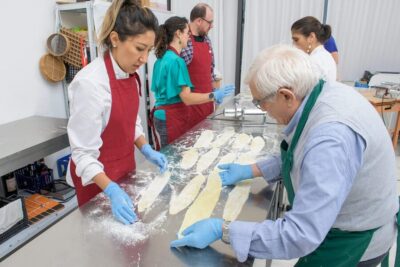
After dough is ready, the class moves to rolling and shaping. This part is more than a “make a circle” exercise. It’s about controlling thickness and avoiding common mistakes.
You’ll practice:
- Rolling out the disc and shaping it correctly
- Managing thickness so you get the dough distribution you want
- Handling techniques meant to prevent sticking
You’ll also get guidance on topping with balance. In other words, you won’t just throw on ingredients because they look good. The chefs emphasize combinations and respect for ingredient quality, which is classic Neapolitan thinking—but explained in a way you can apply right away.
If you’ve only eaten pizza and never made one, this portion is often the most surprising. Small changes in thickness and handling can show up instantly in the final bake.
Toppings and balance: why the class cares about combinations
The toppings portion is practical: you learn how to add ingredients in a way that makes sense with the base and the cook. The chefs talk about taste and balance and how to respect what each ingredient brings.
Even if you’re the type who thinks, I just want cheese and sauce, you’ll still benefit from this guidance. It helps you understand pizza as a system:
- dough structure affects how toppings sit
- sauce and toppings affect moisture behavior
- ingredient choices interact with heat in the oven
And since the class is designed for beginners, the focus stays on what you can do with confidence, not on fancy culinary theory.
Cooking in a professional oven: timing and placement matter
Then comes the part you were waiting for: cooking.
You’ll learn how the professional oven works, plus how to position your pizza correctly. You’ll also understand how long it takes to get the perfect cook. This is one of those details that seems small until you realize it’s the difference between good pizza and that truly great, blistered result.
The chefs guide you through the oven process so you’re not just shoving dough into heat and hoping. Pizza baking depends on placement and timing, and you get a real sense of that during the class.
Final tasting with soft drinks and your participation certificate
The finish is all about eating what you made.
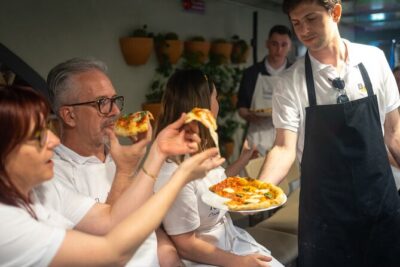
Once your pizza is cooked, you’ll taste it together with the other participants. The tasting is structured as a shared moment: you can compare notes, chat about what worked, and appreciate the result of your own hands-on effort. Soft drinks are included, so you can keep it simple and stay focused on the food.
Then you get a certificate of participation. It’s not life-changing, but it’s a nice touch—especially for families or anyone who likes a concrete souvenir beyond photos.
Price and value: is $65 worth it in Milan?
At $65 per person for a pizza master class with final tasting and drinks included, the value comes down to what you actually do.
You’re paying for:
- hands-on coaching from pizza chefs
- ingredients and professional equipment
- dough-making, shaping, and baking instruction
- the final tasting of what you made
- soft drinks
- a take-home participation certificate
Because this is a true step-by-step workshop (not just a tasting or demonstration), you get more than a meal out of it. You leave with technique: dough handling, shaping basics, and how baking conditions change results.
Two timing notes to keep your expectations right:
- The experience is listed as 2 hours, but the lesson portion can be around 1 hour and may vary slightly depending on the number of participants.
- Either way, plan for a short block of time that’s active and hands-on.
Who should book this Neapolitan pizza class
This is a strong fit if you:
- want an authentic food experience in Milan that’s not just sightseeing
- enjoy learning by doing
- are traveling as a couple, friends, or family with teens
- like food culture that explains technique, not just stories
It’s also useful for beginners. The class explicitly works for people with no prior pizza-making experience. The minimum recommended age is 12, and minors must be accompanied by an adult.
If you have food allergies or intolerances, tell the team when you book so they can prepare suitable ingredients.
A few practical tips before you go
I’d treat this like a working kitchen moment, not a formal dinner.
- Wear comfortable clothes.
- Use closed-toe shoes.
- Be ready to get hands-on with dough and flour.
If you’re concerned about transport, know that transportation to the venue isn’t included. The meeting point is on the ground floor at street level, so use that as your anchor when planning your route through Milan.
If you like flexibility, the experience offers free cancellation up to 24 hours in advance for a full refund, and it also supports a reserve now, pay later option.
Should you book this Milan Neapolitan pizza master class?
I’d book it if you want a hands-on meal with real technique and a friendly kitchen atmosphere. The best parts are the step-by-step coaching, the dough made with seawater, and the fact that you end up eating the pizza you made—not just watching someone else do it.
Skip it (or consider a different option) if you want a long, slow experience with lots of sightseeing, because this is focused and active. Also, if you’re traveling with very young kids, check the minimum age first.
If your goal is to learn something you can reproduce and bring home a memorable Milan food moment, this is a solid pick.
FAQ
FAQ
How long is the Milan Neapolitan pizza master class?
The experience is listed at 2 hours total. The hands-on class time can be around 1 hour and may vary slightly depending on the number of participants.
Where is the meeting point?
It meets at Origine Pizzeria Food Experience, ground floor on the street.
What’s included in the price?
You get a hands-on lesson with expert pizza chefs, all ingredients, professional equipment, tasting of the pizza you make, soft drinks, and a certificate of participation.
Are drinks included?
Yes. Soft drinks are included with the tasting.
Do I need any cooking experience?
No. The class is suitable for both beginners and cooking enthusiasts, and no previous experience is required.
What languages are offered?
The instructor provides the class in Italian and English.
What should I bring or wear?
Wear comfortable clothes and closed-toe shoes.
Is it okay if I have food allergies?
You should tell the provider when you book about any allergies or intolerances so they can prepare suitable ingredients.
More Food & Drink in Milan




More Tour Reviews in Milan





More Milan Cooking Classes


Fresh in our Milan notebook




Milan Cooking Classes, compared.
 ★ 5.0The Secrets to Learn Fresh Pasta and Tiramisù in a Glam HomeFrom $901,182 reviews
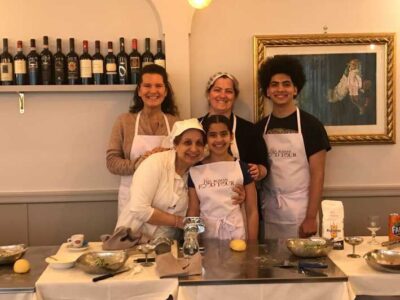 ★ 4.8Pasta and Tiramisu Cooking Class with WineFrom $611,106 reviews
 ★ 5.0Gnocchi, Pasta, Tiramisù and Wine ClassFrom $83691 reviews
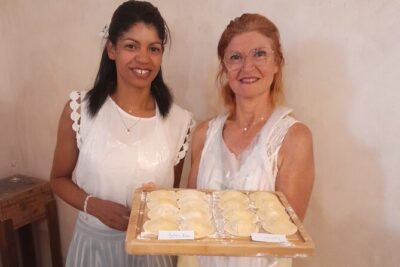 ★ 5.0Pasta and Tiramisu Small Group Cooking Class with WineFrom $83660 reviews
 ★ 5.0Milan Cooking Class: Authentic Pizza & Gelato MakingFrom $78582 reviews
 ★ 4.7Italian Cooking Class with Food and WineFrom $80509 reviews
 ★ 4.9Fresh Pasta & Tiramisù Class in a Glamorous HomeFrom $88478 reviews
 ★ 5.0Milan Culinary Experience: Pasta & Gelato or Tiramisù ClassFrom $85337 reviews
Browse the lists this tour appears in