
Reviewed · MUSEUMS
Milan: Street Art Tour of Ortica, Milan’s open air museum
Street art can turn a backstreet into a museum. This Milan street art tour in Ortica is built like a guided hunt for murals, with the neighborhood’s Or.Me (Ortica Memoria) project sitting at the center of the story. You’ll learn how graffiti went from underground noise to public art that reshapes how people see their own streets.
I like two things most here: the tour connects what you’re seeing to the history and culture of street art, and it keeps the pace friendly with a small group (up to 8) and an English-speaking guide. One possible drawback: because it’s time-limited at 2 hours, you might not end up photographing every single wall you notice along the way—this route focuses on key works and storytelling moments instead.
In This Review
- Key Things to Know Before You Walk
- Ortica Turns Milan’s Concrete Into Stories
- The Or.Me Project: Orticanoodles and 20+ Murals With Community Meaning
- Street Art History You Can See on the Walls
- Walking the Neighborhood: What the 2 Hours Feels Like
- Stop-by-Stop: How Each Part Helps You Read Ortica
- Starting at Argonne: Orientation and Setting the Scene
- The Heart of Ortica: Guided Wall-to-Wall Storytelling
- Photo Stop and Free Time: Let Your Eye Catch Up
- More Guided Time: Techniques, Styles, and Social Impact
- The Viewpoint Photo Stop: Final Frames With a Bigger Picture
- Choosing the Right Guide: Luca, Lucy, and the Art of Explaining It
- Price and Value: What $49 Buys You in Ortica
- Practical Tips for a Smooth Ortica Walk
- Who This Tour Suits Best (and Who Might Skip It)
- Should You Book This Milan Street Art Tour of Ortica?
- FAQ
- How long is the Milan street art tour of Ortica?
- Where is the meeting point?
- Is the tour available in English?
- How big is the group?
- Is the tour wheelchair accessible?
- What is included in the price?
- What’s not included?
- Can I take photos during the tour?
- What happens if the weather is bad?
- Is there free cancellation?
Key Things to Know Before You Walk
- Ortica is Milan’s first open-air museum district, shaped by viaducts, railway tracks, and the Lambro River.
- Or.Me (Ortica Memoria) features 20+ large-scale murals tied to local memory, identity, and hope.
- You’ll get the why, not just the what: origins, techniques, styles, and street art’s social impact.
- Backstreets and hidden alleys mean you see the neighborhood’s texture, not just the postcard walls.
- Photo stops and a viewpoint help you slow down and frame the art properly.
- Small group format (up to 8) with an English guide makes Q&A feel natural.
A few more we would happily send a friend to in Milan
- Milan: Leonardo3 The World of Leonardo Museum Entry Ticket★ 4.4 · 3,936 reviews
- Milan: La Scala Theater & Museum Guided Experience★ 4.1 · 2,931 reviews
- Milan: Entrance Ticket to La Scala Theatre Museum★ 4.3 · 2,098 reviews
Ortica Turns Milan’s Concrete Into Stories
Ortica sits in Lombardy and feels like a neighborhood with an origin story you can actually walk through. It used to be more isolated, shaped by the physical barriers around it—viaducts, railway tracks, and the course of the Lambro River. Historically it was working-class and a bit overlooked, which is part of what makes the change in Ortica so interesting today.
What you’re really doing on this tour is learning how public walls became community memory. When the area started transforming over the last decade, murals didn’t just add decoration. They started acting like neighborhood landmarks—visual reminders of who lived here, what mattered to people here, and what Milan has chosen to remember (and what it forgot).
If you like seeing cities as living systems—people, history, power, everyday life—this tour gives you a practical route through that idea.
The Or.Me Project: Orticanoodles and 20+ Murals With Community Meaning
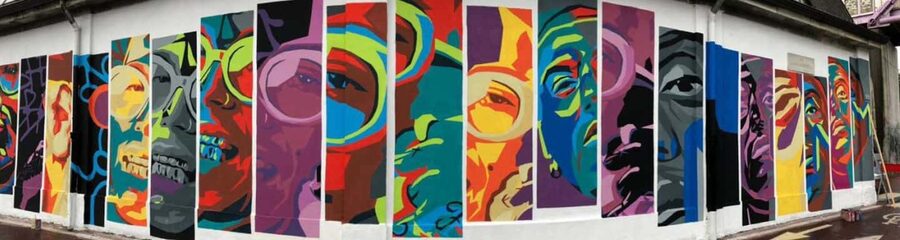
At the heart of Ortica’s open-air museum feel is the Or.Me Project (Ortica Memoria). It’s a monumental urban art initiative by the local artist collective Orticanoodles, and it’s built around more than 20 large-scale murals.
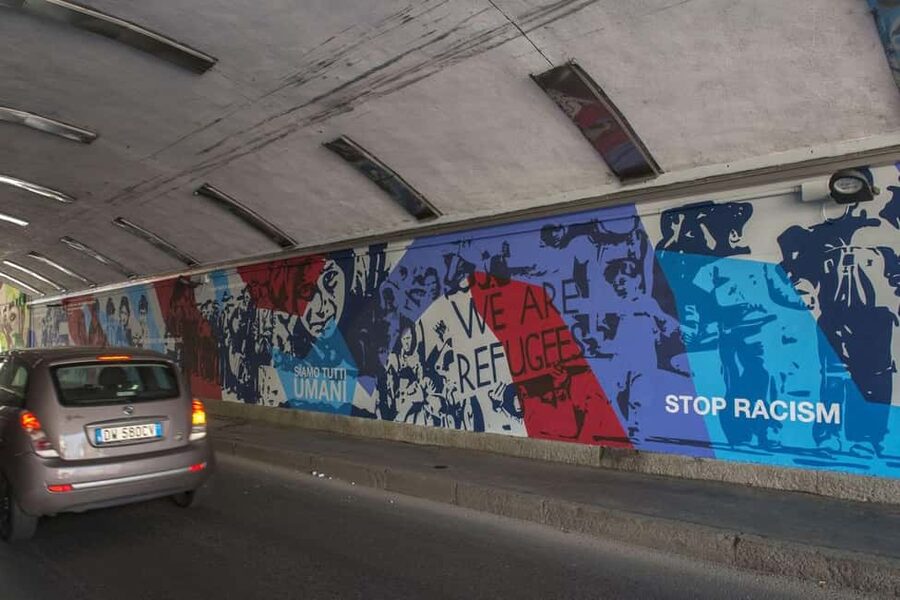
Here’s what makes this especially worth your time: the murals aren’t only about style. They’re about stories. The project aims to tell Milan’s collective memory through figures and themes like heroes, workers, musicians, activists, and also people who often get left out of official history. As you walk, your guide connects these images to the bigger arc of the neighborhood—how a place changes when art becomes part of civic identity.
You’ll also hear about the range of subjects, from anti-fascist partisans to jazz legends, from factory workers to feminist icons. The goal isn’t to name-drop artists for bragging rights. It’s to show you how street art can hold social meaning in public space—where everyone can see it.
For you, that means your photos won’t just look good. They’ll point to a reason. And that’s what usually makes a “fun walk” turn into a “I remember this” moment.
Street Art History You Can See on the Walls
A lot of street art tours stop at, Pretty mural, cool colors. This one is structured to help you read the art like a language.
You’ll learn about:
- the history and origins of street art
- how the movement evolved into something more widely recognized
- the present and future of street art as culture
- different techniques and styles you’ll spot as you walk
In other words, you’re training your eye. Instead of wondering, What am I even looking at?, you start asking smarter questions, like:
- Is this closer to graffiti lettering, or a mural with a narrative?
- Does the artist’s technique look more like quick expression or careful composition?
- Does the imagery lean toward protest, remembrance, or celebration?
And because Ortica’s transformation is tied to a community effort, the tour keeps snapping back to a key theme: street art can be a driver of urban regeneration. It changes how people feel about a place, and how the place is perceived by outsiders.
A few more we would happily send a friend to in Milan
- Street Art&Urban Vibes in Milan’s Most Exciting Rising Areas
★ 4.6 · 5 reviews
Walking the Neighborhood: What the 2 Hours Feels Like
This is a real walking experience. The tour lasts 2 hours, it’s guided, and it’s set up to keep moving without turning into a rushed sprint. The small group size (up to 8 participants) helps a lot: you can ask questions, and the pace stays human.
You start at Argonne, at the meeting point outside the metro stop Argonne (Line 4). The guide meets you there with the agency logo, so you’re not left guessing.
The tour moves through Ortica in segments. There’s an early orientation, then the bulk of the time dedicated to murals and explanation. After that, you get built-in stops for photos and short breaks, before finishing with more guided time and a final viewpoint photo moment.
If you hate long lectures, don’t worry. This tour is mostly walking and looking, with storytelling placed at the right moments so you stay focused on the art and the neighborhood context.
Stop-by-Stop: How Each Part Helps You Read Ortica
Starting at Argonne: Orientation and Setting the Scene
Before you even reach the densest mural areas, there’s a short guided portion (about 15 minutes). This is where you get the frame for what you’re about to see.
Think of it as your decoder ring. You’ll understand what Ortica is, why it was once isolated, and what changed. That’s important because street art can look random if you don’t know the neighborhood’s background.
The Heart of Ortica: Guided Wall-to-Wall Storytelling
Most of your time goes to a longer guided segment (about 45 minutes). This is the core of the tour, where you’ll be “on the hunt” for the most creative, evocative, and significant street art works.
This is also where the Or.Me murals come to life. Your guide ties imagery to specific themes: memory, identity, forgotten figures, and the neighborhood’s shift from industrial fringe to an open-air museum district.
If you’re the type who likes to learn by seeing, this is your favorite stretch. You won’t just point and shoot—you’ll start noticing details like composition choices, references to local life, and how the street art communicates without a label on a wall.
Photo Stop and Free Time: Let Your Eye Catch Up
After the main guided segment, there’s a dedicated photo stop (about 10 minutes). Then you also get a brief free time window (about 10 minutes).
These pauses matter more than they seem. Street art is often best in context, not from one quick angle. During this time, you can:
- get photos without feeling like you’re holding up the group
- try a different viewpoint
- take a moment to simply look
More Guided Time: Techniques, Styles, and Social Impact
Later, you’ll have additional guided segments (one around 20 minutes and another around 10 minutes). This is when you usually start connecting the dots you missed earlier—especially about technique and style.
You’ll get explanations about how graffiti and street art moved through different phases: underground rebellion, then growing recognition as cultural form. Your guide also connects these changes to how public art can influence neighborhoods.
The Viewpoint Photo Stop: Final Frames With a Bigger Picture
The tour ends with a viewpoint photo stop (about 10 minutes). Even without a lot of formal “sightseeing,” this moment helps you step back and see the neighborhood as part of a wider story—not just a collection of individual murals.
Choosing the Right Guide: Luca, Lucy, and the Art of Explaining It
A big part of the tour experience is the guide. In recent outings, guides like Lucy and Luca have shown up in the English tours, and they’re described as professional, enthusiastic, informative, and easy to chat with.
That matters because street art can be interpretive. The best guides don’t just point; they help you understand why each mural exists and what it’s trying to say.
Practical tip: bring curiosity. Ask what a symbol means or what technique you’re seeing. Since it’s a small group, those questions don’t get swallowed.
Price and Value: What $49 Buys You in Ortica
The price is $49 per person for a 2-hour guided walk. That can sound like a simple sightseeing add-on—until you compare what’s actually included.
You’re getting:
- a guided tour of Ortica’s street art
- insights into the history and culture of street art
- a guided exploration of Milan’s first open-air museum district
You’re also paying for an organized route, interpretation, and the fact that the murals are tied to a community storytelling project (Or.Me / Orticanoodles). In other words, your money doesn’t just purchase access to walls. It buys context so the walls mean something.
What’s not included is also clear: transportation to/from the activity and food and drinks. So plan to arrive at Argonne and be ready to walk. If you add a snack afterward, that’s usually the easiest fit with the rest of your Milan day.
Practical Tips for a Smooth Ortica Walk
This tour is built around walking. Wear comfortable shoes—that’s the real requirement, not optional advice. Dress for the weather and check the forecast, because the tour may be rescheduled in case of bad weather.
Photography is encouraged, but treat the neighborhood respectfully. Street art is part of local life, not a theme-park display.
Also plan your day so you can walk with a relaxed pace. You’ll want time for photos and for actually reading what’s around you.
Who This Tour Suits Best (and Who Might Skip It)
This is a great match if you:
- like art that has real social meaning
- want a Milan experience outside the usual monuments
- enjoy neighborhoods with a clear transformation story
- would rather learn from a guide than wander street to street guessing
It may be less perfect if you:
- want a longer route with more stops and more walls in 2 hours
- prefer highly structured, major-sightseeing tours
The good news: Ortica’s most important murals are still a strong concentration for a half-day window. You just need to set expectations that it’s a focused highlight walk, not an unlimited wall-hunting expedition.
Should You Book This Milan Street Art Tour of Ortica?
Book it if you want street art with context and a strong neighborhood narrative. The mix of Or.Me (Ortica Memoria), a guided look at technique and history, and photo moments makes the time feel intentional rather than random.
Skip it only if you’re the type who expects dozens of different murals in every direction. This tour concentrates on the most significant works and the stories behind them, so you’ll leave with understanding—not just images.
If your goal is to see Milan as a city of people and change, this is one of the most practical ways to do it on foot.
FAQ
How long is the Milan street art tour of Ortica?
It lasts 2 hours.
Where is the meeting point?
The meeting point is outside metro stop Argonne (Line 4). The guide will be there with the agency logo.
Is the tour available in English?
Yes, the live tour guide speaks English.
How big is the group?
It’s a small group limited to 8 participants.
Is the tour wheelchair accessible?
Yes, wheelchair accessibility is listed for this activity.
What is included in the price?
The guided tour of Ortica’s street art, insights into the history and culture of street art, and an exploration of Milan’s first open-air museum district are included.
What’s not included?
Transportation to and from the activity, plus food and drinks, are not included.
Can I take photos during the tour?
Photography is encouraged, with the reminder to respect the art and the neighborhood.
What happens if the weather is bad?
The tour may be rescheduled in case of bad weather.
Is there free cancellation?
Yes—cancellation up to 24 hours in advance offers a full refund.
More Museums in Milan


More Tours in Milan


More Tour Reviews in Milan

Fresh in our Milan notebook



Museums, compared.
 ★ 4.4Leonardo3 The World of Leonardo Museum Entry TicketFrom $183,936 reviews
 ★ 4.1La Scala Theater & Museum Guided ExperienceFrom $342,931 reviews
 ★ 4.3Entrance Ticket to La Scala Theatre MuseumFrom $172,098 reviews
 ★ 4.7La Scala Theater and Museum Tour with Entry TicketsFrom $341,722 reviews
 ★ 4.5Cathedral, Archeological Area and Museum TicketFrom $221,093 reviews
 ★ 4.6Casa Milan: Museum Entry TicketFrom $18969 reviews
 ★ 4.1San Siro Stadium and Museum Official Guided TourFrom $52962 reviews
★ 4.4Entrance Ticket to La Scala Theatre MuseumFrom $17759 reviews
★ 4.1San Siro Stadium and Museum Official Guided TourFrom $52962 reviews
★ 4.4Entrance Ticket to La Scala Theatre MuseumFrom $17759 reviews
Browse the lists this tour appears in